Content

2024 Progress Report: The Bigger Picture

Wearing my ā€˜serial founder exploring starting a company’ hat, I advanced my passion project KIP3.

KIP is a seven-year long passion project to tackle the disinformation problem on social media that makes us poor information citizens and polarized neighbors who cannot take collective action in the face of threats like the climate crisis.

The bigger picture, in your words

With my KIP project to make sense in the social age and surface the best civic participators - or members of ā€œthe Fifth Estateā€, - I’ve been collecting the contributions on Twitter.

For a couple years I made graphic images of quotes I spied. I put some of them together into a larger narrative of our time, and this moment. Take a look!

Below is a short version of the narrative in the video. See the video for quote credits or read the transcript with credits here.

ā€œThe Bigger Pictureā€ In Snippets From Emergent News Contributors Curated By KIP

"Social media has held politics and media to account"

Journalism & Backsliding Democracy was a good journalism-democracy-disinformation panel with Jay Rosen at New York University School of Journalism for the Cambridge Disinformation Summit last week.

From my live notes: ā€œSocial media has held politics and media to account,ā€ said former director of BBC News Richard Sambrook, hitting the nail on the head!

Social media is not just part of the #disinformation problem, it’s part of the solution as I’ve been contending with my Fifth Estate-holding-power-to-account project: KIP! (Read about it here.)

The hitch: knowing which are the good actors on social media and which are the bad actors.

My live notes: Jay said we need smart practices to solve the hardest problems in news coverage, like if you had a ā€œCategory of bad actorsā€ you could put a source in you’d be better prepared. šŸ¤”

That sounds very much like the categorization I’ve been structuring with KIP.


Is your foot on the brake at the same time you're trying to accelerate? It’s your brain science

New read for Fogust...

I was fortunate to read an early manuscript of this new book release by ā˜€ļø Jessica J.J. Lutz ā˜€ļø and look forward to diving into the final version now making its way around the world!

I see Barbie gets a mention on p 110 - she was Jessica's favored doll because she wasn't a baby, she was a grown woman who knew what she wanted - Jessica and I were among the (how many, uncounted?) girls whose parents wouldn't allow us to play with the toy. Before Barbie director Greta Gerwig was even born, Barbie was a subversive force in our lives!

ā€œA war correspondent facing burnout wonders why she suddenly feels fear when a bomb goes off at her Baghdad hotel: a clue comes when she realizes she is 4 months pregnant. To understand how her coping mechanisms no longer work, she applied her journalistic research skills to the inner conflict she experienced, and her upbringing. What comes out of it is a deep dive into the gender-based sociology, and the brain science, a review of the literature parsing it all, and a way forward, through simple exercises that anyone can do to start using our dual-sided human brain to succeed in life and work, and stay healthy and feel good about it too.ā€
— How I encapsulated the book on an early read.


Here’s where you can get the book in the USA: Amazon.

Timely Civic Education Project ISO Peers, Partners, Sponsors

It’s a Wikipedia + Wordle for Current Affairs to make better citizens and voters…
A comprehensive project that aims to promote trust and transparency in democracy while combating disinformation and corruption.
The deliverables can be used individually or collectively to empower citizens with the knowledge and tools needed to critically evaluate information and build a network of trustworthy sources.

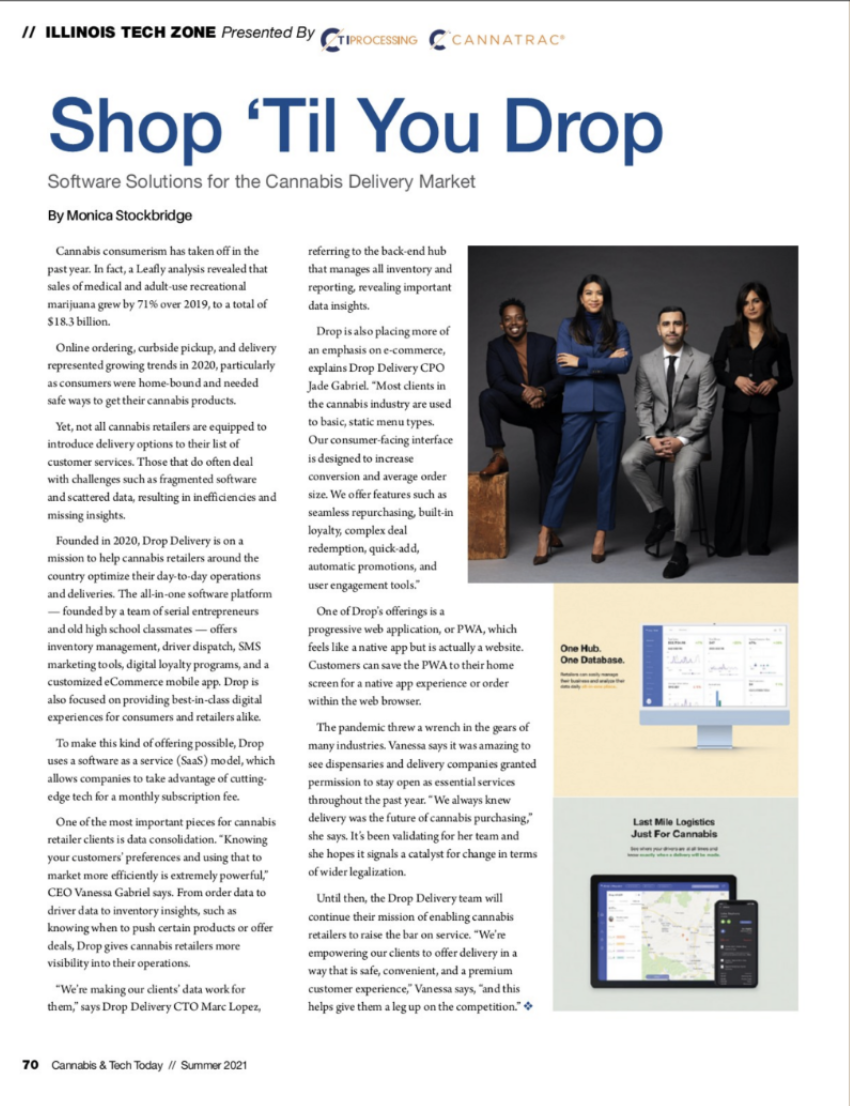
The September Issue: Drop is "the future of delivery"

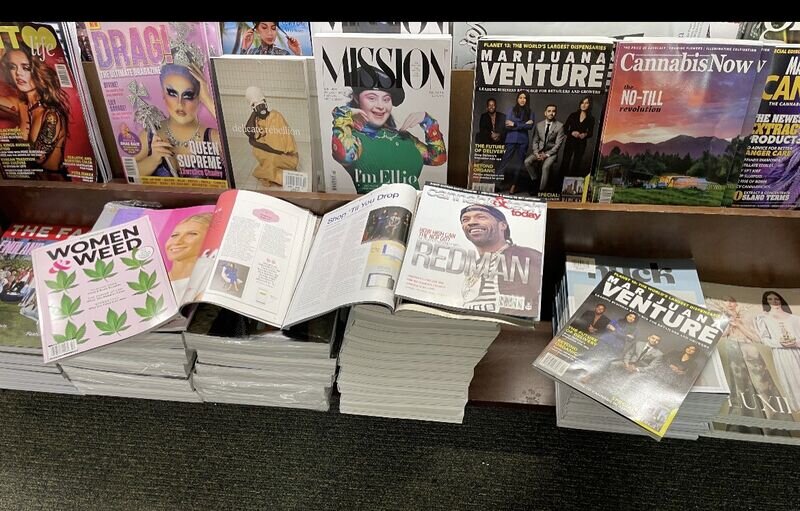
ā€œWhat does it look like when a pre-Series A startup is on newsstands in three national industry magazines at the same time? ā€
— Like this!

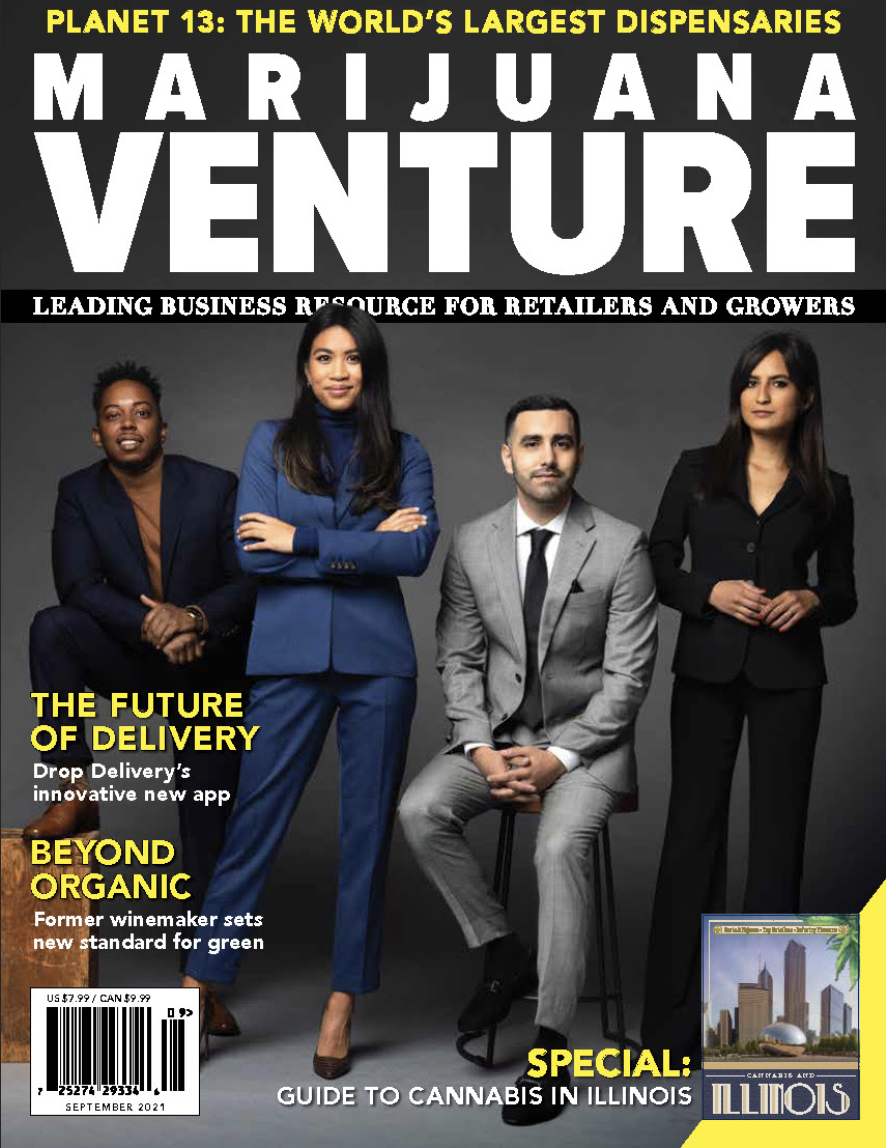
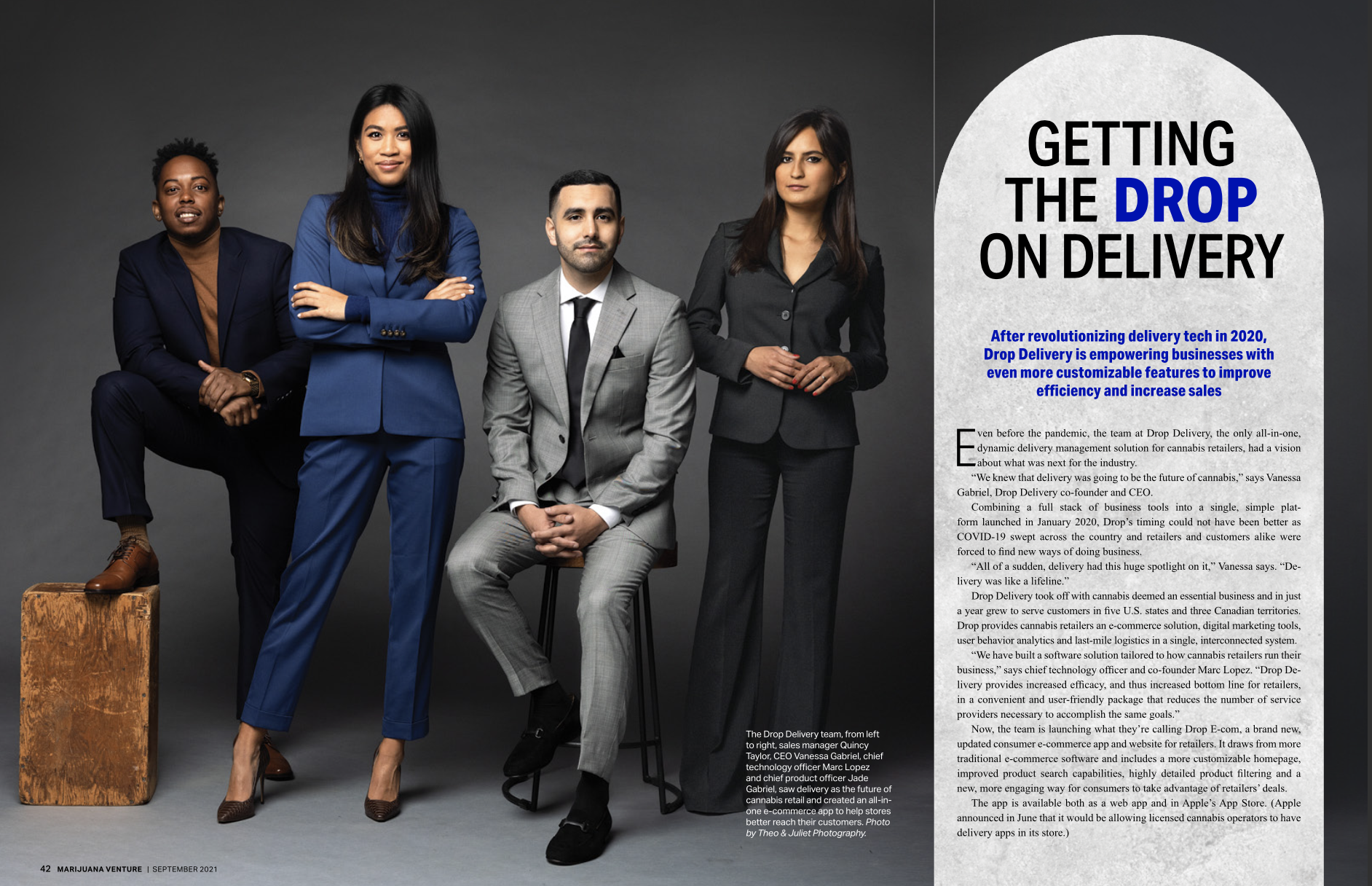
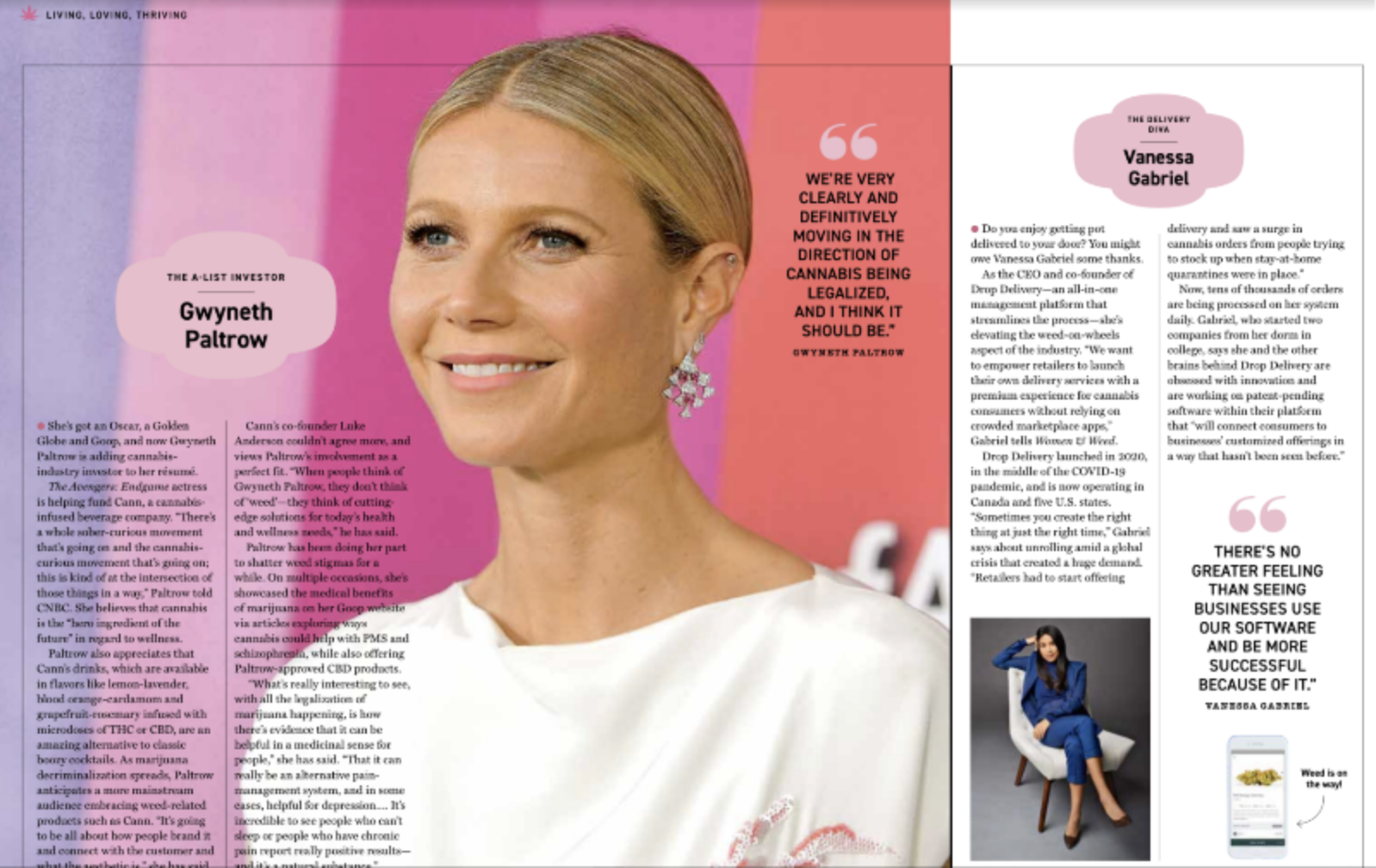
Congrats to the young diverse team at Drop Delivery which Marijuana Venture calls in its cover story "The future of delivery".

Marijuana Venture writes: ā€œAfter revolutionizing delivery tech in 2020, Drop Delivery is empowering businesses with even more customizable features to improve efficiency and increase sales.ā€

Women & Weed calls CEO Vanessa Gabriel ā€œthe delivery divaā€.

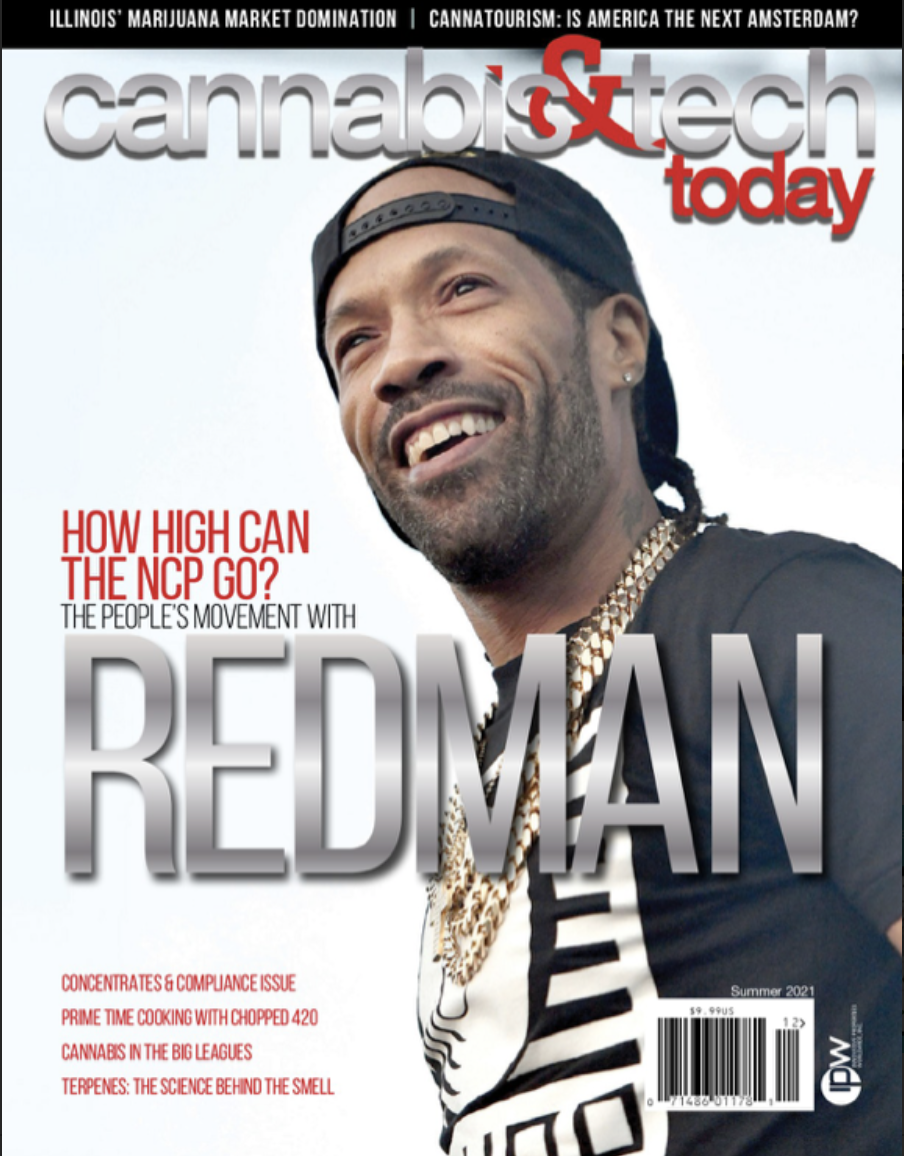
Cannabis & Tech Today says Drop’s on a mission to help retailers optimize their day-to-day operations and delivery services with cutting-edge technology for a monthly subscription fee. That’s the SaaS model.

Why am I writing about Drop?

If you missed it, I’ve been pleased to be bringing my experience to Drop as their chief operating officer since last November!

The tech + cannabis industry space is having a particular moment, as legalization spreads to more states and during the pandemic ā€œcannabis has become an essential household item.ā€ California, which began adult-use sales in 2018, saw consumers rise to 45% of all adults in the first half of 2021 according to BDSA’s business intelligence and market share tracking. Consumption is on the rise across the nation.
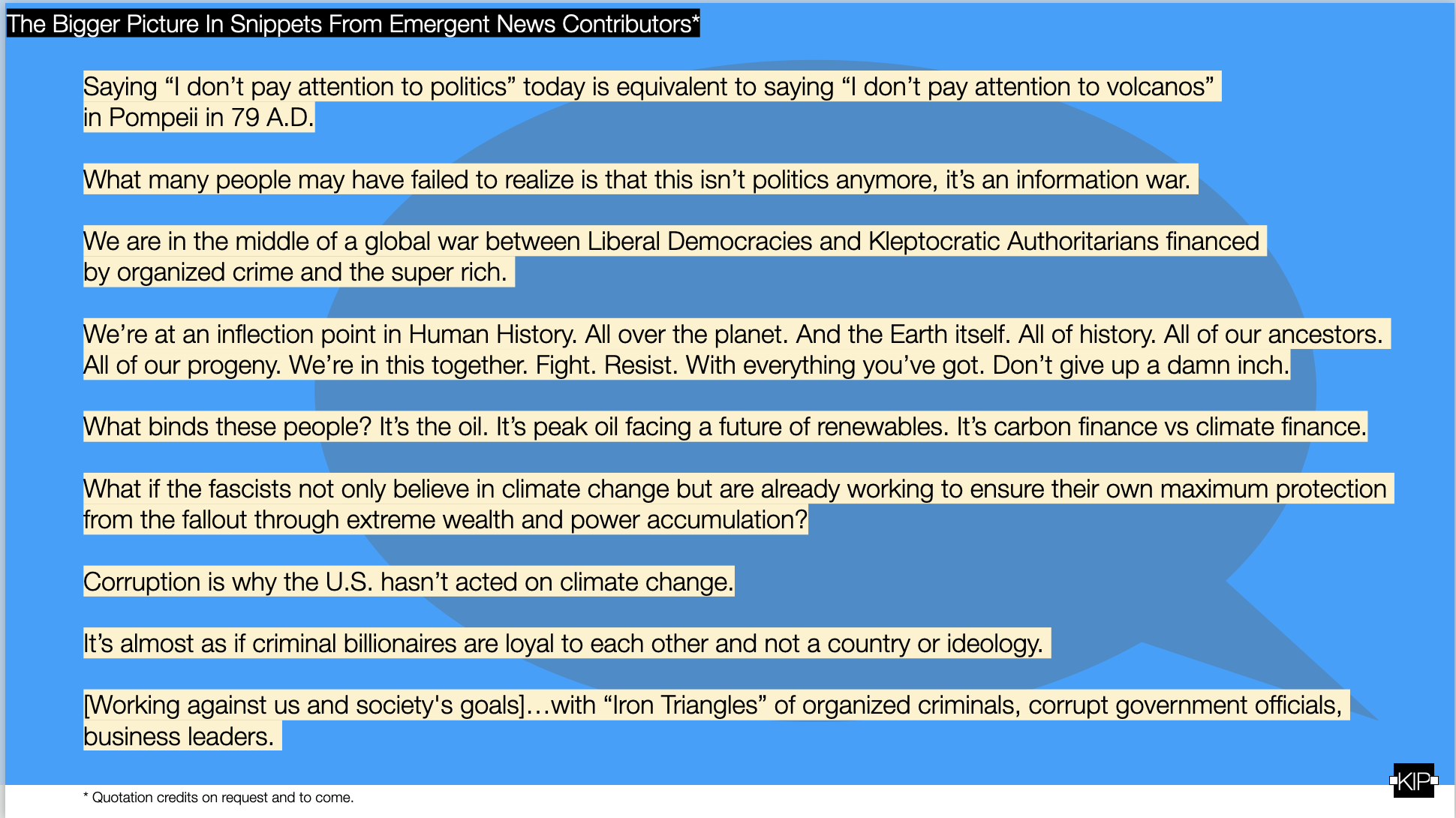
ā€œCannabis has become an essential household item. Consumerism has exploded. Delivery is the future.ā€

…and the news does not stop.

Yesterday, Drop won the Poseidon Asset Management Green Shoots Pitch Forum, a special event that connects top-performing cannabis companies across all verticals (licensed and ancillary), with accredited investors. It’s organized by Poseidon, a first mover in the cannabis investment space named Top Hedge Fund Q3 2020 by Barclay Hedge. Winning sends Vanessa to pitch to investors on stage during MJUnpacked in Las Vegas in October, an industry conference for brands, retail executives, and investors.


Amazon buys MGM, now itching for actual updates to the content vault

So many of us have envisioned this day, or at least where things are now surely headed for MGM's legendary library!

Once worked in Studio Business Affairs at MGM in the 90s, you may recall.

Then prepandemic had the pleasure of pitching 10 Block, my social and mobile streaming platform solution to MGM, Madhu and the studio's distribution leadership, and together envisioning the impact of connecting today's global audiences -- where and when and how they are watching -- with MGM's vaulted riches.

Still itching to see actual forward-looking viewing conventions applied to older content. Personally, want annotations, episodes, interactivity.

Can you imagine, for instance, viewing MGM’s library of Old Hollywood classics and Bond blockbusters broken down into short modern length episodes you can chat with your friends about, and discovering what to watch through reviews and what your network is liking? That looks like this?

A woman can dream!


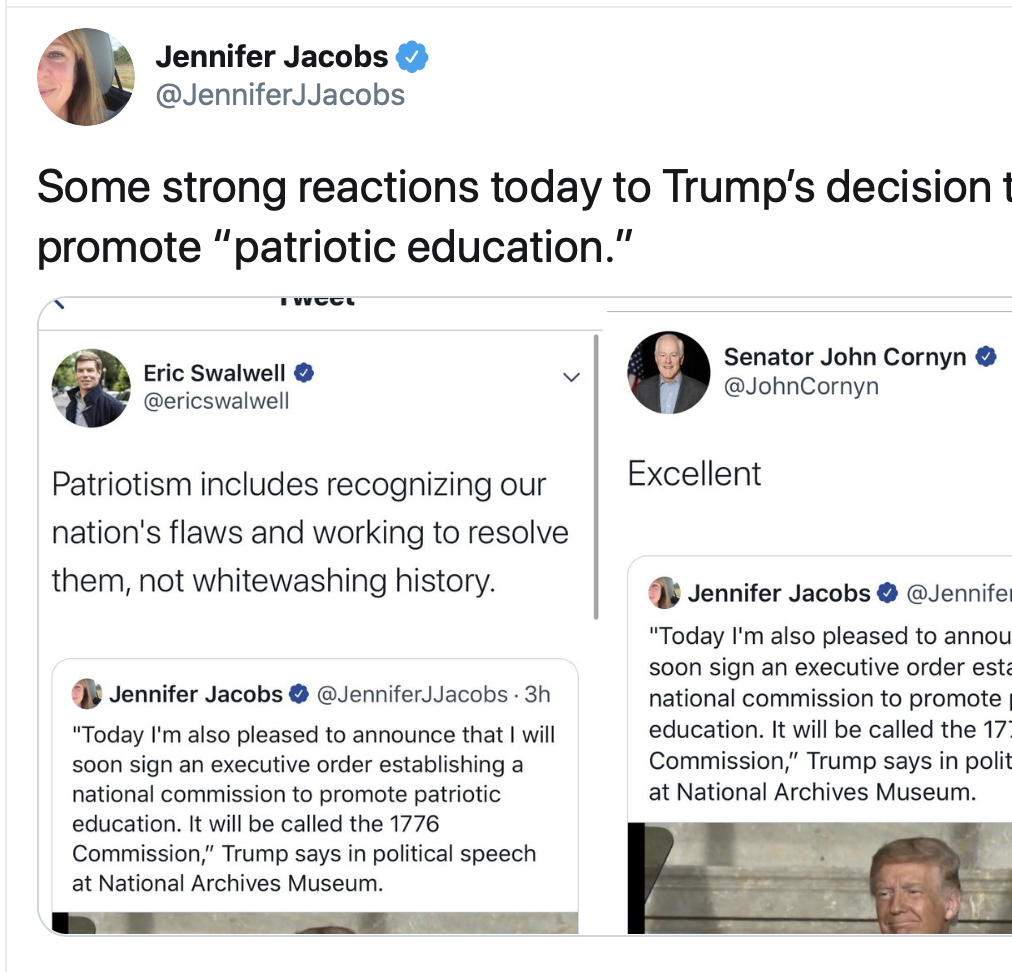
Your performativity robs us all

Paying lip service is easy, that’s why people do it — to check a box that other people think is important, in the most efficient and expeditious way possible.

But lip service is also a waste of your resources, literally. You’ve wasted the opportunity to do something worthwhile for other people. Especially if you have a platform you can lend.

Screen Shot 2021-03-10 at 1.43.54 PM.png

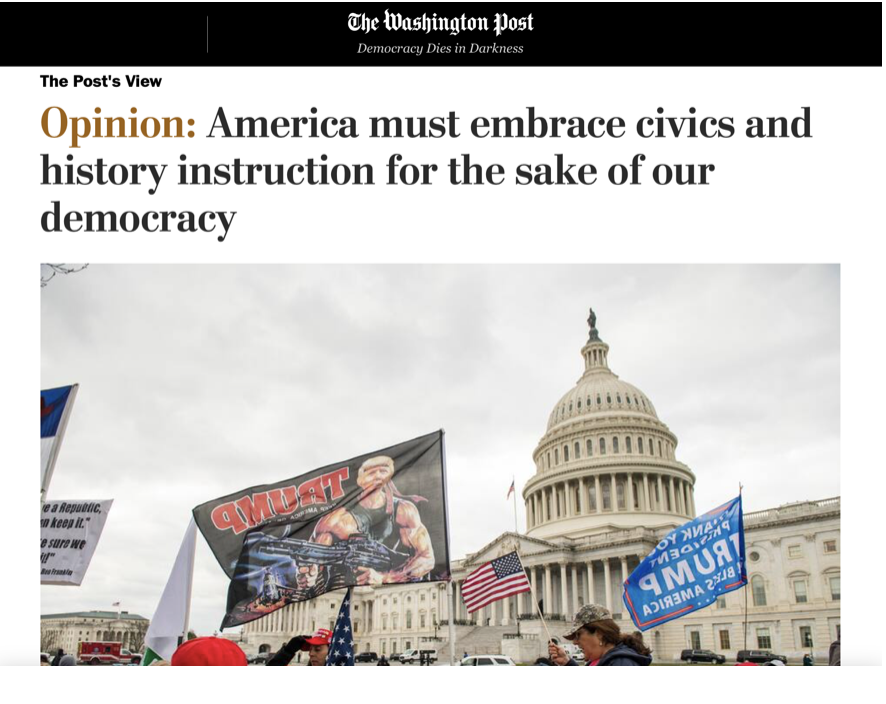
Washington Post has my opinion 8 months later

Washington Post says America needs civics and history to save democracy.

This is how the Post’s Editorial Board puts it today. ā€œWhile the country spends about $50 federal dollars per student per year on science and math education, only five cents per year per student is allocated for civic education,ā€ notes Lawrence Trib…

This is how the Post’s Editorial Board puts it today. ā€œWhile the country spends about $50 federal dollars per student per year on science and math education, only five cents per year per student is allocated for civic education,ā€ notes Lawrence Tribe whose tweet I first saw. ā€œDemocracy demands a population better educated in history and civics,ā€ says the professor emeritus at Harvard Law School.

I said as much 8 months ago when announcing my pro-democracy knowledge project: America needs a re-education.
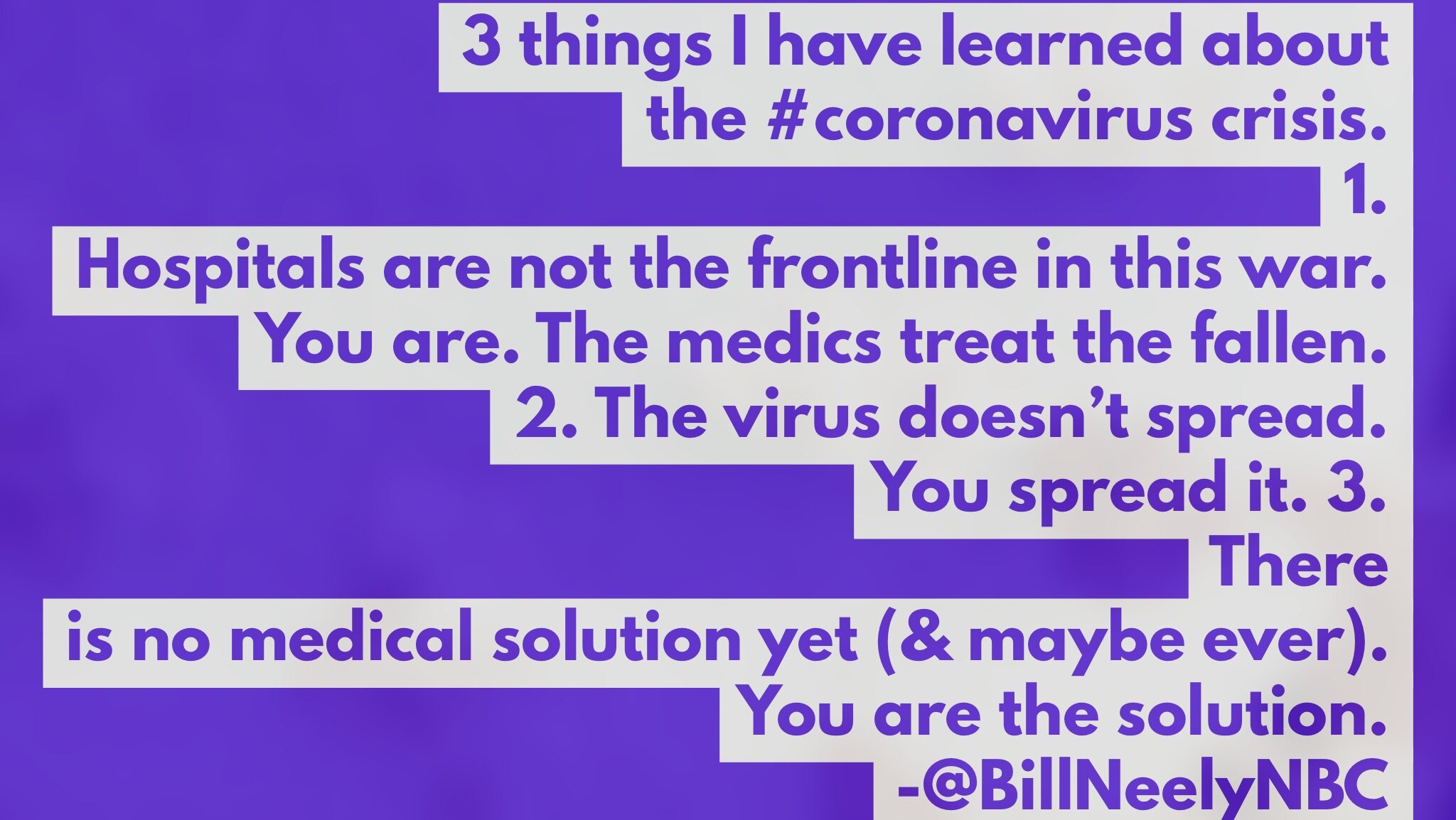
Helping people requires what one of my readers called ā€œa new civil service journalism to inform citizens at a time when the Fourth Estate is dying and under attack, and news media has devolved into propaganda machines.ā€

My mission is to help with what comes next: when we dig out from the damage, there will be a massive need to educate people about what just happened.

Last June I wrote about my work on a curated knowledge & awareness project for concerned citizens.

A good moment for the right vanity press/publishing service

Publishing friends, authors, business women, entrepreneurs: what do you think of this new initiative from Worth Media?

  • A new pipeline to publishing for their subject-matter expert members to help build and further their careers,

  • an opportunity for people who traditionally have a harder time getting published or recognized,

  • to be released through an imprint/house for an established publisher (Simon & Schuster),

  • and author retains the rights.

My first thought? Vanity press. In a downmarket for publishing.

And then, well, okay. It's a good business opportunity to provide publishing services direct to an underserved information-rich community. And, then, hey maybe better than OK. For everyone involved, including the readers of these books. Read about it here.

If I were writing the book on 2020, this would be the BLUF

B00350D0-32F7-47F8-A390-912747F8DE87.jpeg

This is how a book written by the ā€˜generative journalismā€ account/ā€œknowledge service in an infodemicā€ I contribute to would start. I believe that’s called BLUF: bottom line, up front.

What would the first sentence of YOUR book on 2020 be?

Today's bookshelf

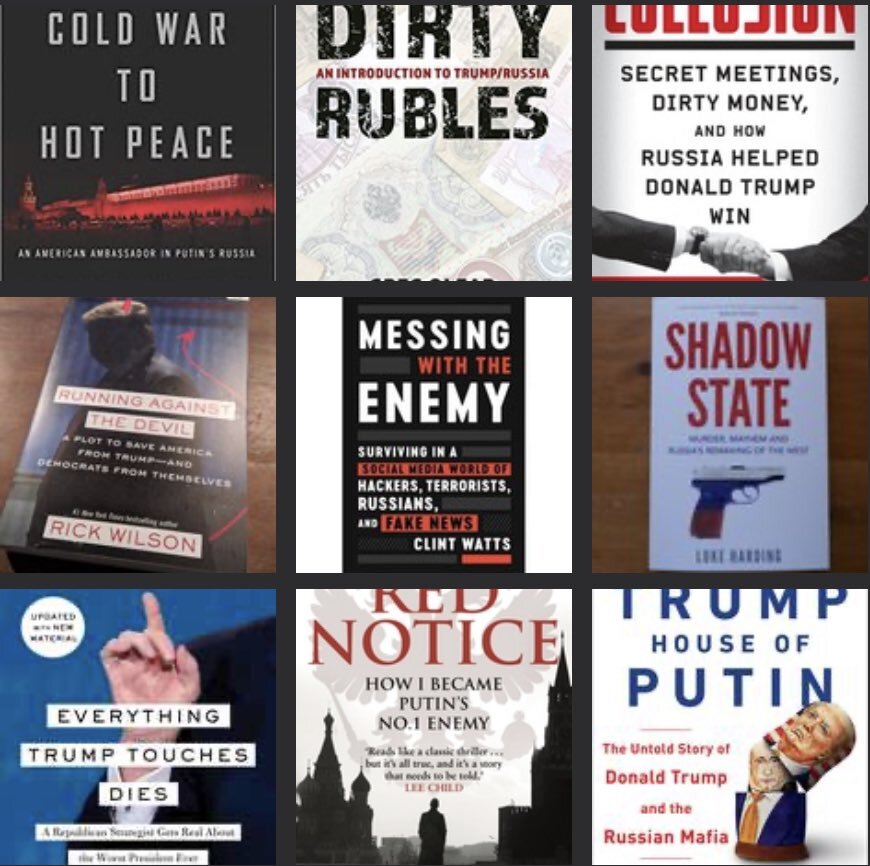
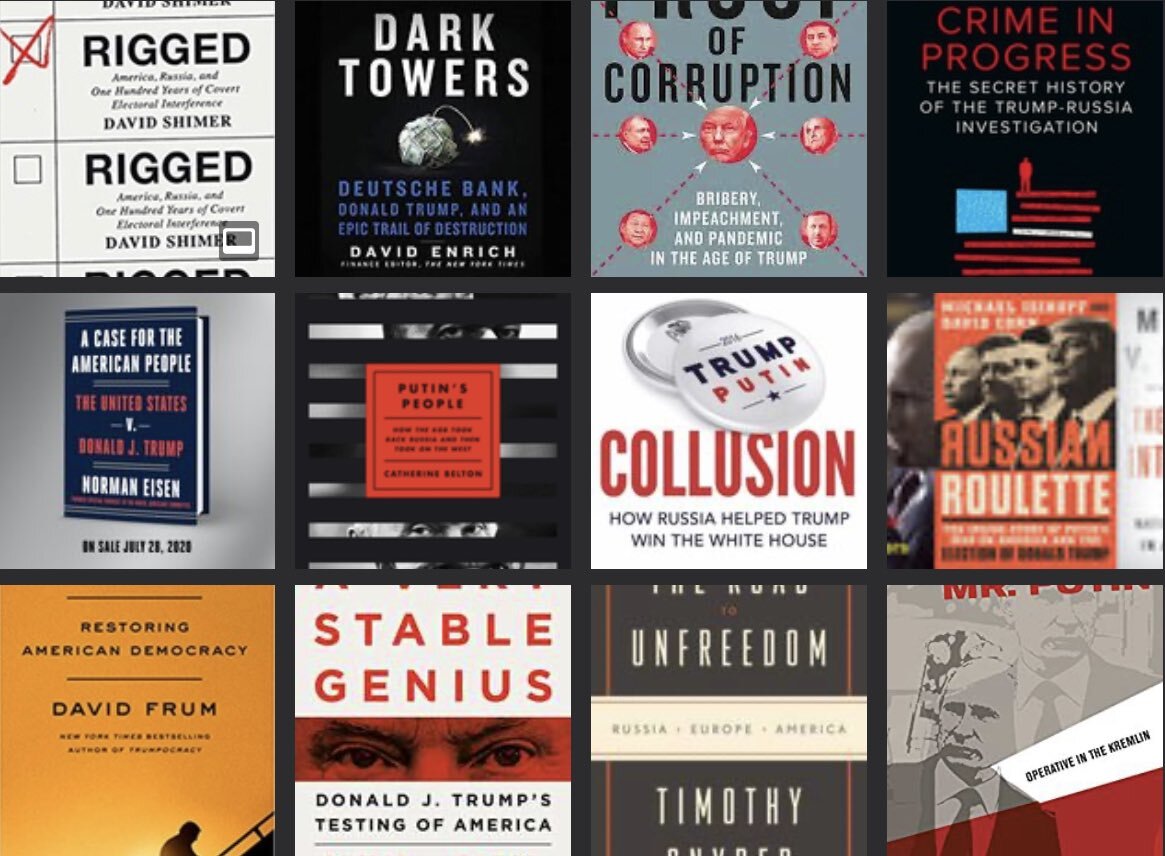
Our bookshelf of tomes about this dark chapter in American political history keeps growing…

ā€œAge Of Lies. Rigged. Cold War. Hot Peace. Dirty Money. Unfreedom. Shadow State. Red Notice. Stable Genius. Untold Story. Putin’s People. Crime In Progress. Secret Meetings. Dark Towers. Trail Of Destruction. Age of Trump.ā€
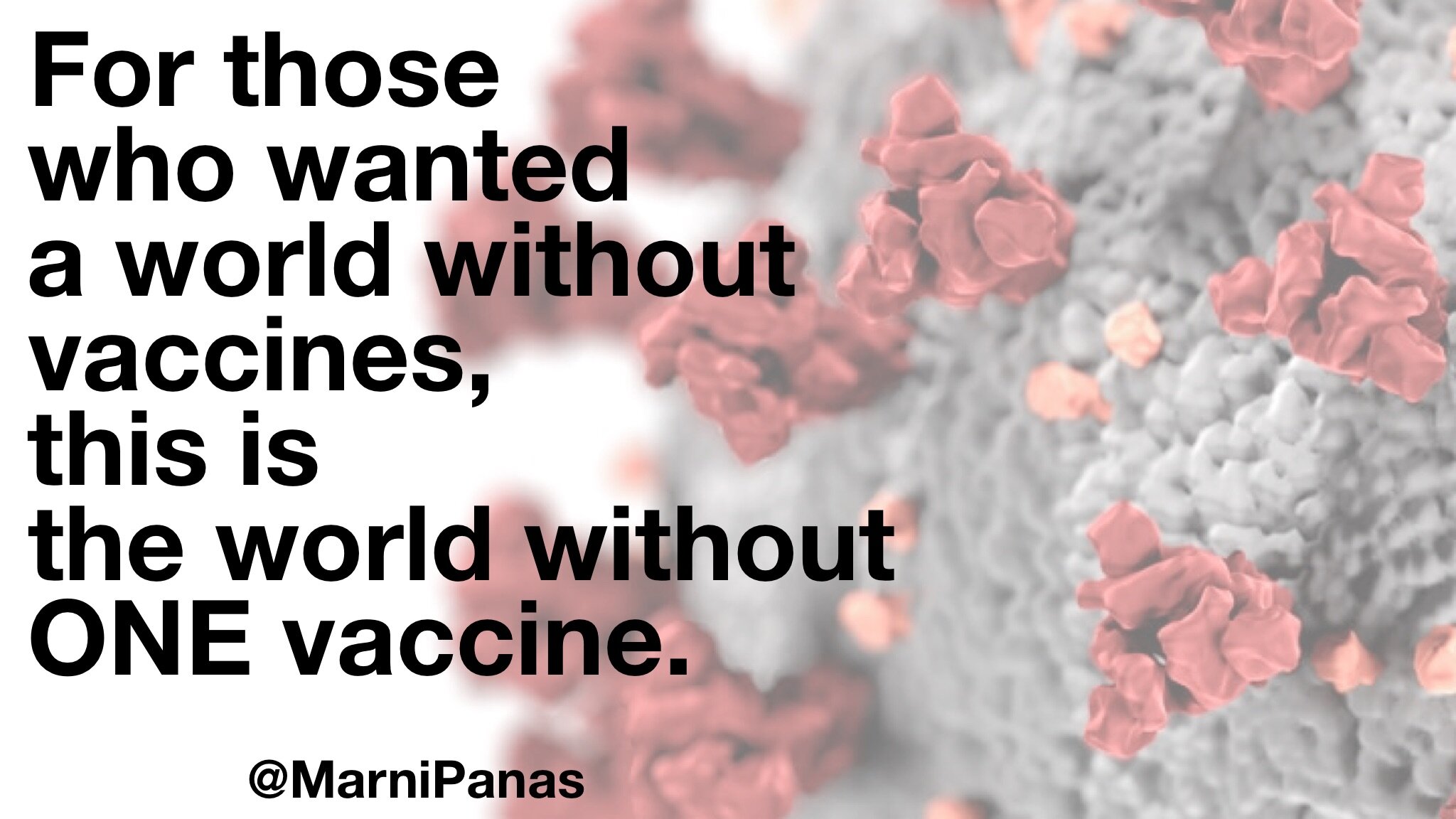
We’ll keep adding to it until this chapter of history is fully written & in the dustbin.

Here’s to the heroes among us who are going to bring us through.

Making early sense of the pandemic

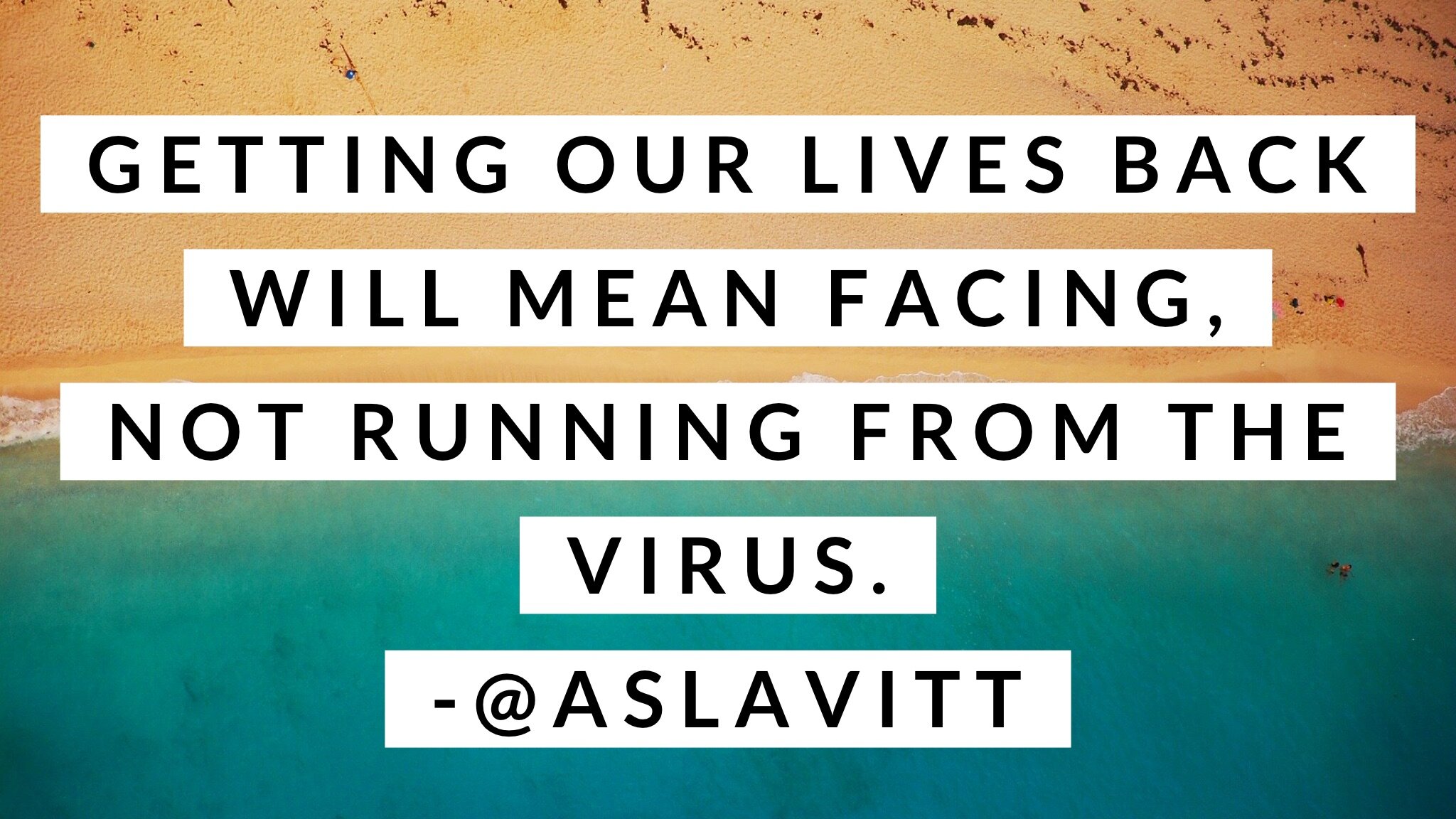
ā€œI saw the coronavirus coming in Januaryā€

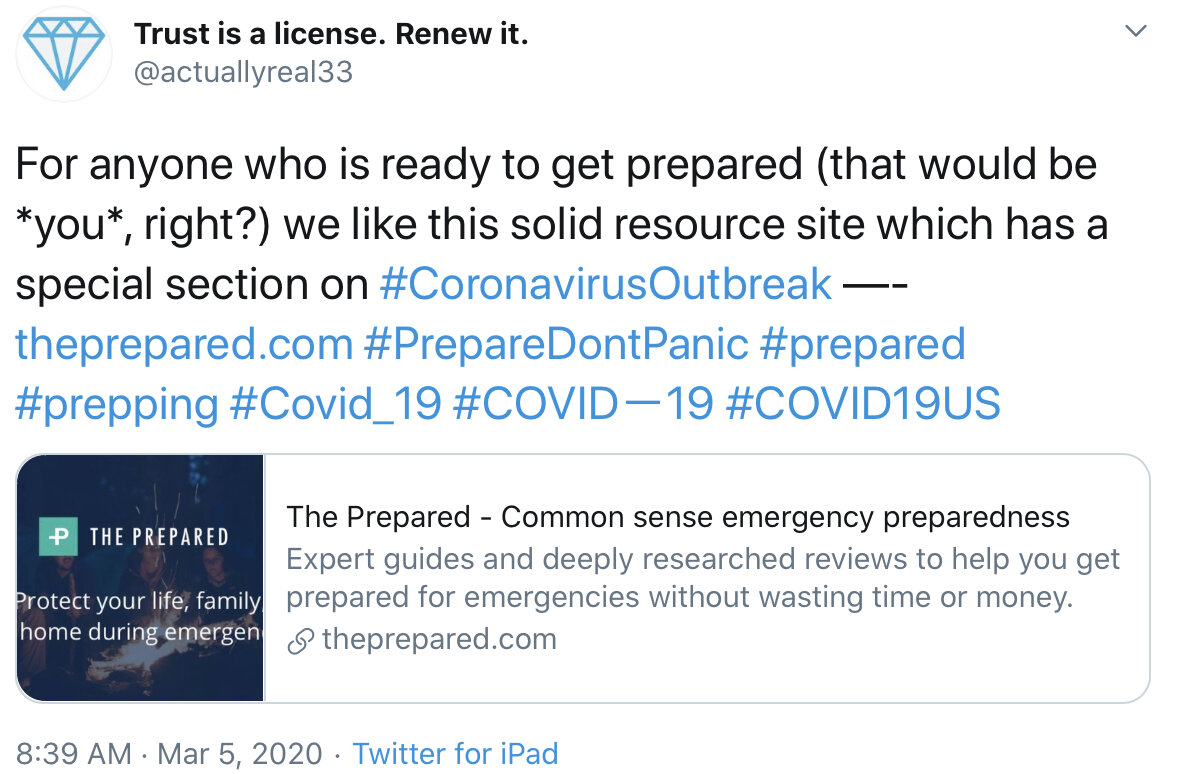
I saw the coronavirus coming in January and have been tracking the pandemic ever since. It’s been uniquely disturbing to see a mysterious wave of illness and death surging toward us, with far too many people refusing to face it.

~ Andrew M. Slavitt (former Acting Administrator of the Centers for Medicare and Medicaid Services)

~ Andrew M. Slavitt (former Acting Administrator of the Centers for Medicare and Medicaid Services)

ā€œA wave of illness and death is surging toward us with far too many people refusing to face itā€

I’d been looking to see which flus were coming out of China as my family members and business associates were heading to CES in Las Vegas in mid January. I wanted to know which bugs they might be dealing with at the massive consumer electronics trade show.

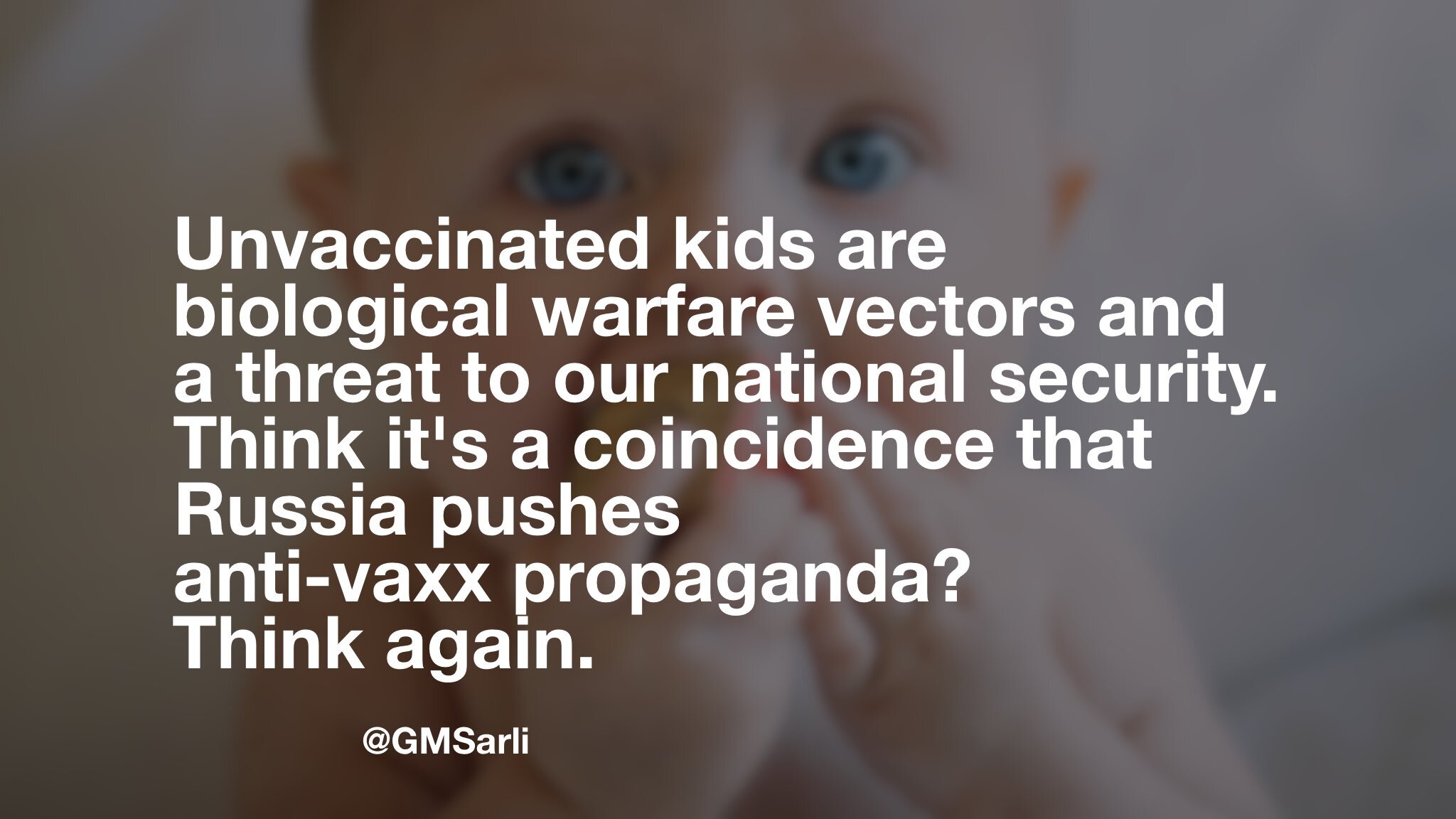
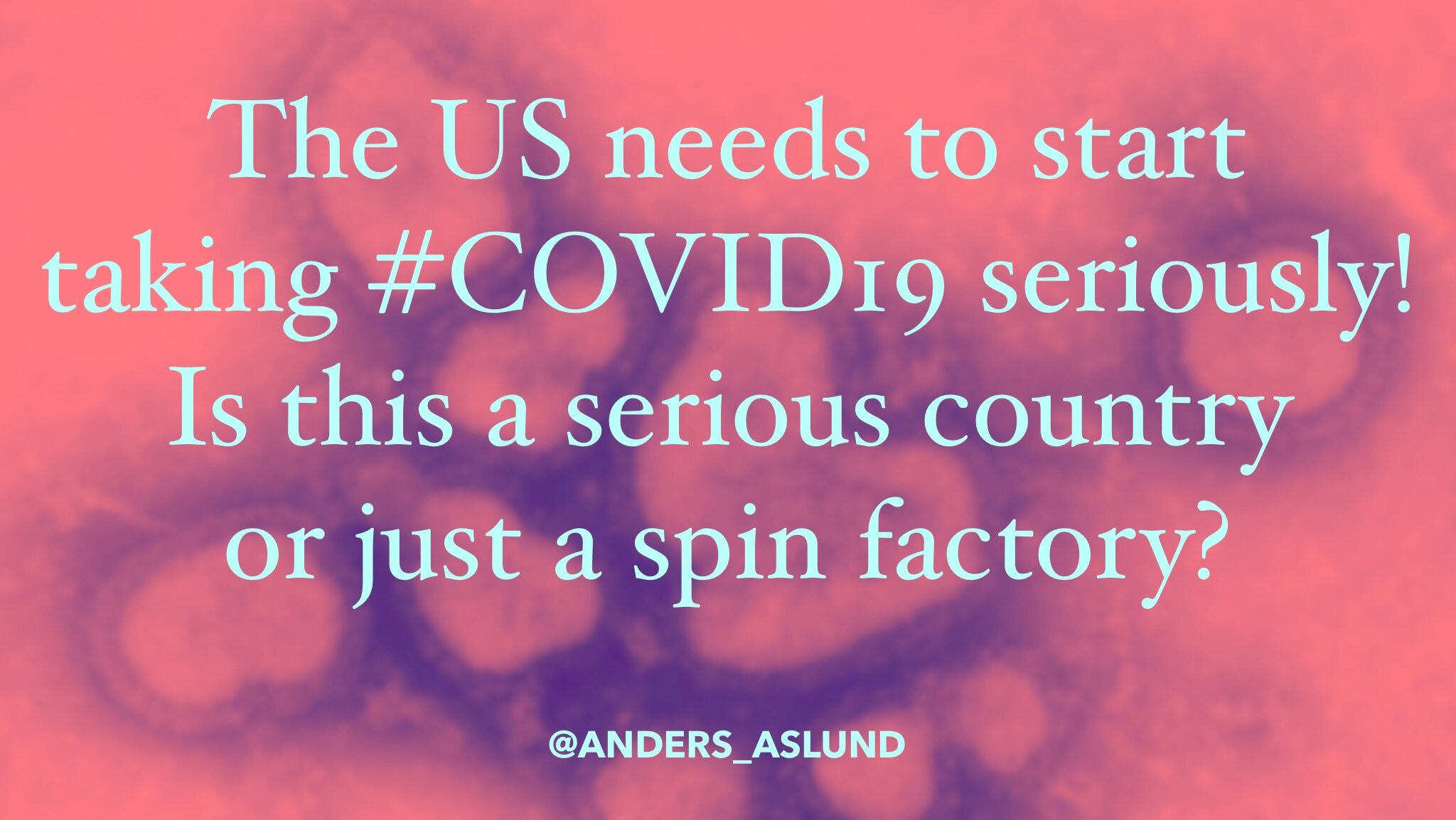
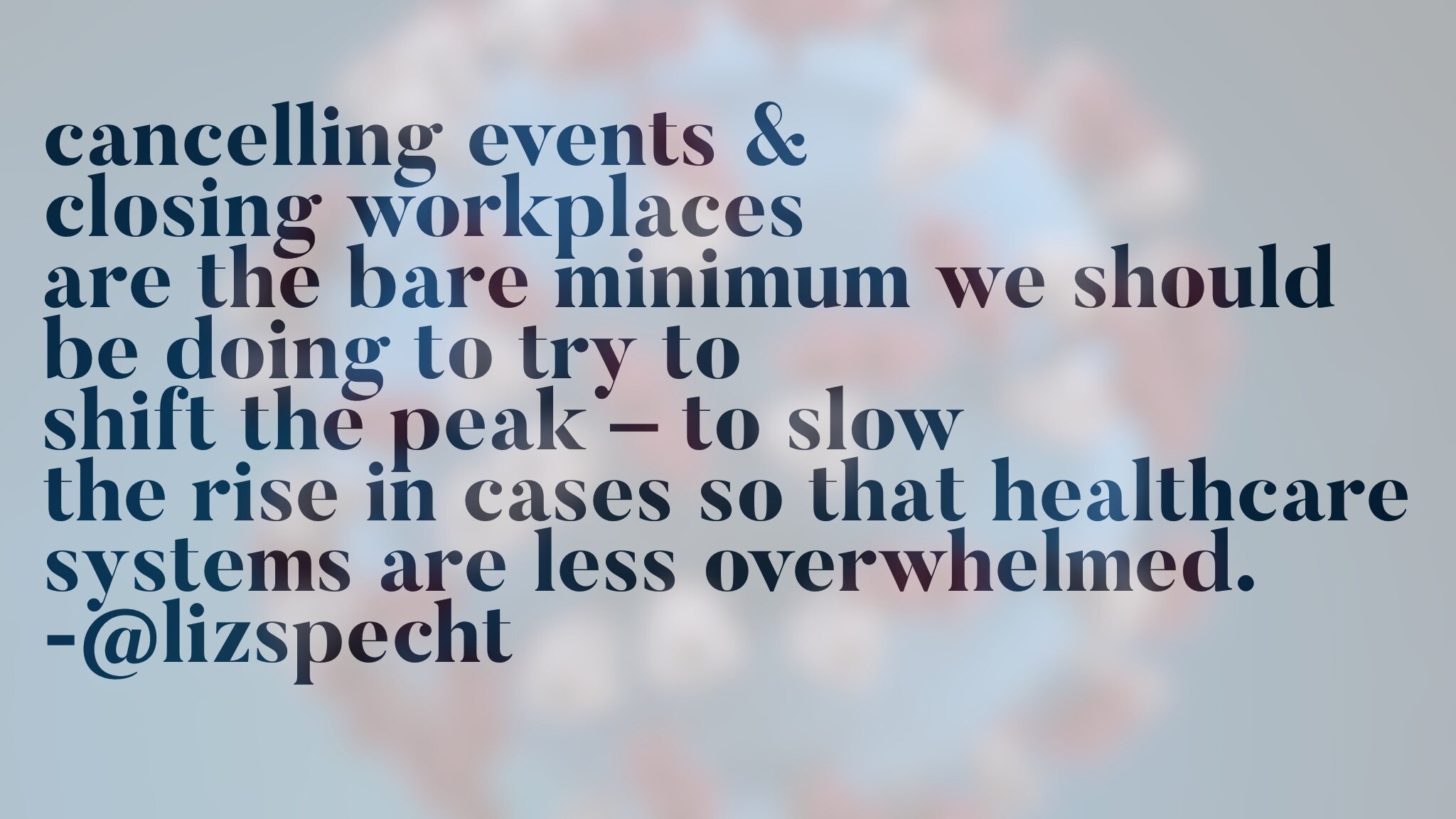
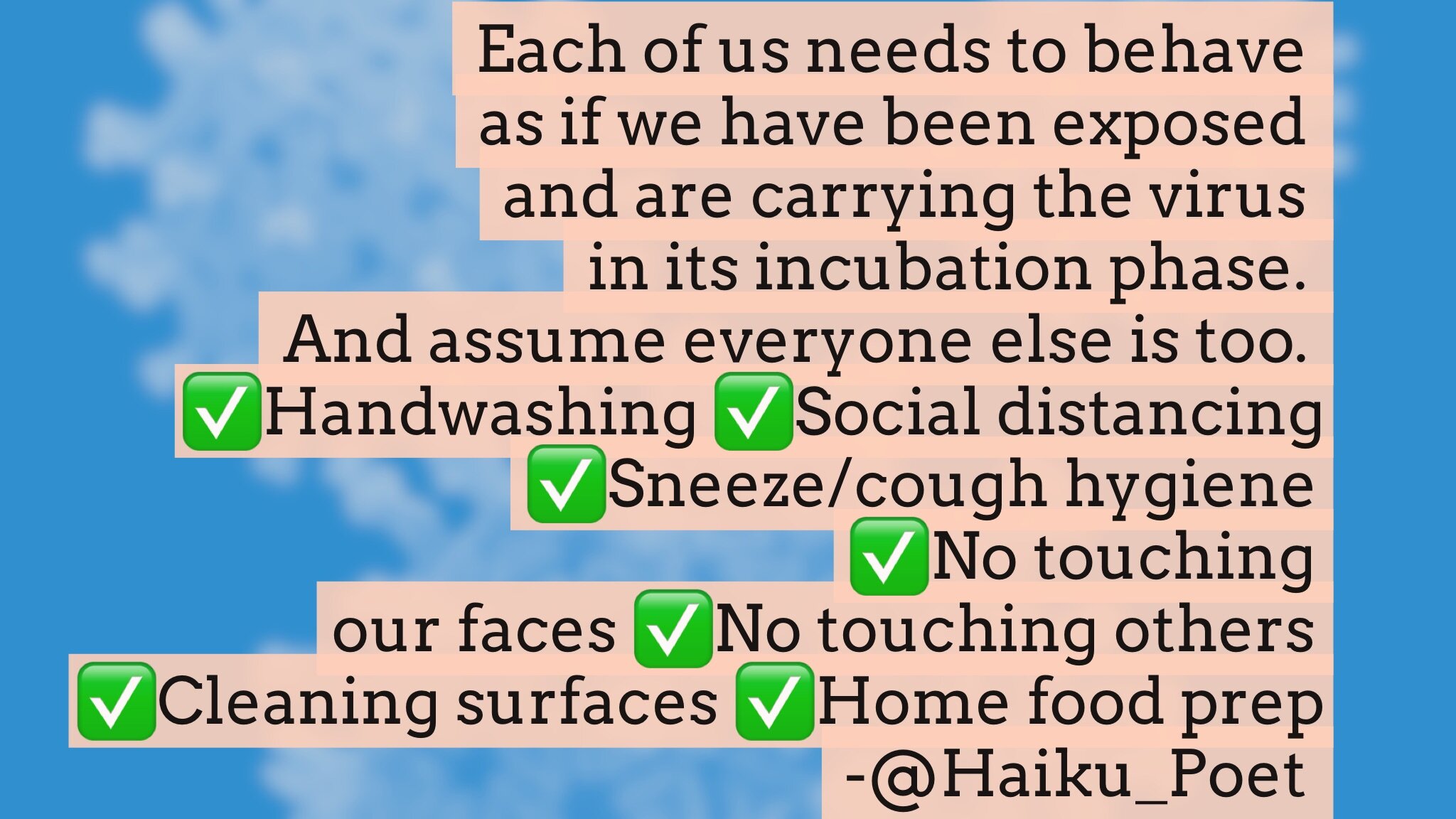
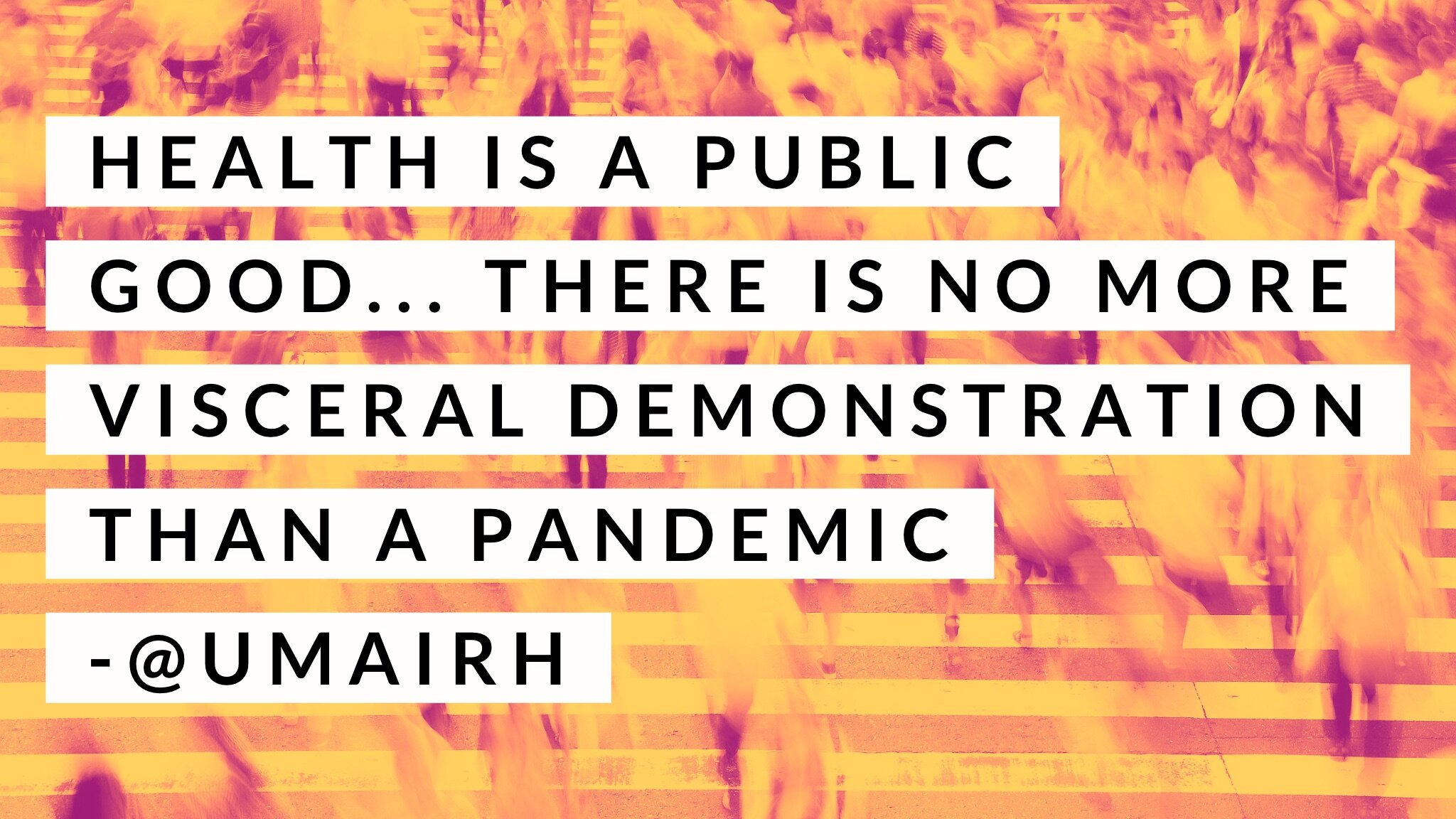
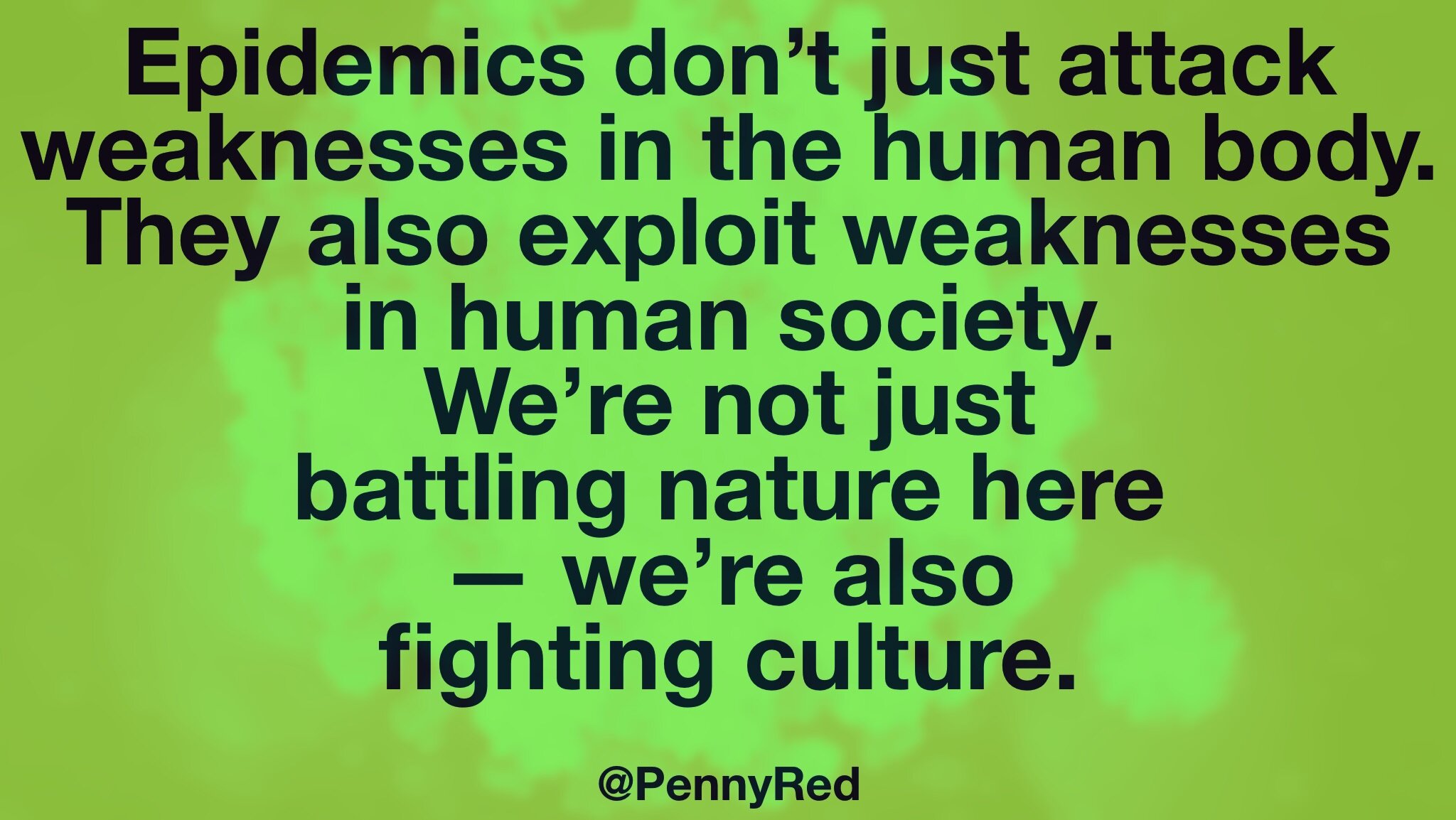
I’ve been highlighting points made on Twitter by various sources about the COVID-19 pandemic — and the antivax movement, which as it happens will be even more destructive a force in society with this true-blue no-vaccine killer virus on the loose.

So I found the pandemic in January. In February I found the general response we’d need to preserve our medical system and suppress the spread of the virus.

I'd discovered the below graph of Philadelphia vs. St. Louis deaths from the Spanish Flu, showing how social isolation helped depress the infections and deaths in one town while the other’s lax policy resulted in a spike of unnecessary deaths.

A response blueprint in February

I saw a German computer scientist share this Spanish Flu example of what we need to do as a society to flatten the curve of COVID


Correct public health policy saves lives

A French multinational biotech company shared this study of how public health decisions saved citizens and flattened the curve of the Spanish Flu

It was great to see a Bloomberg deep dive on the same example when it came out a few weeks later, and the term ā€œflatten the curveā€ make its way into public health communications on COVID.

COVID RESOURCE LIST

Collecting resources for all in March

Click through to reach my list.

I also follow these COVID lists, click on their names to see: Kim Mai-Cutler and Brian Koppelman.

I started a Twitter list of COVID-19 expert sources in early March.

It seemed especially important to gather my own science and public safety sources (and follow other lists compiled by early pandemic watchers) at a time when the president and far too many government leaders were ignoring or downplaying the disastrous and monumental impact of this virus on the planet’s human population. The disinformation campaign against early effective action will go down in history as a genocide.

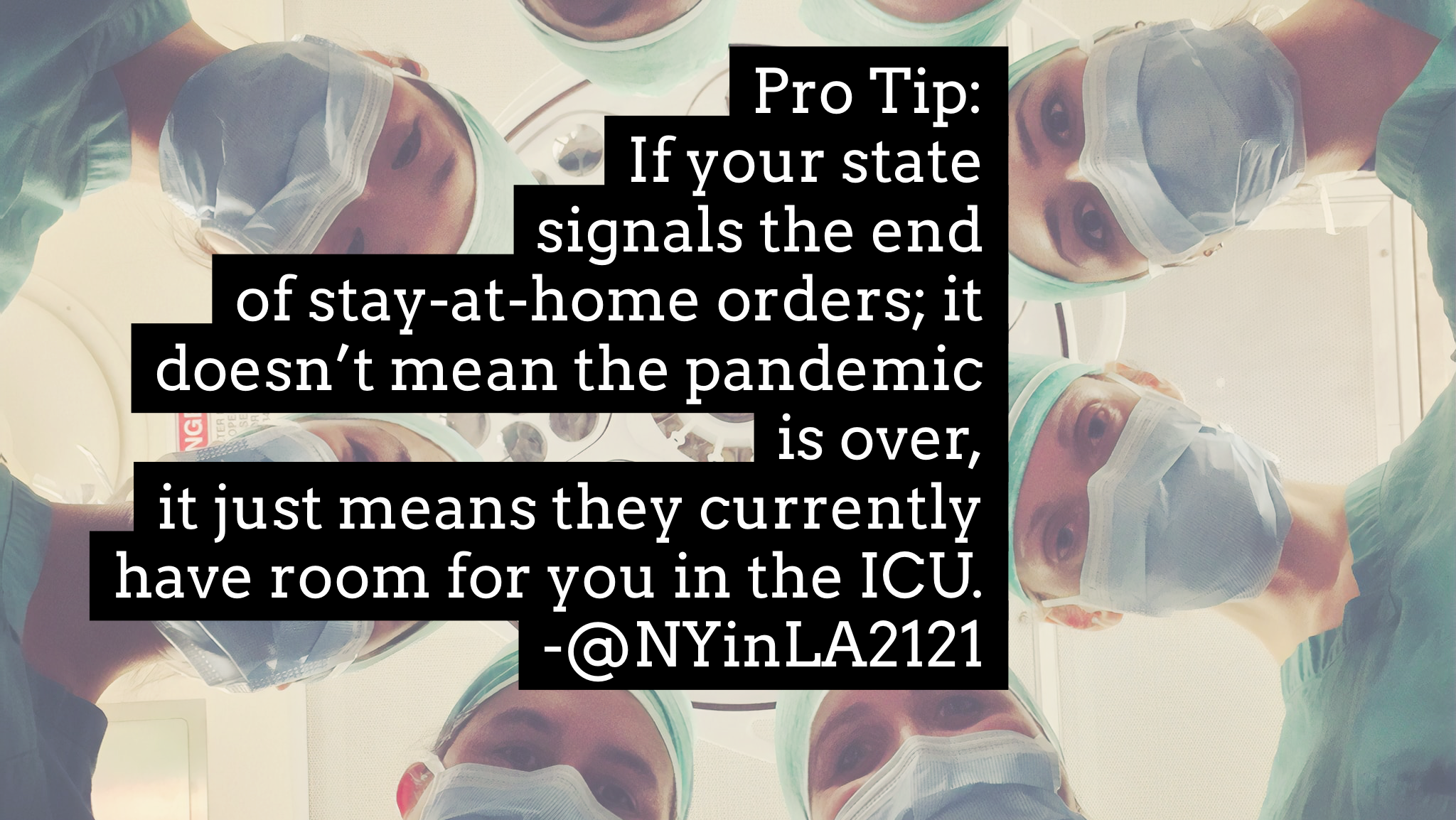
ā€œPeople said ā€œI don’t need that leaflet - I don’t live here.ā€
That’s ok, viruses love to travel! ā€

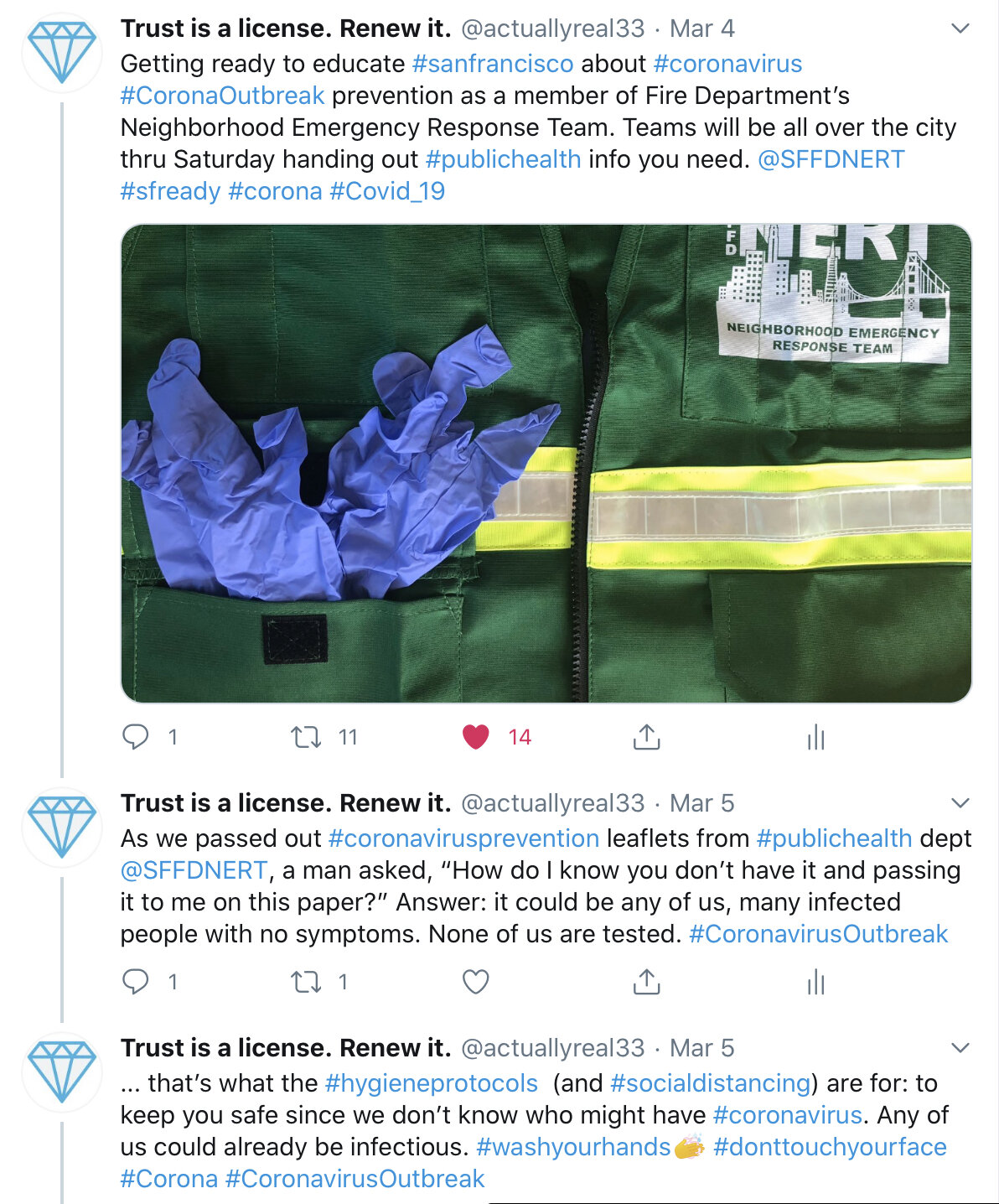
In early March I was activated by the Fire Department as an emergency response worker for disaster preparedness. SF had declared a health emergency the prior week. The activation meant passing out coronavirus health department leaflets downtown (wash your hands, don’t touch your face [impossible for humans I believe], elbow cough, make plans).

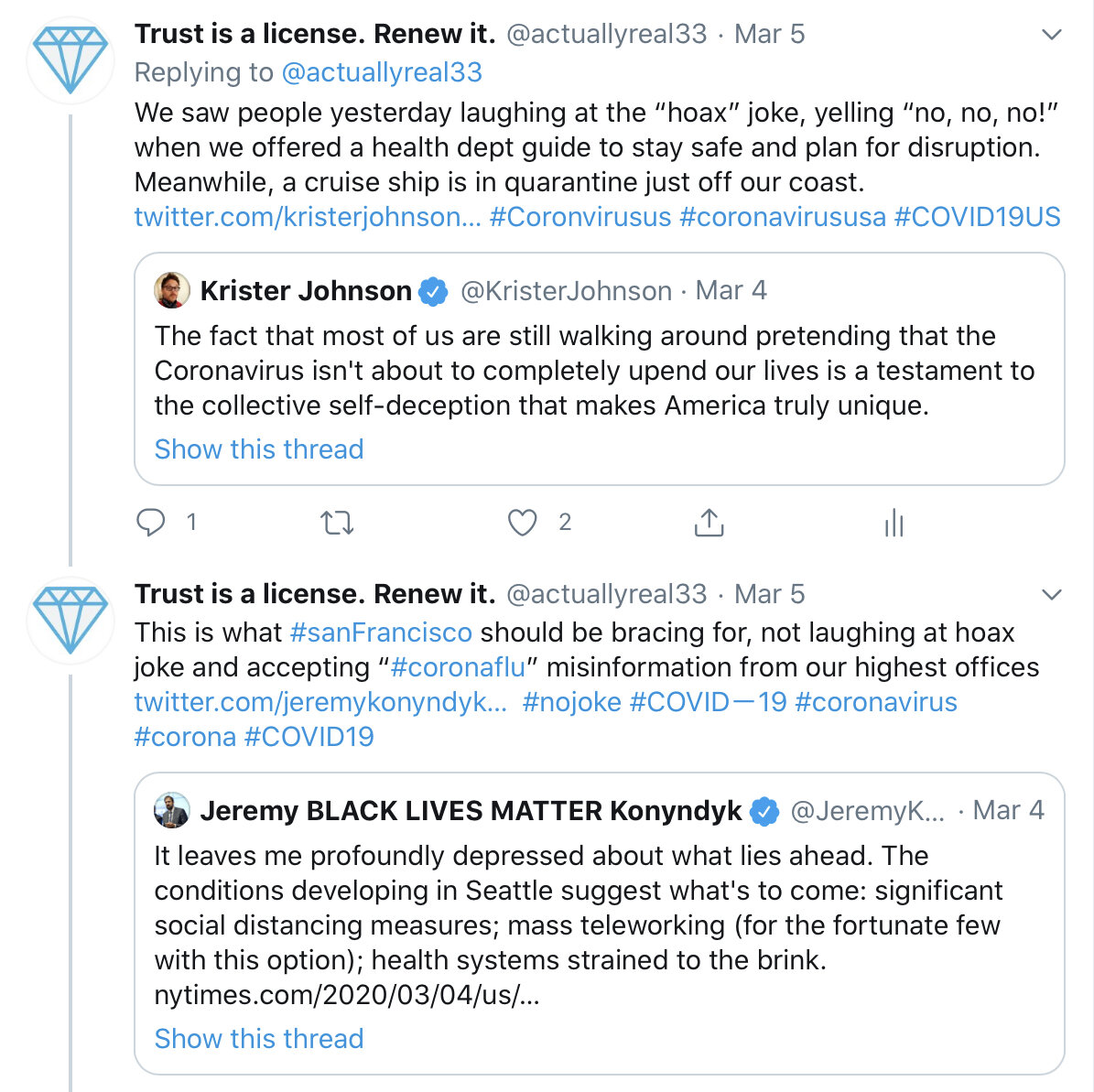
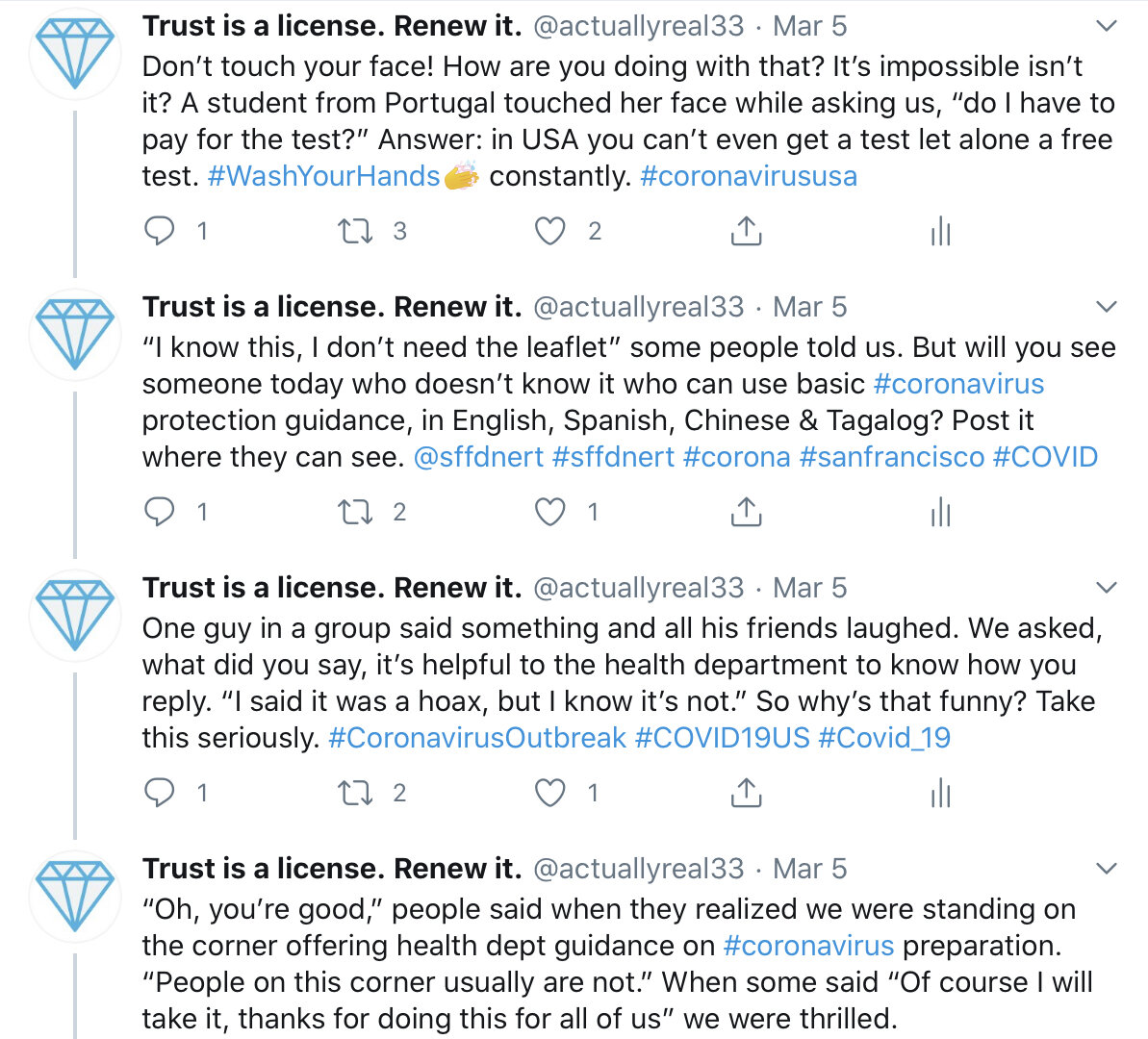
Handing out public health COVID preparation leaflets on that busy Financial District street corner was brutal. People didn’t want to hear it.

Some people laughed, some people said no!, some people said ā€œI don’t need that - I don’t live here.ā€ I thought, That’s ok, viruses love to travel! A handful were grateful and said ā€œhey thanks for doing this.ā€ They knew we’re all in it together and with 2 community transmission cases in SF that very day, the virus was already here, and also waiting in a cruise ship off the Golden Gate.

To be continued…

Mastodon