What If Disaster Heroes Were Just Well-Trained Neighbors & Friends?
Mapping Disaster Heroes to Real-Life Emergency Skills
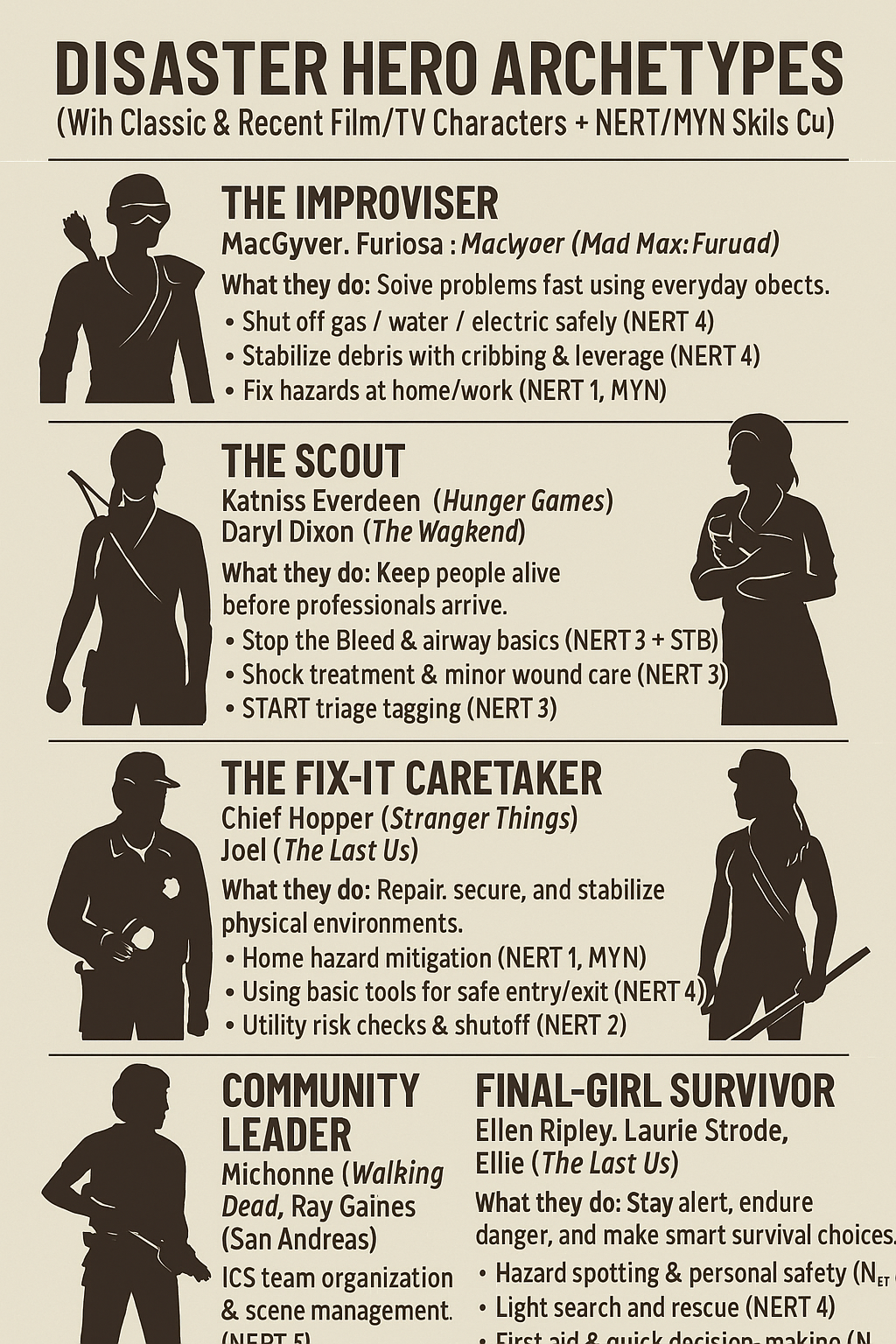
We all want a hero. Or maybe a hero type.
Besides wanting one nearby, I think many people also want to be the person who knows what to do. We just may not know how, or whether we could.
I’ve been thinking about preparedness communication and how to connect more people, especially younger people, with the free emergency training already available locally.
Popular culture already teaches people to admire preparedness. We just don't recognize those abilities as learnable civic skills.
Popular culture has already given us a vocabulary for these roles: the improviser, the scout, the caretaker, the community leader, the survivor. We recognize the person who stays calm, works with what is available, finds the injured, organizes the group, or gets others through the first hour.
My idea was to match those familiar and admired hero types with practical skills people can actually learn nearby and for free.
The image is an early exercise in that direction. It asks whether the abilities we admire in our favorite characters could be ordinary, teachable neighborhood skills.
Maybe the question is not whether you are heroic but what kind of helper you could learn to become?
Heroes aren’t born. They’re made.
Do you know the disaster hero skills you can learn for free in your neighborhood?
This image is unfinished. It’s an unproofed concept draft and contains the usual AI artifacts, misspellings, and imperfect matches. If I were to develop this concept further, I would verify the characters and storylines, refine the archetypes, and reconcile each example with the actual curricula. For now, I’m sharing the idea and a glimpse of the process.
New peer-reviewed research on Expat Harem is published
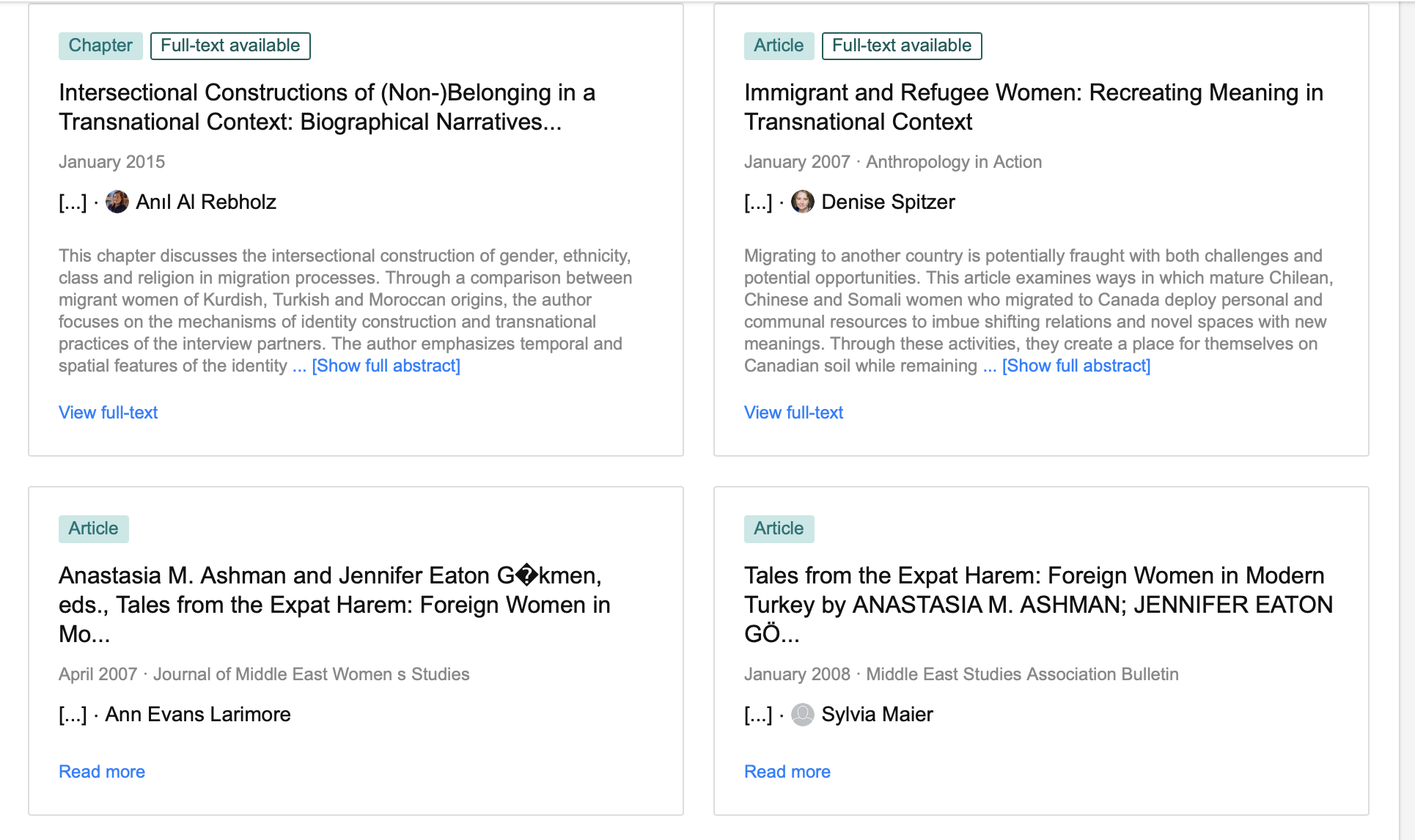
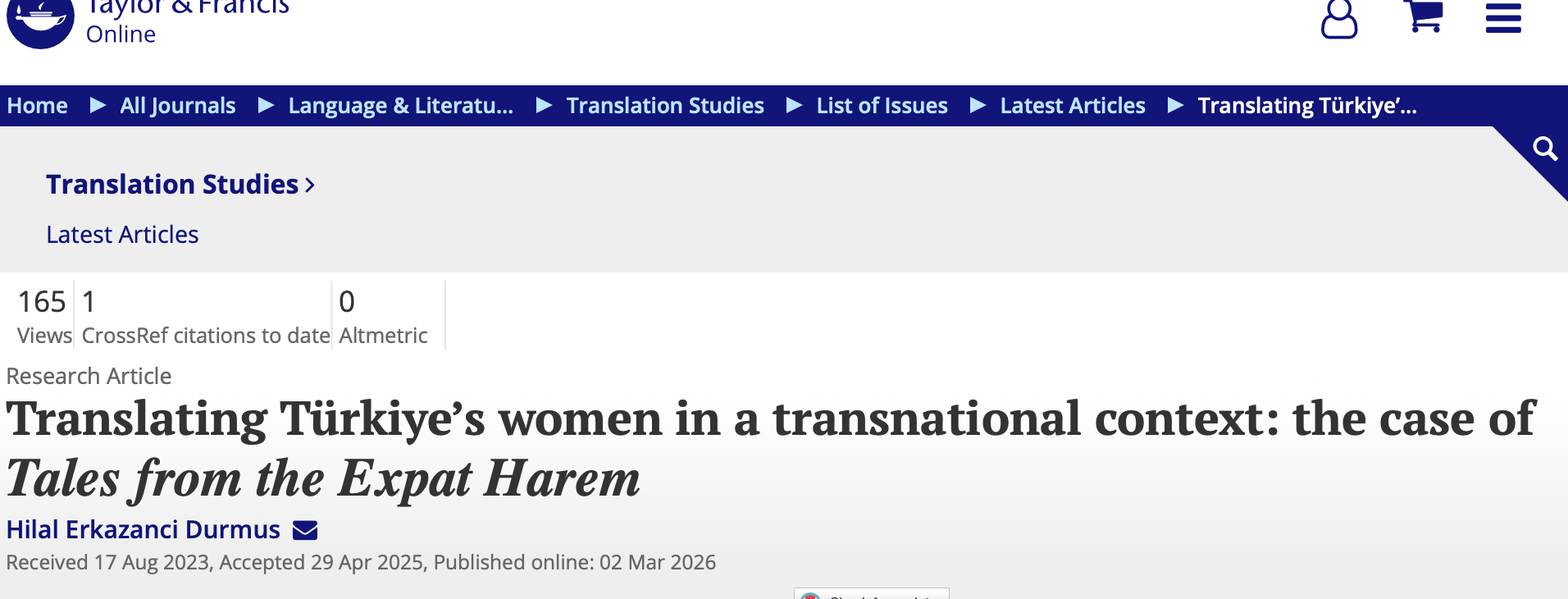
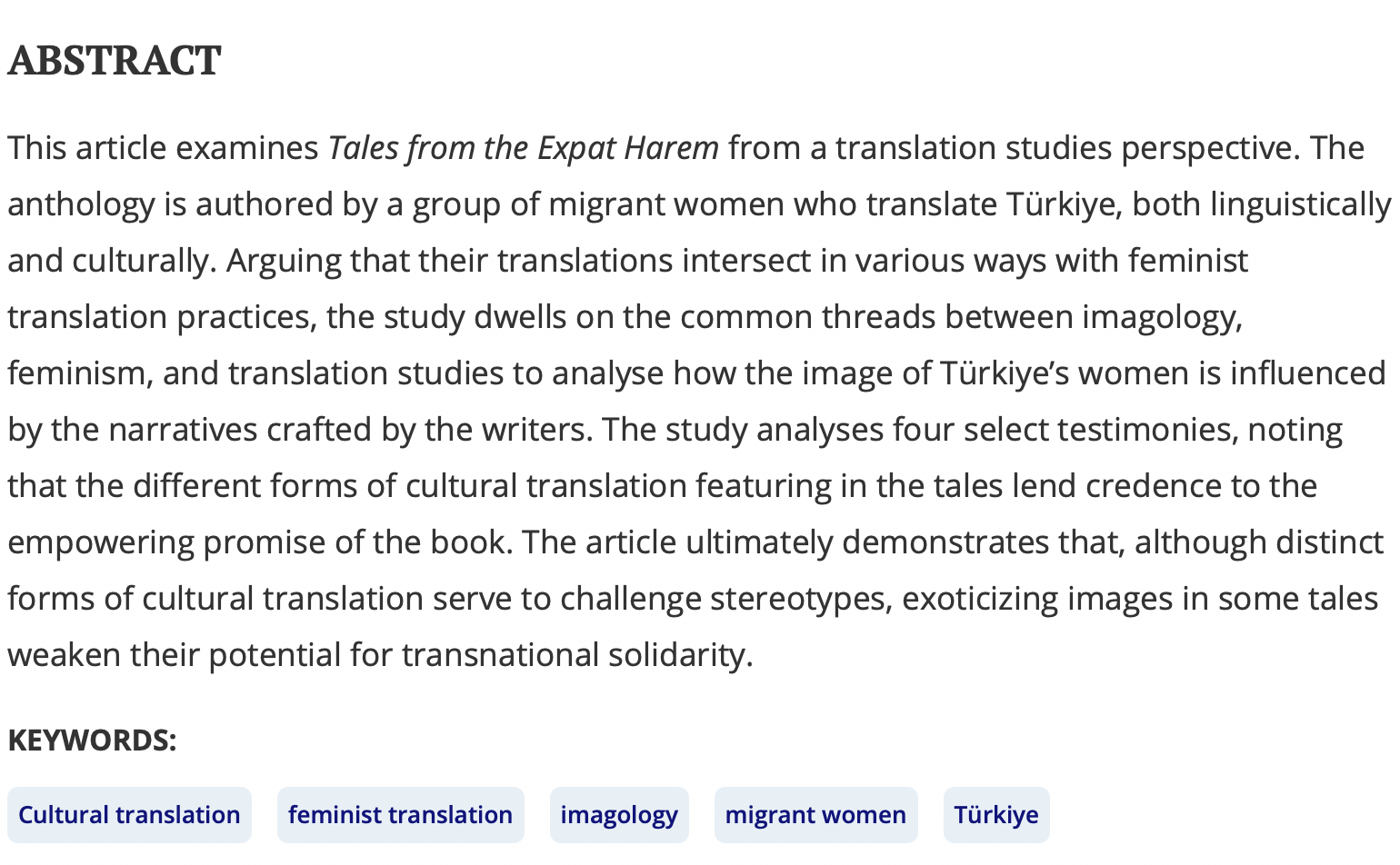
My book is 20 years old and currently undergoing a "renaissance" in academic circles. It looks to remain the gold standard for Turkish expat memoirs.
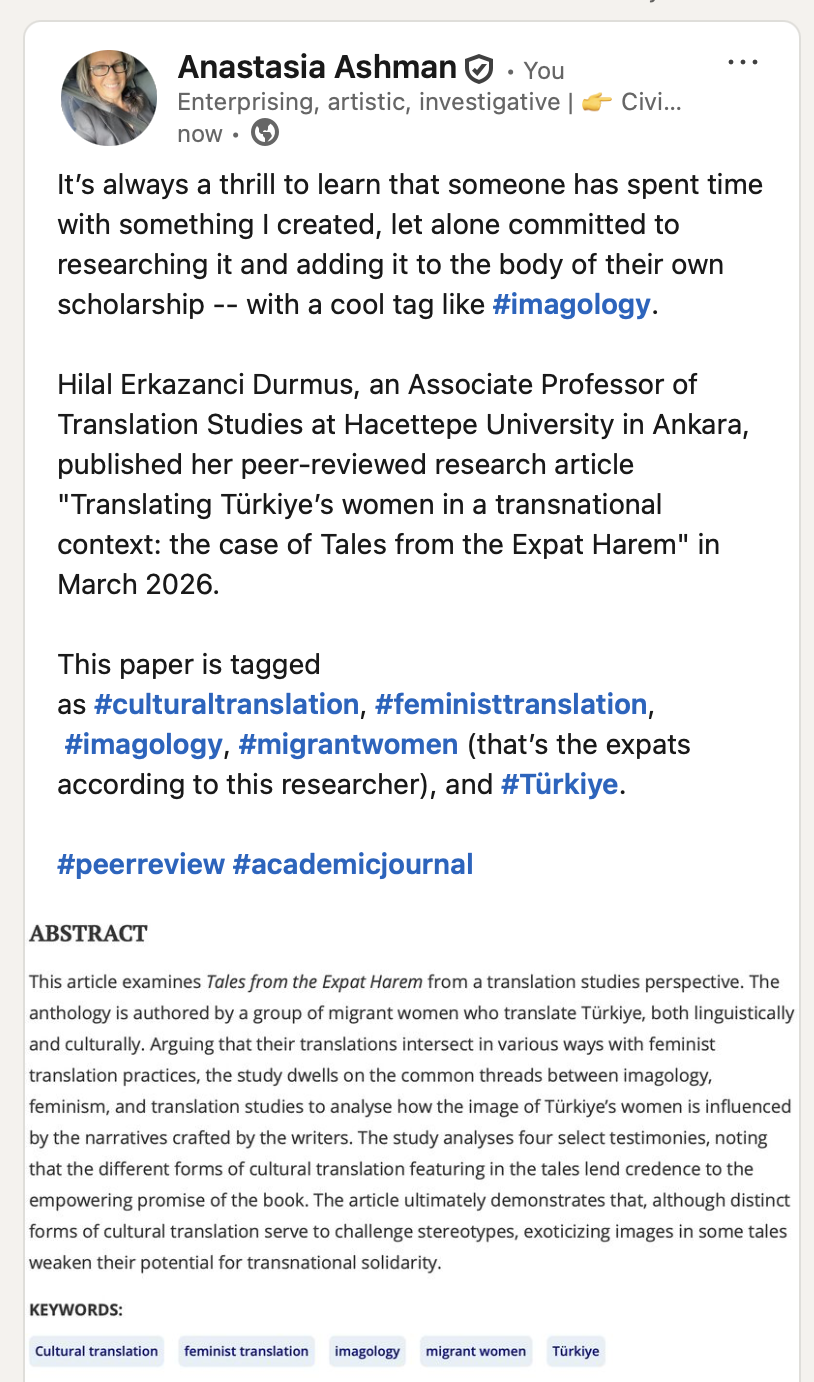
It’s always a thrill to learn that someone has spent time with something I created, let alone adding it to the body of their own scholarship with a cool tag like #imagology.
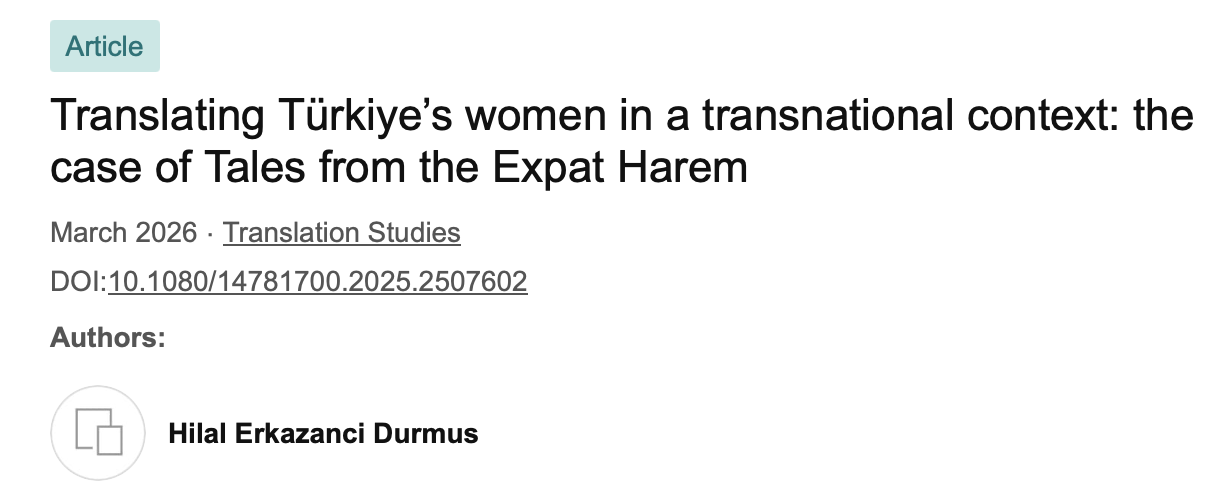
I just noticed a new academic research article on the anthology I co-edited more than twenty years ago. A peer-reviewed paper Translating Türkiye’s women in a transnational context: the case of Tales from the Expat Harem by Hilal Erkazanci Durmus, an Associate Professor of Translation Studies at Hacettepe University in Ankara, has been published in the Translation Studies Journal this spring, March 2026.
Her article examines Tales from the Expat Harem from a translation studies perspective, as a cultural product moving within a social network.
Professor Durmus examines the book through the lens of translation sociology, an investigation into translation as a social practice. It looks at the “agents" involved—translators and editors acting as active mediators and cross-cultural agents—and how our choices were shaped by the institutions, publishing demands, and power dynamics of the time.
The study examines how the authors "translate" Turkish culture and women’s roles for a global audience.
Her research explores the social, economic, and political factors that influence how stories like these are produced, distributed, and received. It’s a deep dive into how translations impact the global circulation of ideas, especially when moving between major languages and cultures.
Professor Durmus teaches undergraduate and graduate courses on translation sociology and discourse, and her paper is tagged with some fascinating identifiers: cultural translation, feminist translation, imagology, migrant women (the "expats," in academic terms), and Türkiye.
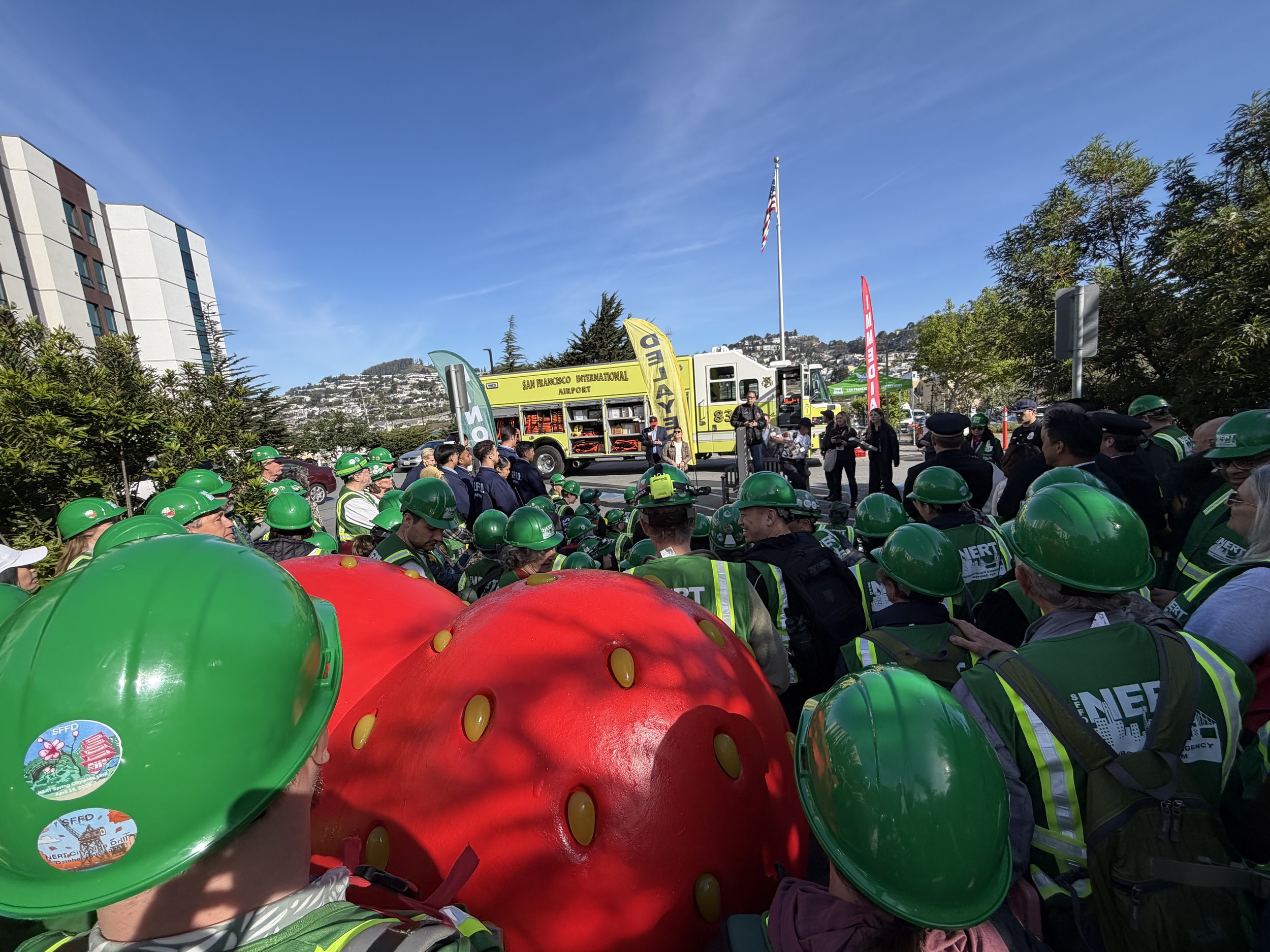
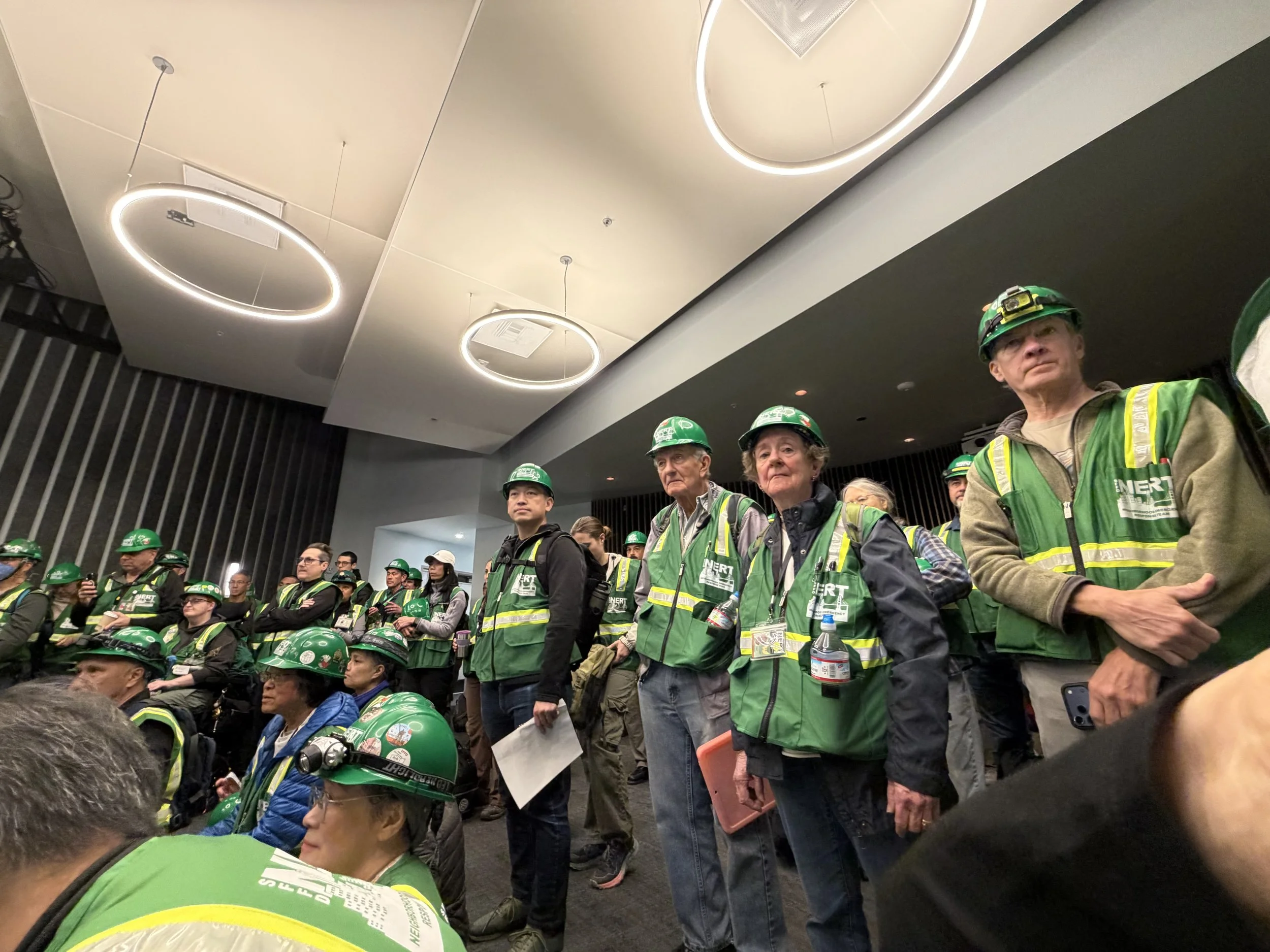
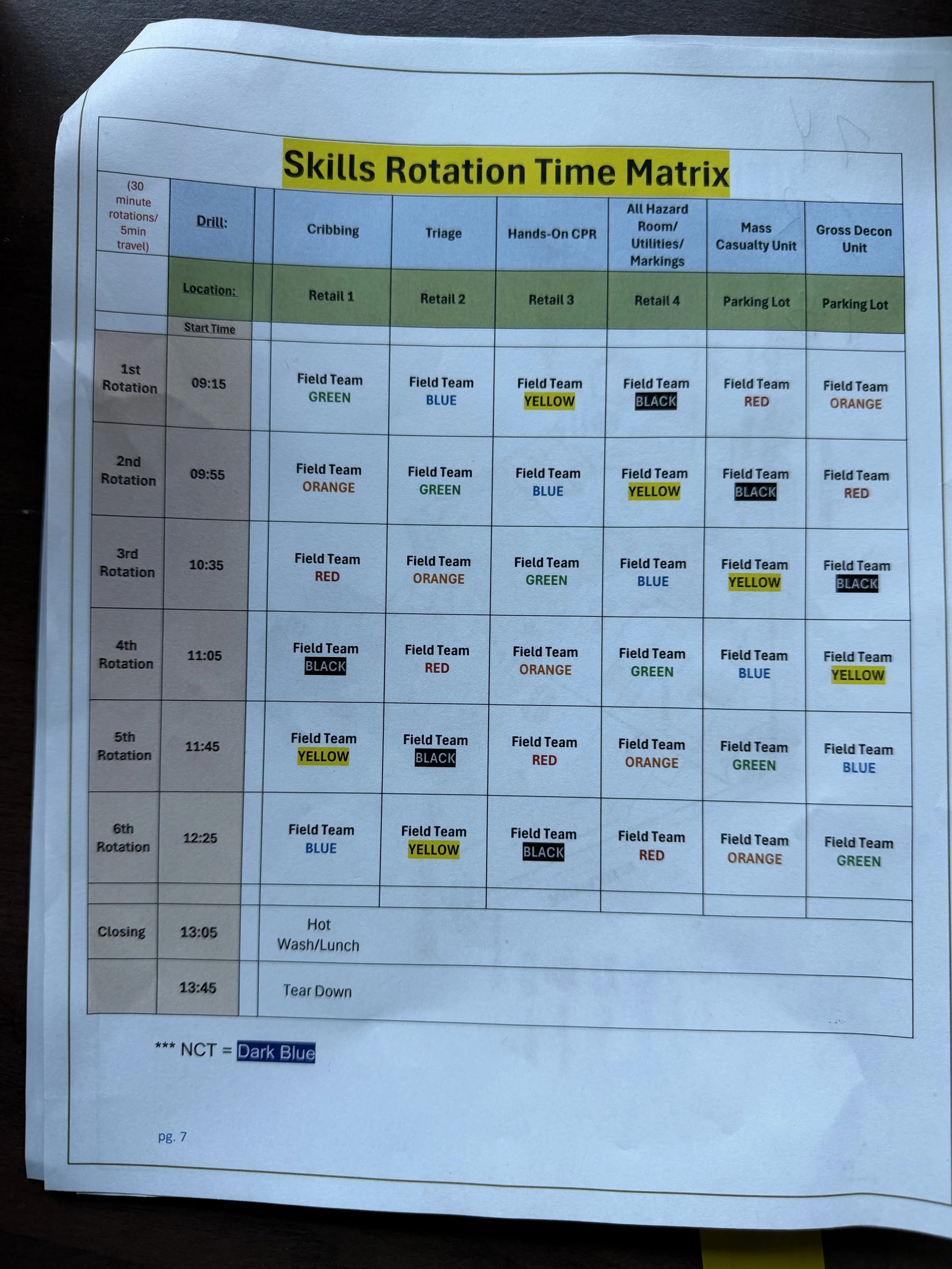
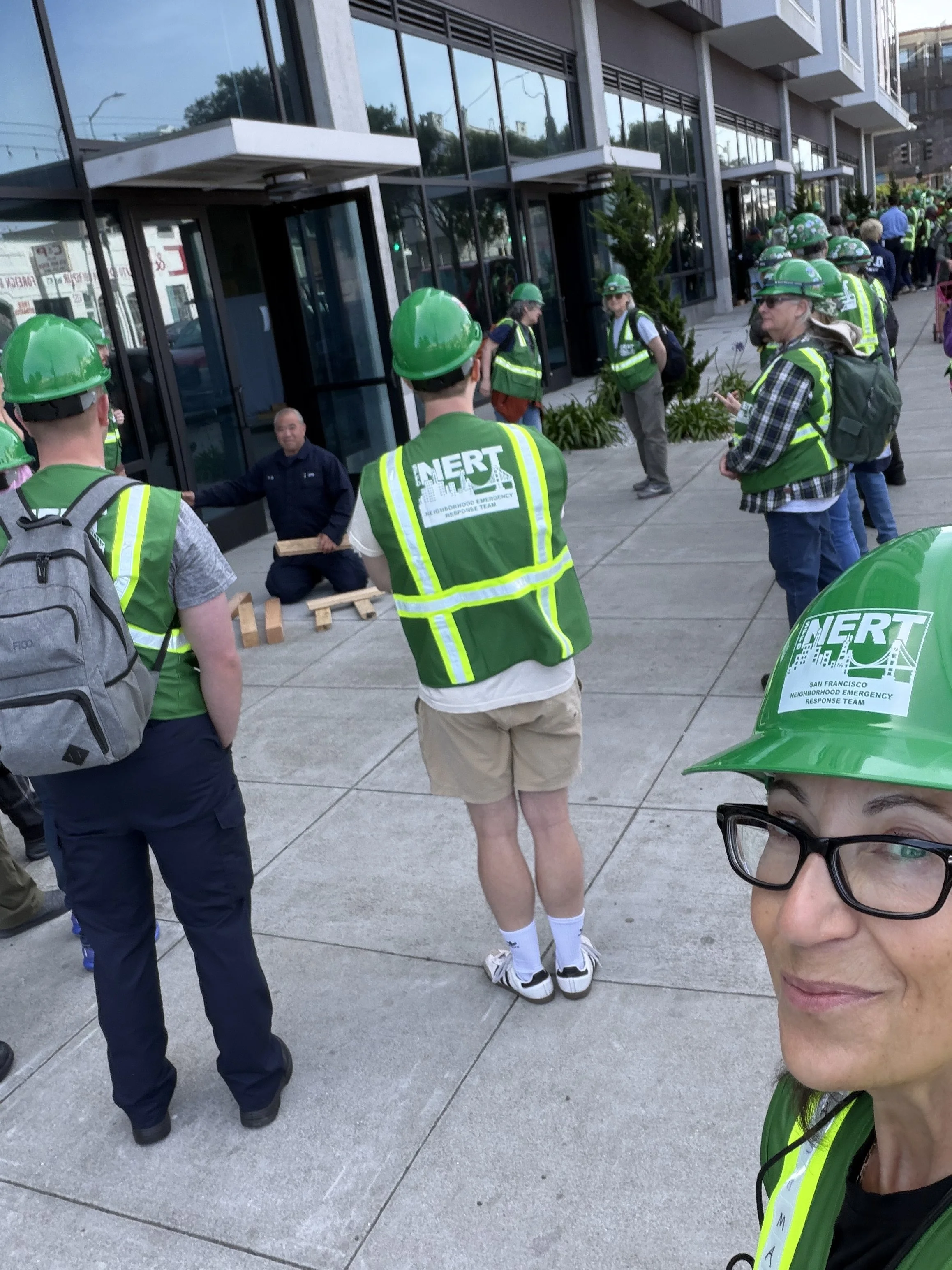
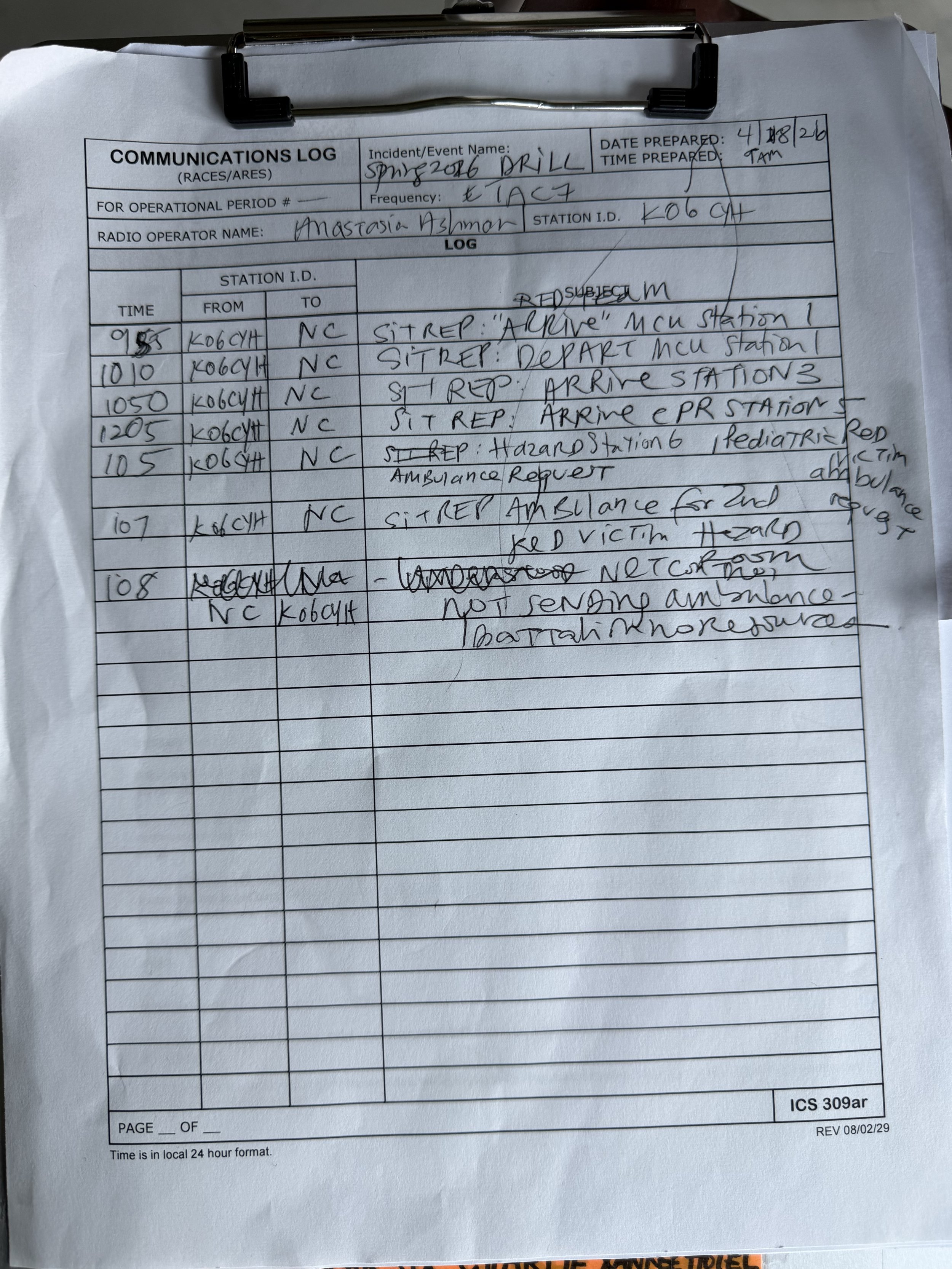
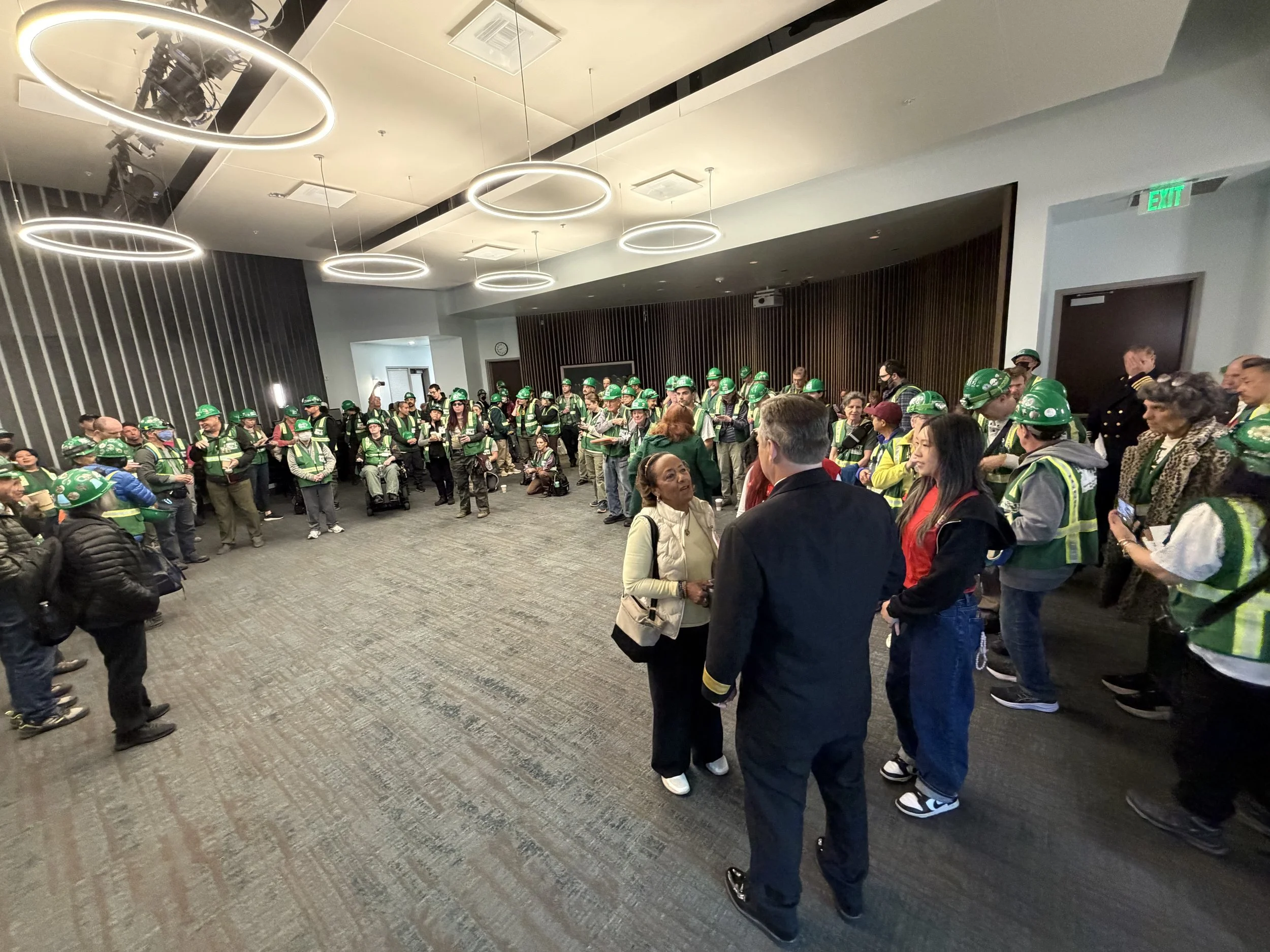
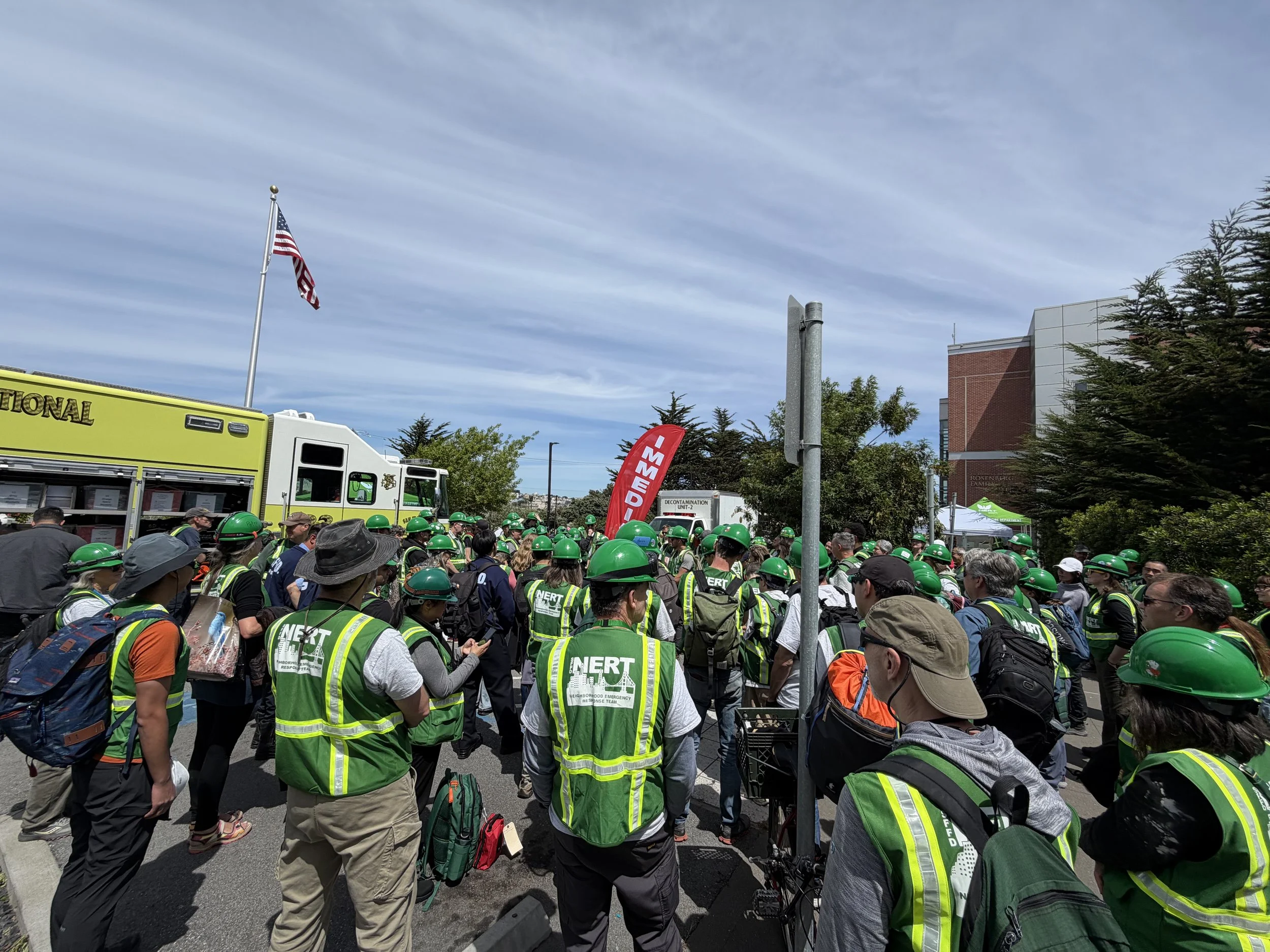
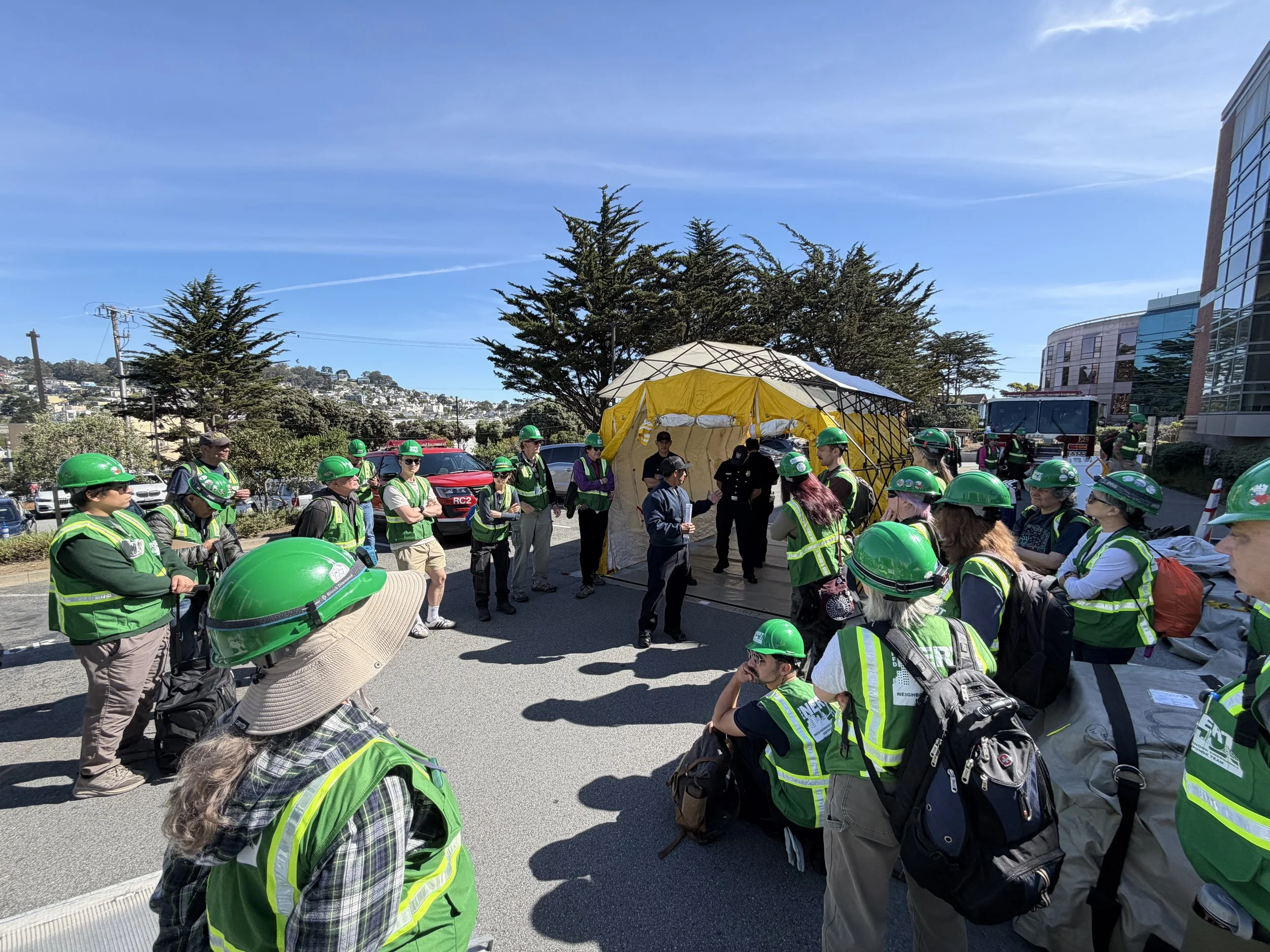
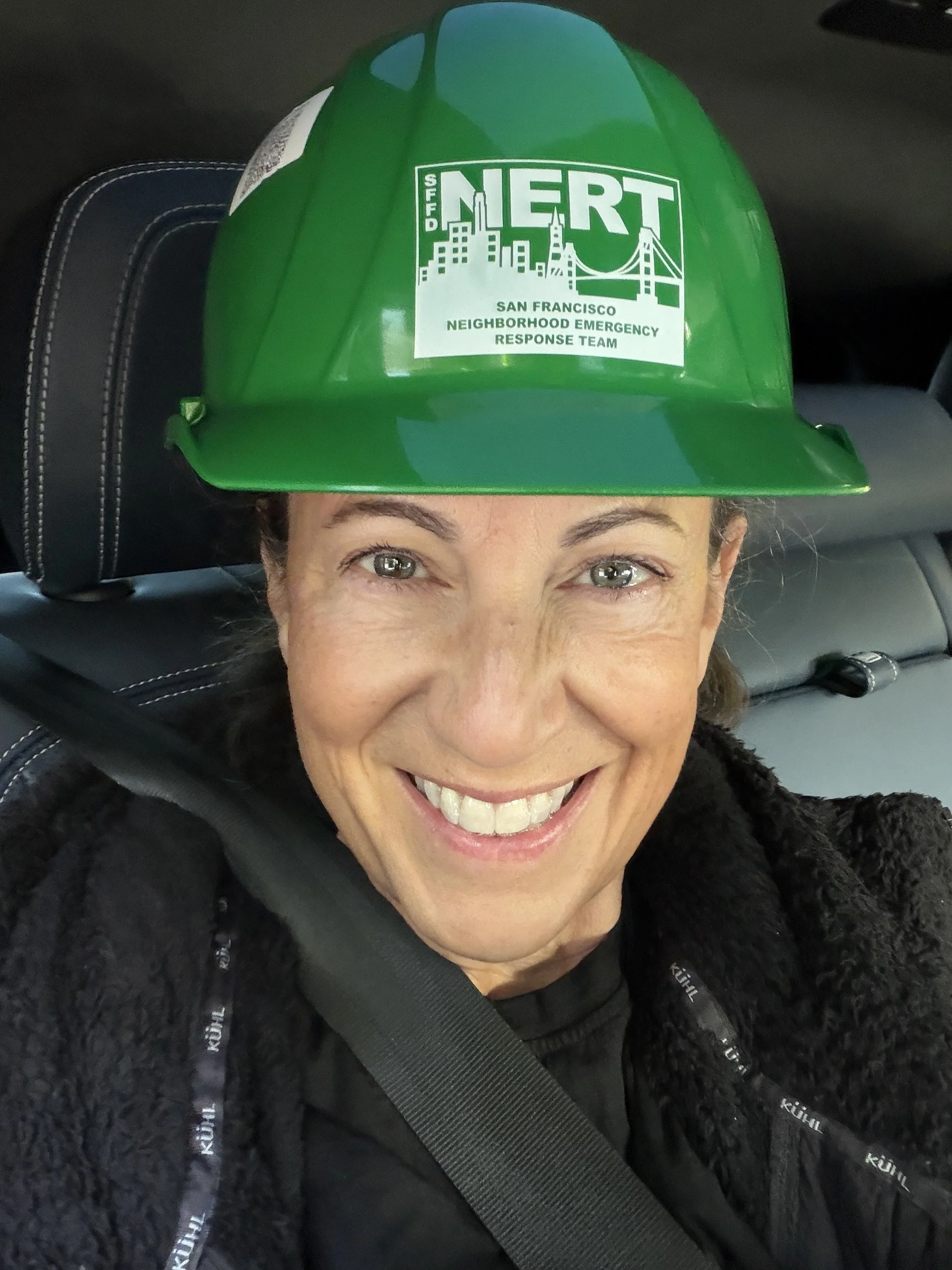
Joining the first D2 Open House
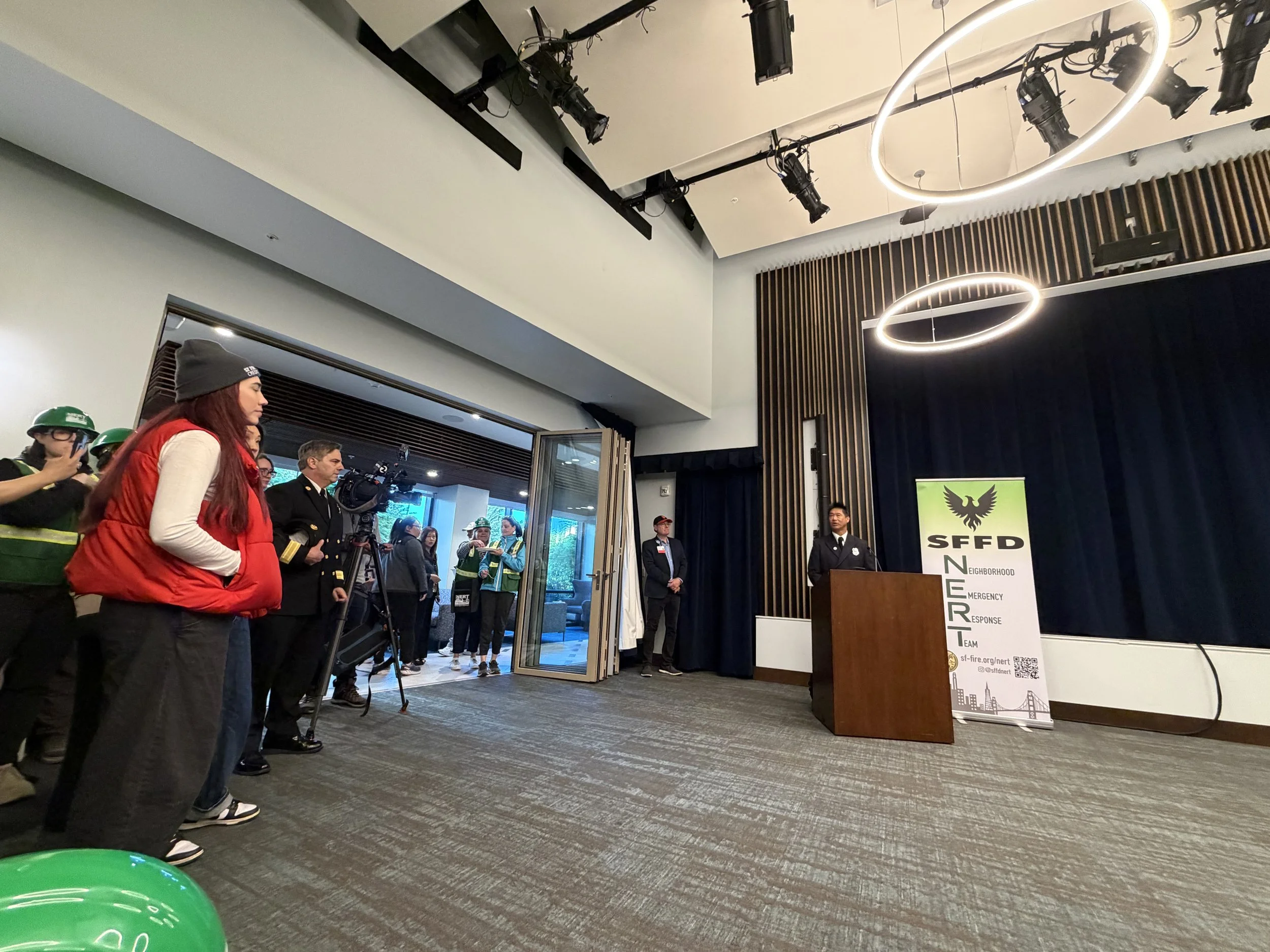
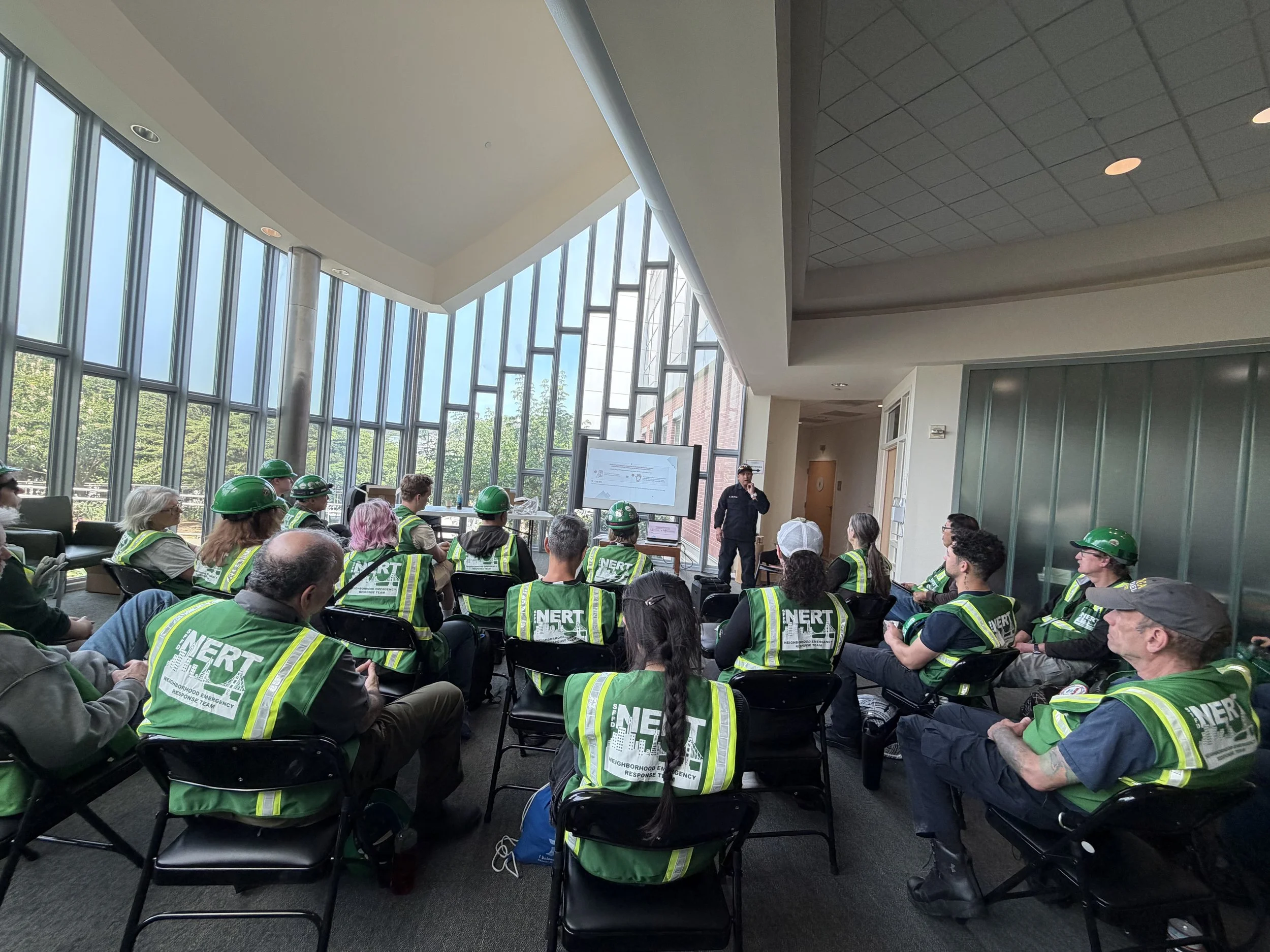
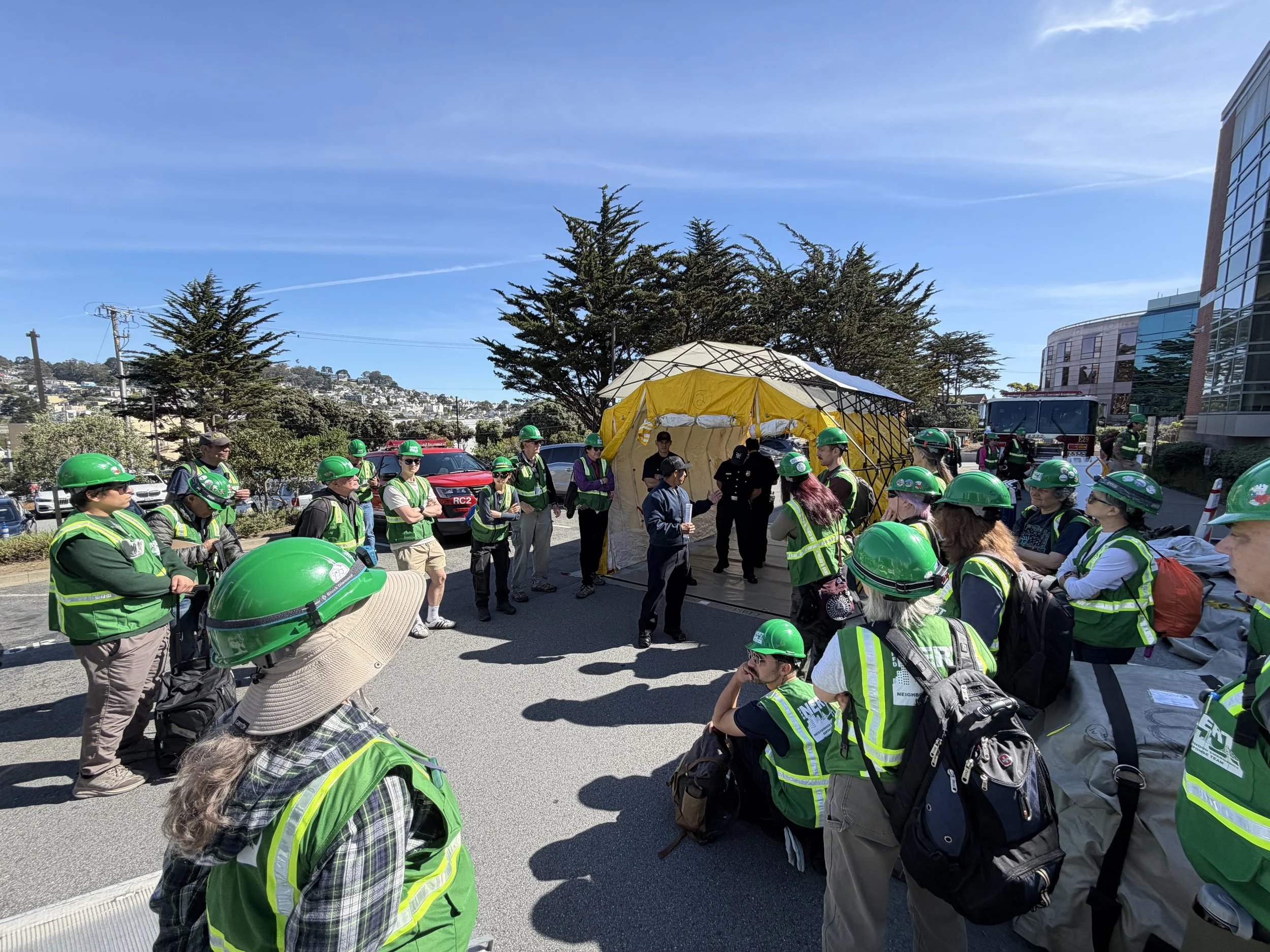
This week marked the first-ever District 2 Open House at Fort Mason. Organized by Jack Hebb, the communications director for Supervisor Stephen Sherrill, who I got to know last year organizing the D2 Map Your Neighborhood event at the Palace of Fine Arts.
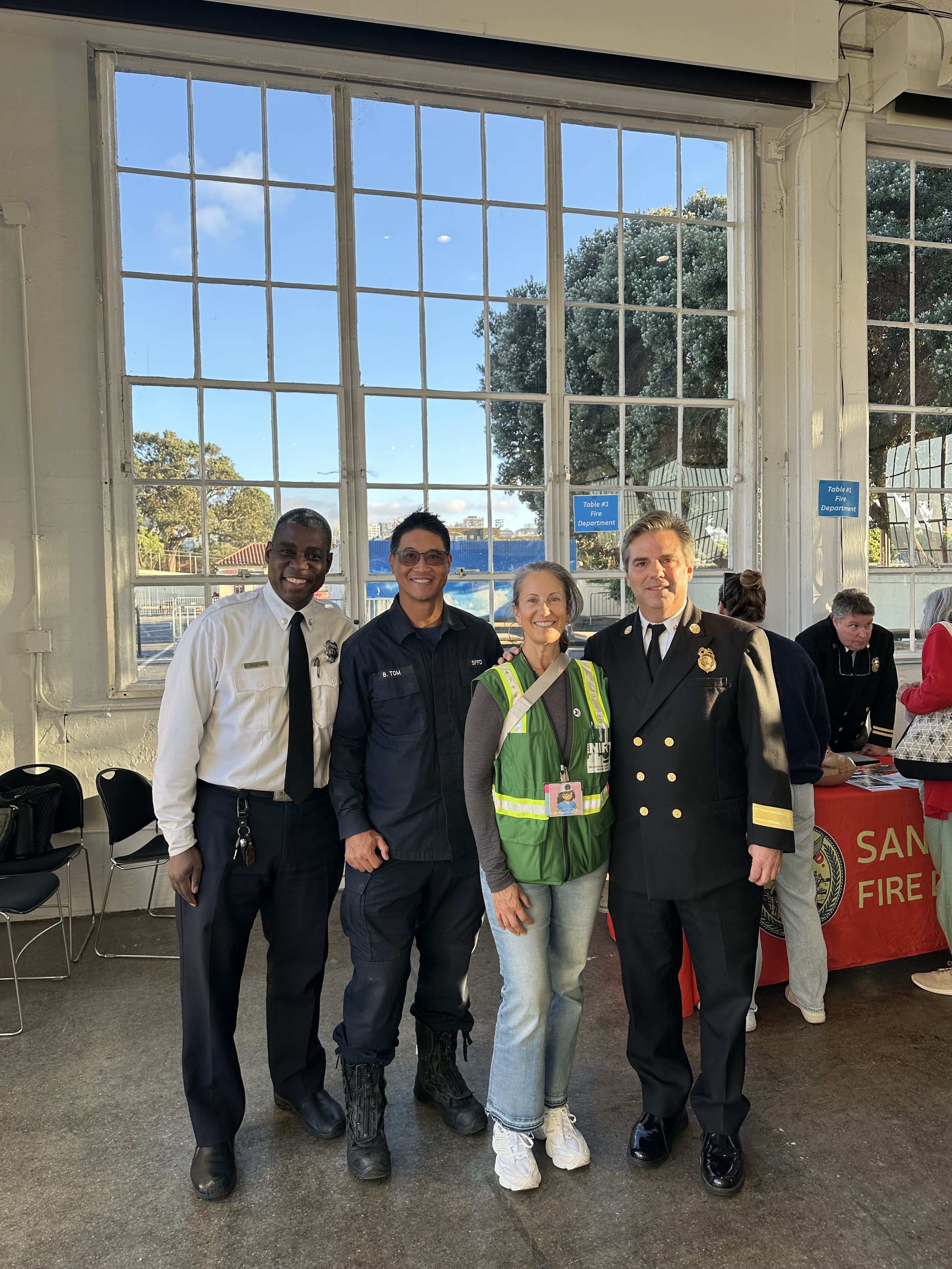
SFFD Captain Hashim Anderson, Captain Brandon Tom, me, and Fire Chief Dean Crispen. Assistant Fire Marshall Kathy Arnold can be seen at the table assisting residents.
The Mayor Daniel Lurie, District Attorney Brooke Jenkins, and Supervisor Stephen Sherrill spoke about public safety to the crowd that assembled with only a few hours notice. There were tables from multiple city departments, like Police and Parks and Public Works and Emergency Management, ready to answer and assist with permits, grants, and inquiries.
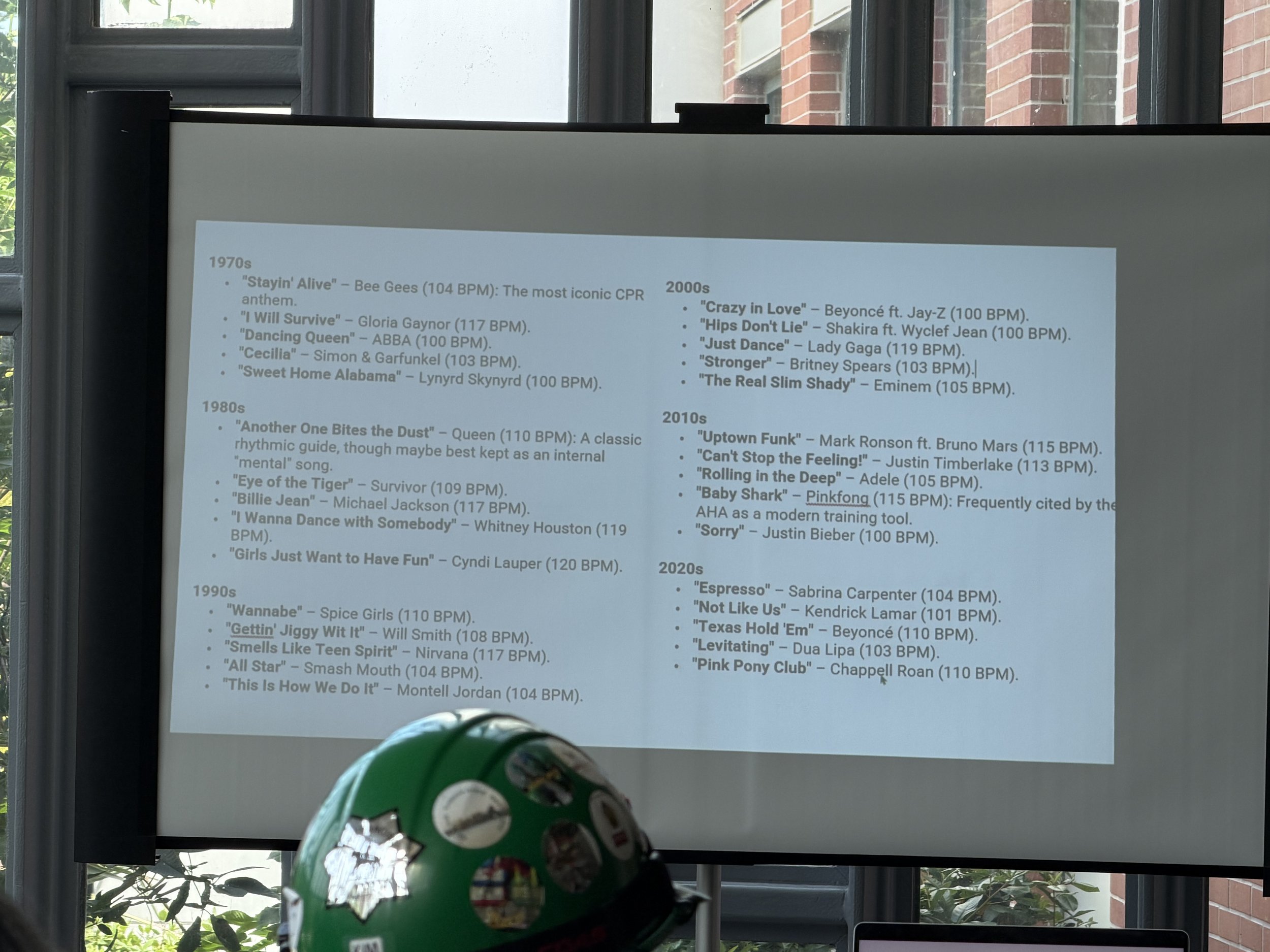
The Fire Dept invited me to table with them to meet my District 2 neighbors in my initiative to revitalize emergency response in this area. The table was rounded out by EMT Alia Dong-Stewart who taught CPR to attendees and Assistant Fire Marshall Kathy Harold who keeps the city up to code. As you can see I wore the vest, the only neon green in the room so easy to find if you wanted to connect with me! Granted, it was also easy to find DA Jenkins. She was wearing head to toe fuchsia and heels.
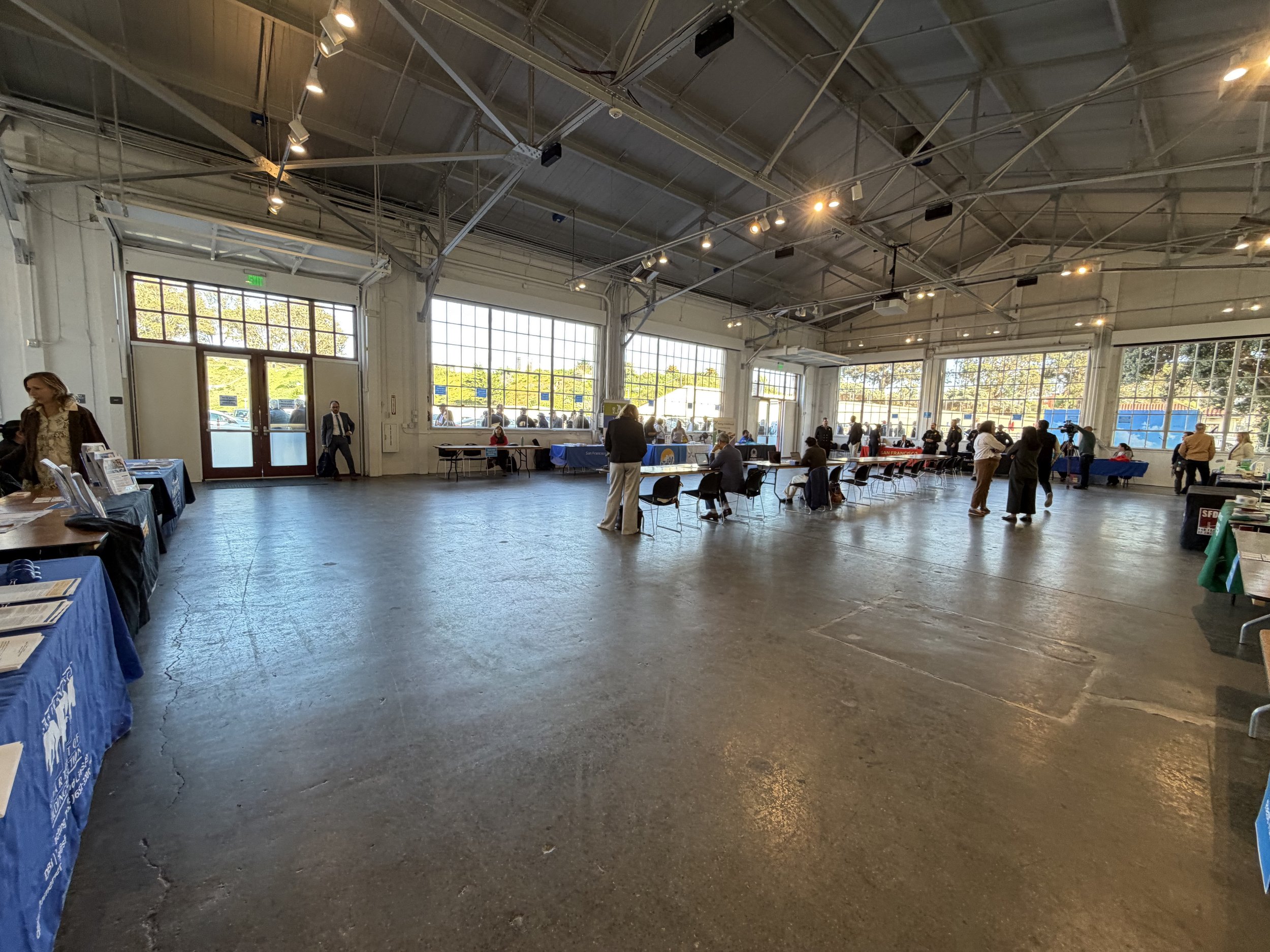
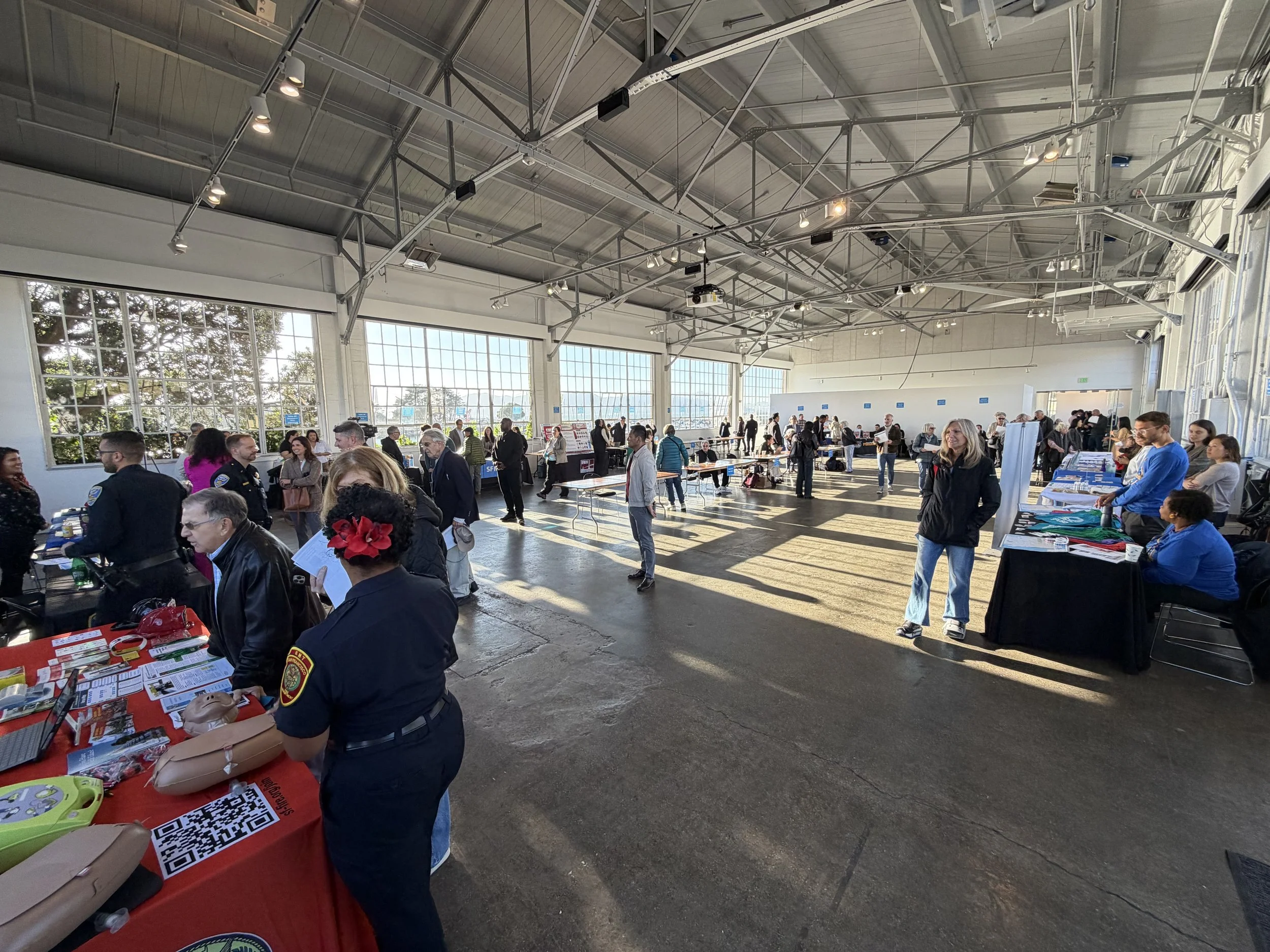
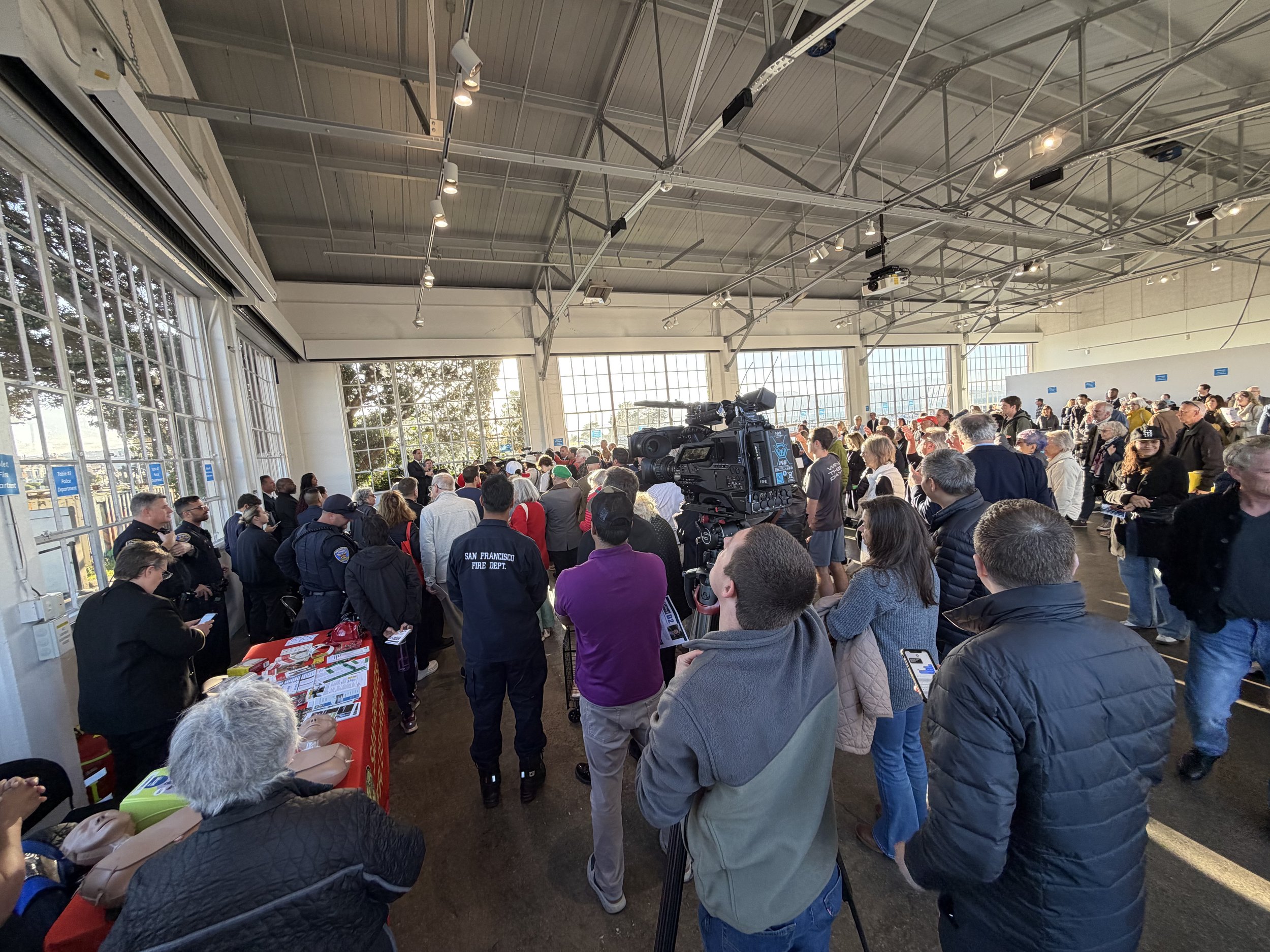
I alerted my local NERT roster and was able to meet face to face for the first time with numerous response team members who live in Cow Hollow and Marina. We’ve been penpals for the past two years discussing the history of NERT and the present conditions of our team roster: aging out, in need of new members.
Passing The Baton
One 90-year old NERT hung up her helmet for the last time this week. She came to the D2 Open House to hand me back her vest and green helmet. Thirty plus years of service! Brava, Frances, and thank you.
I was edified that I met so many people who are members of neighborhood groups, which is exactly how to scale the Fire Department’s offer of free training: when an organized group takes it on and disseminates the opportunity to their own membership. I look forward to what we can all do together this year.
Thanks to the Mayor for his initiative to stage District Open Houses “to bring the city to the neighborhoods”.
Chuck Norris kept a roof over my head
In memoriam
For a little while in the early ‘90s, when I first got to Hollywood, apparently I was Chuck Norris’s favorite script reader at Cannon Films.
It was the ‘legendary trash house’ of low budget action pictures. (Read The Rise And Fall of Cannon Films - there was also a 2014 documentary about it.)
Because Norris liked my harsh script coverage (I would point out “We’ve seen this before! Nothing new here!”) he kept requesting me to read scripts submitted to him. Another cool $40 for me.
If I actually liked a script it was worth looking at, I suppose he began to figure. That helped me make my rent.
Thanks Chuck, for all the memories.
Chuck Norris (3/10/40 - 3/19/26)
It begins: Family of Mine research blog
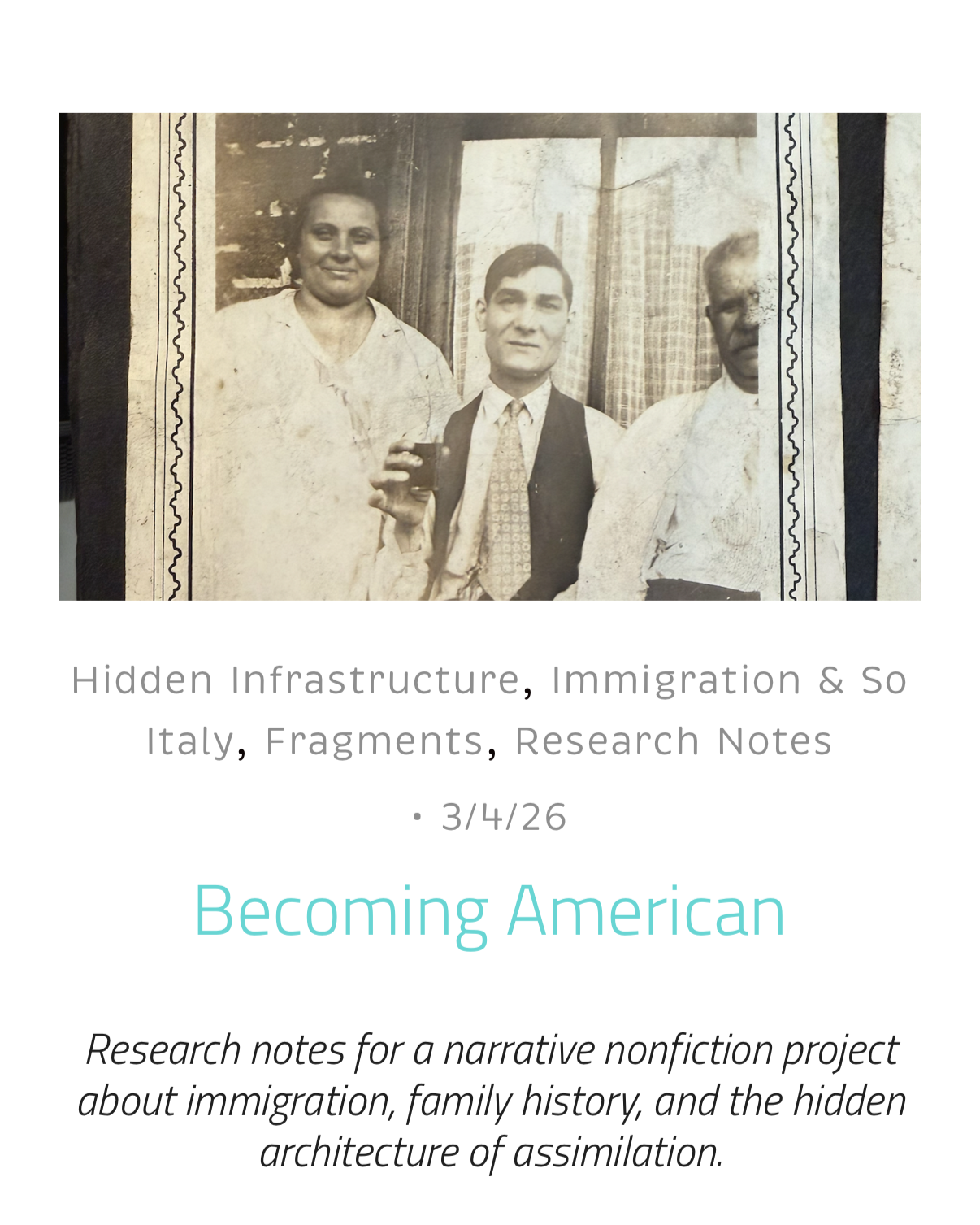
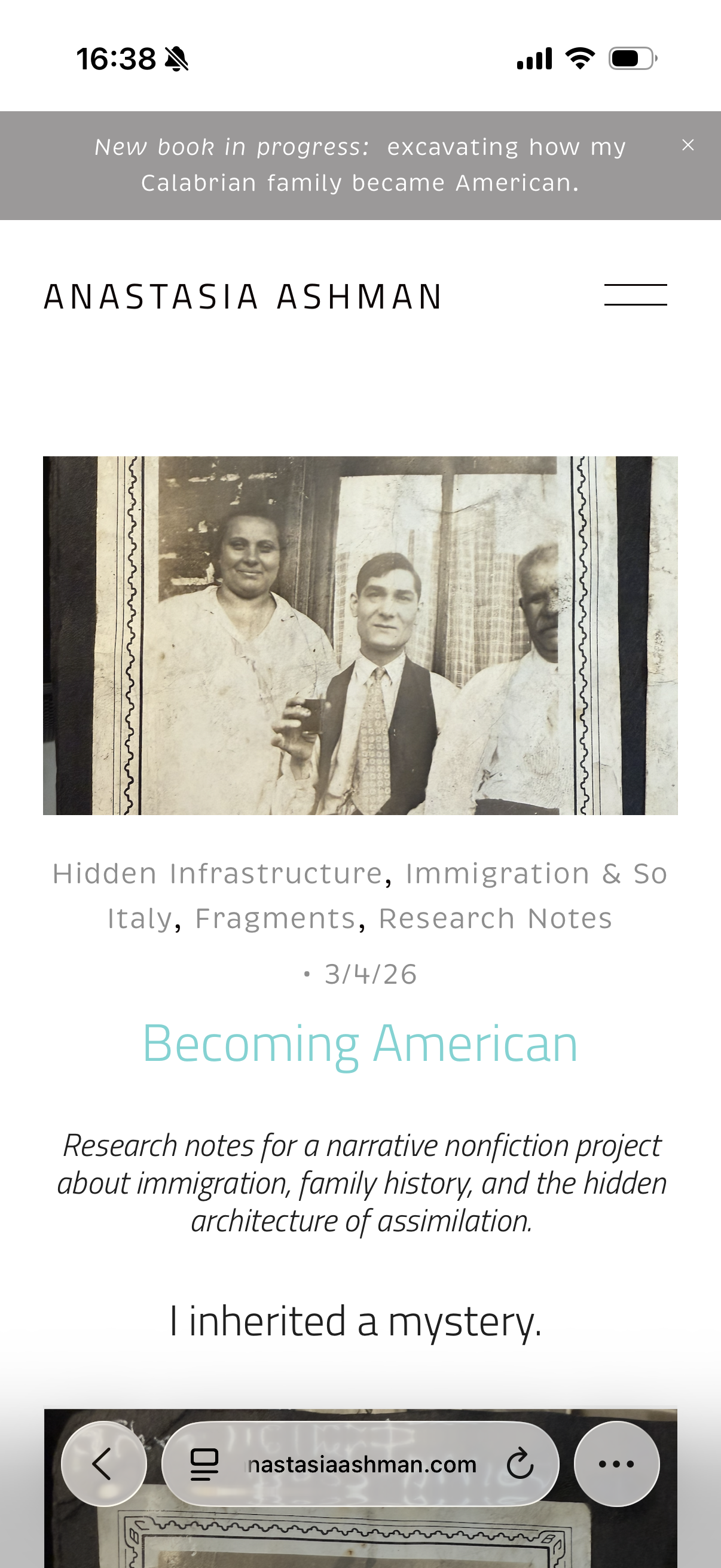
Earlier this month I opened another blog channel here on my site. You can access it from the menu at the top of this page. It will focus solely on a new project I’m calling Family of Mine, and share pieces of that investigation.
I inherited a mystery. This is not a story that was passed down.
First post off my own site about this project, at LinkedIn.. Milestone! Anyway, I post it here too on my own blog because the fact of the matter is, something new is starting here, in a different blog on the same site.
The past few years I’ve been on a trail that started with some old family photos and interviews.
It grew into the research behind my new book-in-progress, Family of Mine, and led me into government archives, genealogy records, and parts of history I hadn’t expected to encounter.
If you enjoy family history or the research side of storytelling, you might like it.
What am I bringing to the civil service? All my experience and exposure.
My late-career stage brings a wealth of diverse experiences and perspectives that make me a unique and valuable candidate for civil service. My extensive background spans multiple decades and includes living and working in various American cities and three other countries, offering me deep insights into different cultural and social norms. Raised in a progressive Civil Rights hotbed, my early experiences shaped my commitment to social justice, inclusivity, and equity, while my upbringing in an integrated school district with BIPOC and AAPI teachers further enriched my understanding of diversity.
Throughout my career, I have consistently advocated for marginalized communities, from mentoring students of color, LGBTQIA+ individuals, and undocumented students to promoting gender equality and challenging workplace discrimination. My experience with transcendental meditation community has given me unique perspectives on spirituality. Additionally, growing up in a lower socio-economic environment taught me about systemic inequalities and the importance of creating opportunities for all.
My age also brings a level of resilience, adaptability, and problem-solving skills honed over decades of navigating diverse environments and challenging situations. This rich tapestry of experiences equips me with the maturity, empathy, and strategic vision necessary to contribute meaningfully to civil service, driving forward initiatives that promote equity and inclusion.
Once an archaeologist, always an archaeologist
What seemed like all the archaeologists in America were in town last week at the 127th Annual Meeting of the Archaeological Institute of America and the Society for Classical Studies...
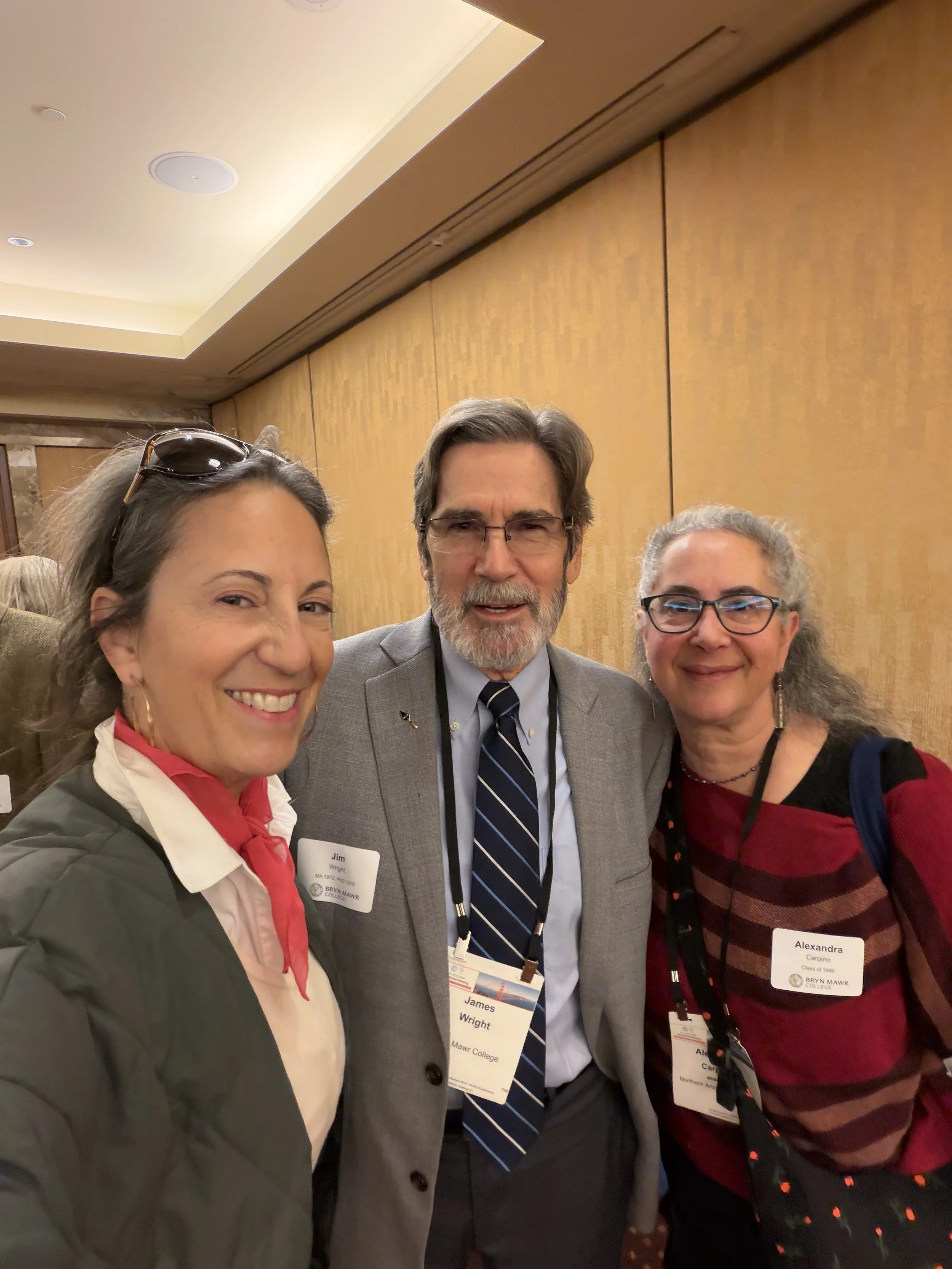
At the Bryn Mawr College lunch I caught up with my classmate-now-Etruscan expert Alexandra Carpino (don't miss the big Etruscan exhibit coming to the Legion of Honor in May 2026!) and our Aegean Bronze Age professor Jim Wright who recently led the American School of Classical Studies at Athens, and even in retirement continues his ongoing project in Crete...
Neighbors helping neighbors 💪 with the Supervisor & the Fire Captain at the Palace of Fine Arts
Last weekend, I had the pleasure of organizing and hosting a SFFD NERT Map Your Neighborhood (MYN) disaster preparedness class with SF City Supervisor Stephen Sherrill at the Palace of Fine Arts — and what an energizing afternoon it turned out to be!
Neighbors Come Together to Get Ready
Our Eventbrite registration page garnered more than 400 visits, so I hope that means a lot of people are quietly interested in being better prepared. About 10% completed the registration.
We had about 25 people total in attendance, including a teenage boy who brought his parents (I love seeing families learning together), neighbors from Broderick and Filbert Street including a block with a longtime neighborhood watch group. We were joined by several Marina District Avila Street group leaders who are now organizing for emergency response — they’re already famous for their Halloween block parties! Folks came not just from Cow Hollow and the Marina, but also from Pacific Heights, the Richmond, and even the Mission and the Sunset District — a great mix of neighborhoods coming together to learn how to take care of each other when disaster strikes.
Fire Department and City Leaders Join the Effort
As the SFFD NERT Program Coordinator from the Fire Department, Fire Captain Brandon Tom came and spoke to everyone about the opportunities to get free training.

The Supervisor’s legislative assistant Jack Hebb captured footage for District 2’s channels. The event was featured in the Supervisor’s newsletter (thank you for including us — it was a very full news month!).

SFFD PIO Sam Menchaca was there filming videos for the Fire Department to share.
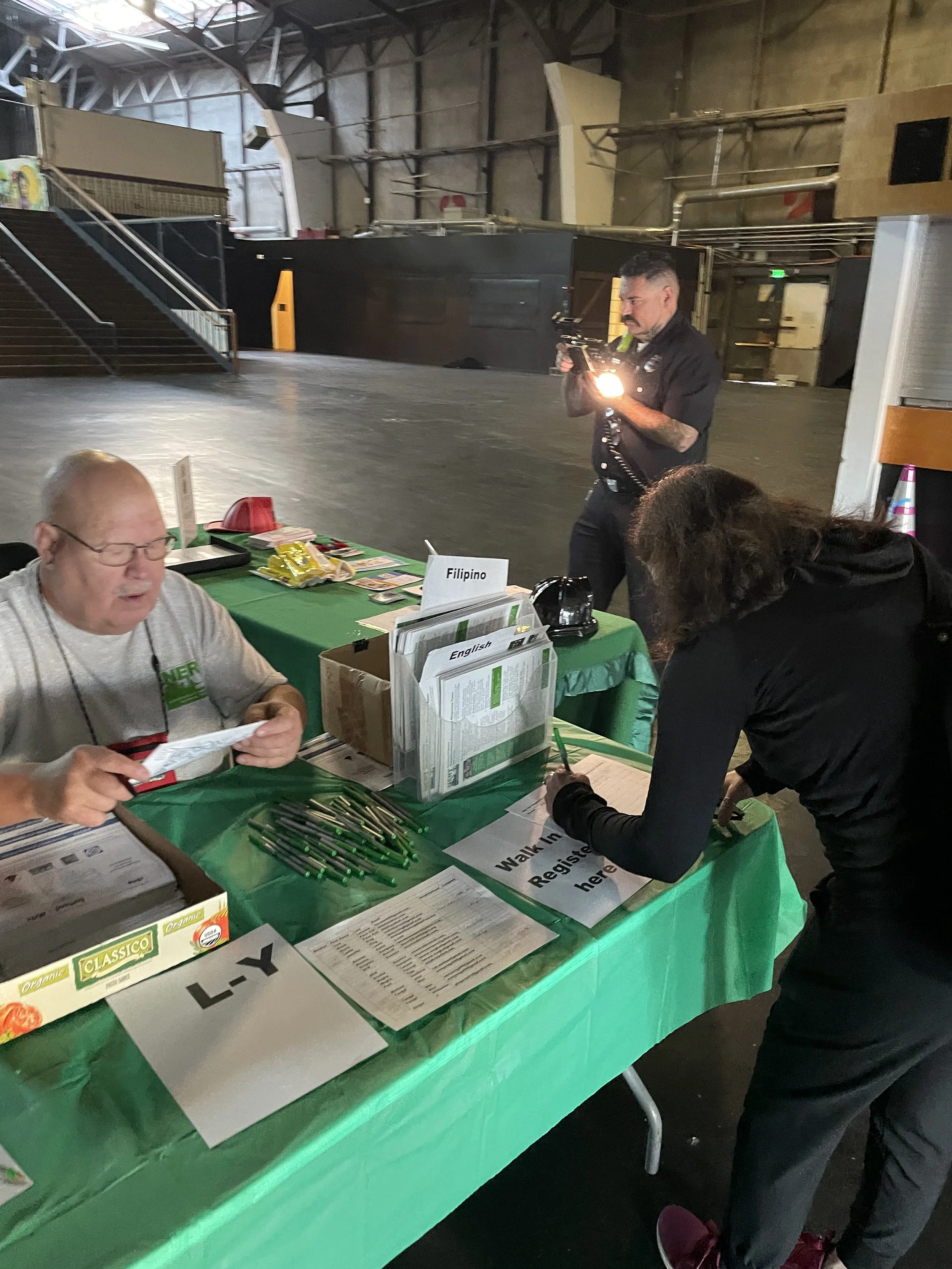
SFFD PIO Sam Menchaca captures footage of SFFD NERT Paul Tipp registering walk-ins. Thanks to Paul and fellow NERT Elisabeth Brandon for volunteering to assist during this special event!
A Perfect Setting for Community Connection
The Small Theatre space at the Palace worked beautifully — cozy, focused, and perfect for discussion. Huge thanks to Rich Goss for helping us secure it for this event! We had a handful of walk-ins, and curious pedestrians stopped by to ask what NERT is, including a tourist from Boston, Massachusetts who will now look to see about CERT classes in his area.
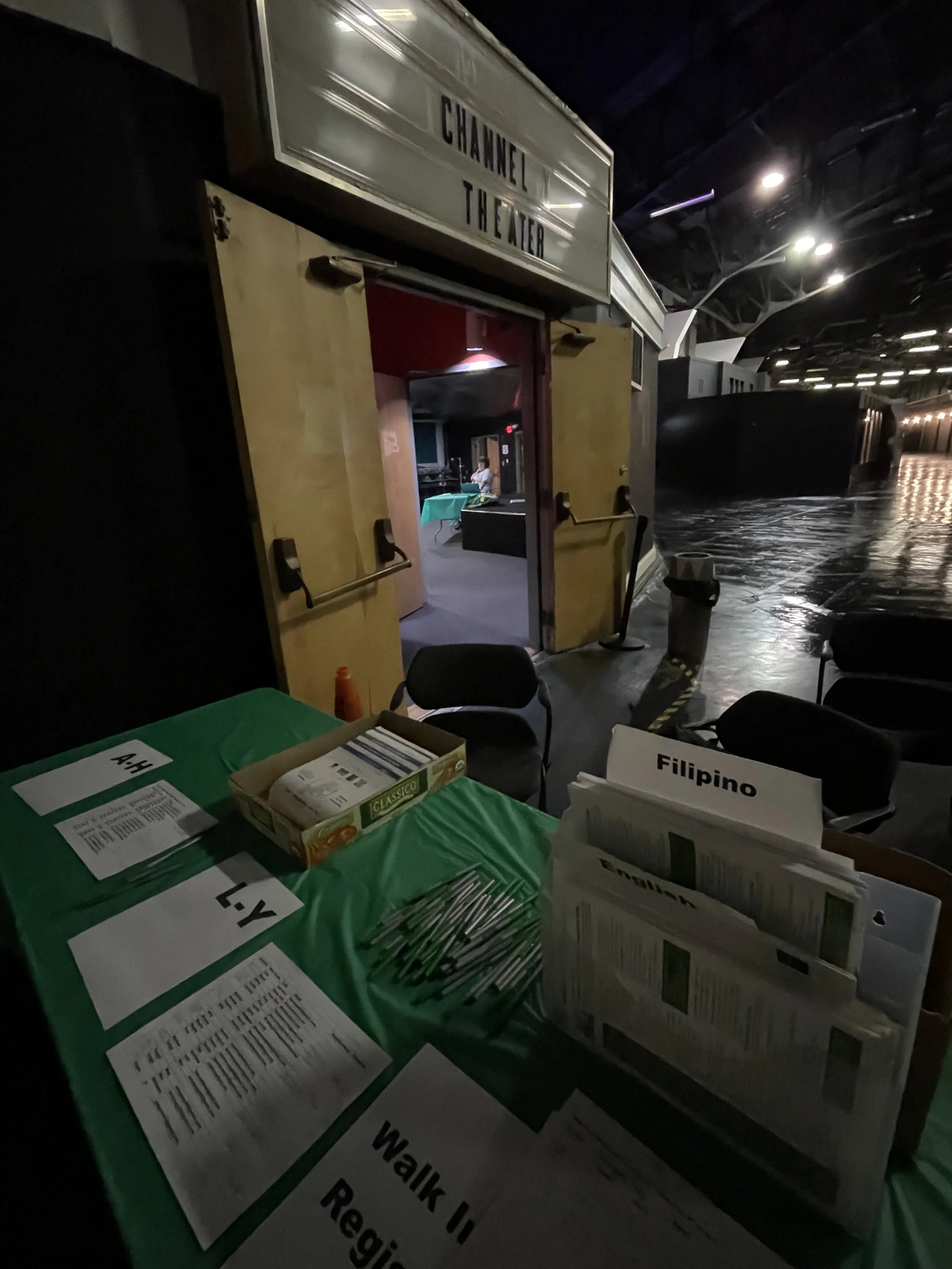
Instructor Sue Brown addressing the class in the small theatre of the Palace of Fine Arts
Learning the Nine-Step MYN Plan
Our instructor, SFFD NERT Sue Brown, did a fantastic job leading the 90-minute session, walking everyone through the nine-step MYN plan — a simple but powerful way for neighbors to coordinate after a disaster when first responders can’t reach us right away. The class focused on communication, checking on neighbors, and mapping local resources so we can all help one another in that “golden hour” after an emergency.
One of the most exciting takeaways? Supervisor Stephen Sherrill’s involvement seems to have inspired other districts to invite their supervisors to participate in a class. Sue tells me Districts 7 and 11 are now planning their own MYN events — how great is that? Preparedness truly spreads!
Keeping the Spirit of NERT Alive
No one from my street or block showed up (despite my relentless leafleting directly to their residences 😅), but I’m hopeful that awareness will begin to build. After all, District 2 is where NERT began — right after the Loma Prieta earthquake — and it’s up to us to keep that legacy alive. We still have 92-year-old NERTs here in the neighborhood waiting for the next generation to step up. I am thinking about them when I contact the rest of you!
The Next Generation Is Every Neighbor
We already have the free classes from generous volunteer instructor Sue Brown — we just need people to take them.
Stay Involved and Stay Prepared
Find a readiness event that works for you, and come!
If you couldn’t make it this time, keep an eye out for future SFFD NERT and Map Your Neighborhood trainings listed on the Fire Dept. site here: NERT TRAINING CALENDAR.
The more we know, the stronger and safer our community becomes.
Because in the golden hour after a disaster, we all become first responders.
NERT Citywide Drill October 2025, Dogpatch YMCA
Participated in the second annual citywide drill for 2025, at the new YMCA in Dogpatch. New skill practice: Hose Drag.
The Hose Tender rig you see here is newly custom-made for the department and features a 5,500-gpm pump and carries 6,000-feet of 5-inch hose. We’re pumping water out of the bay here, using the 3,000-gpm carbon fiber, hydraulically driven, submersible pump for situations where a tender may not be positioned close to a water source.
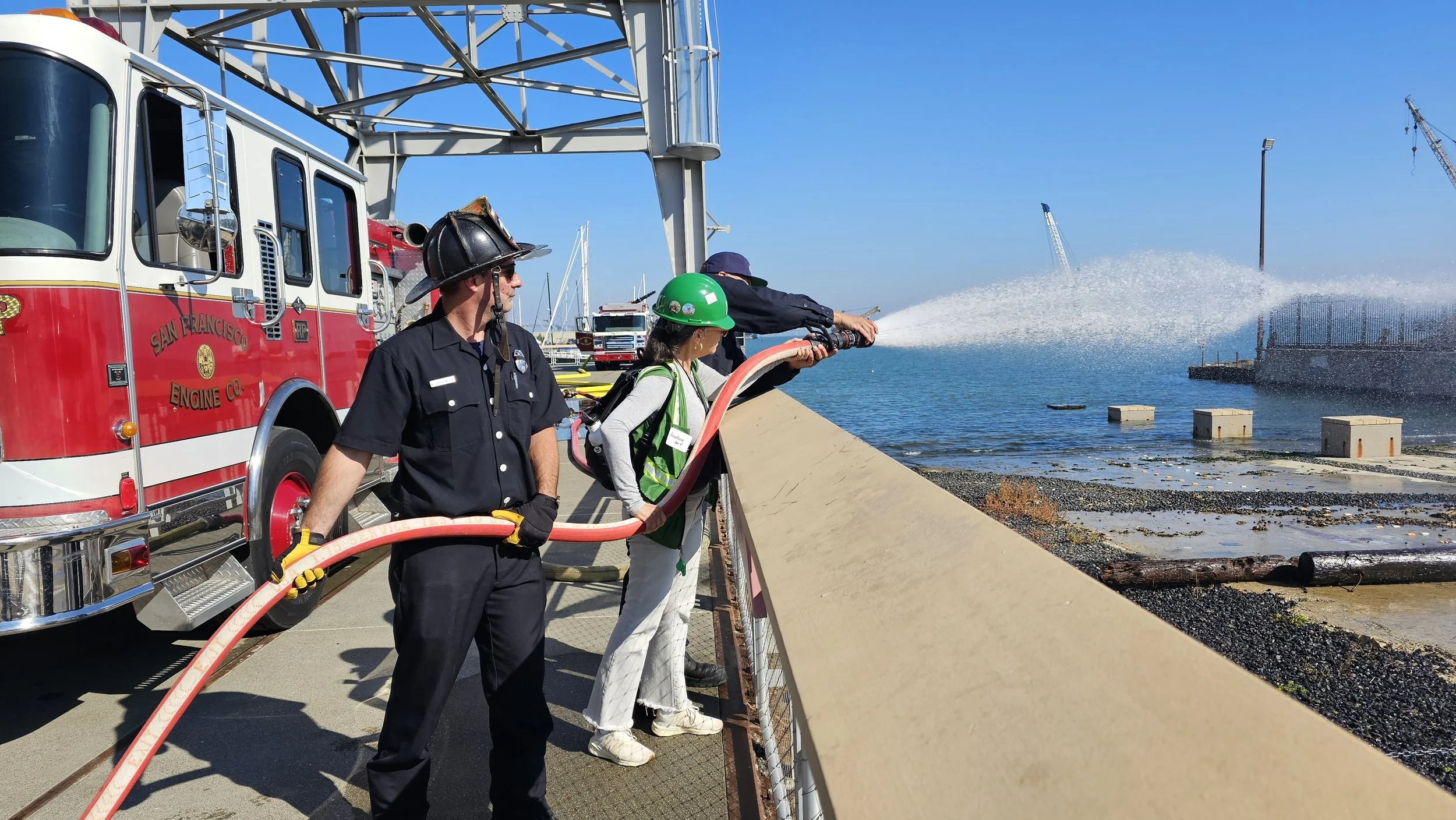
Tending a handheld 1.5 inch fire hose.
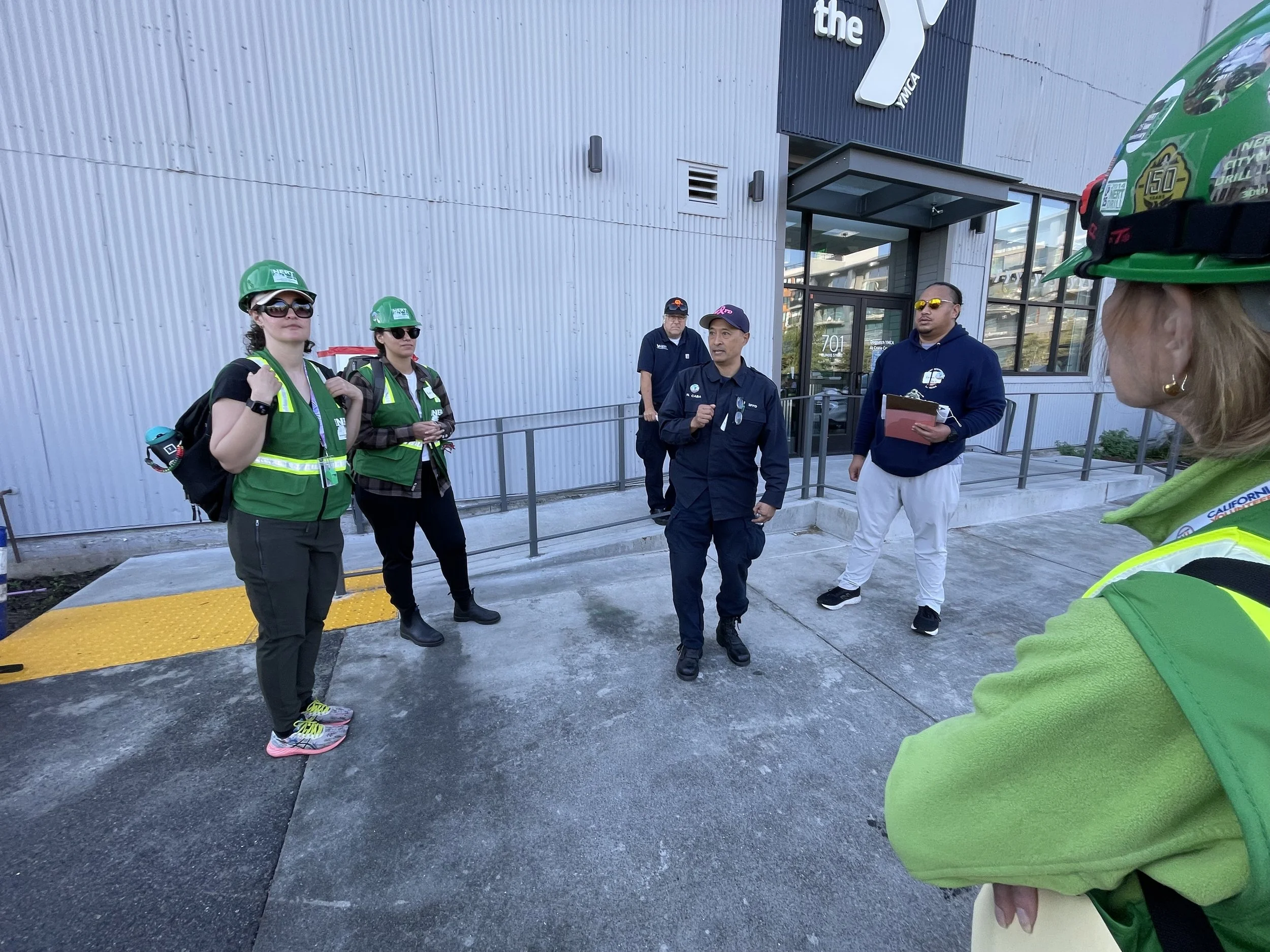
NERT Program Director Captain Brandon Tom welcomes the assembly of certified NERTs to this drill of Battalion-based teams. He asks if we felt the earthquake the other day.
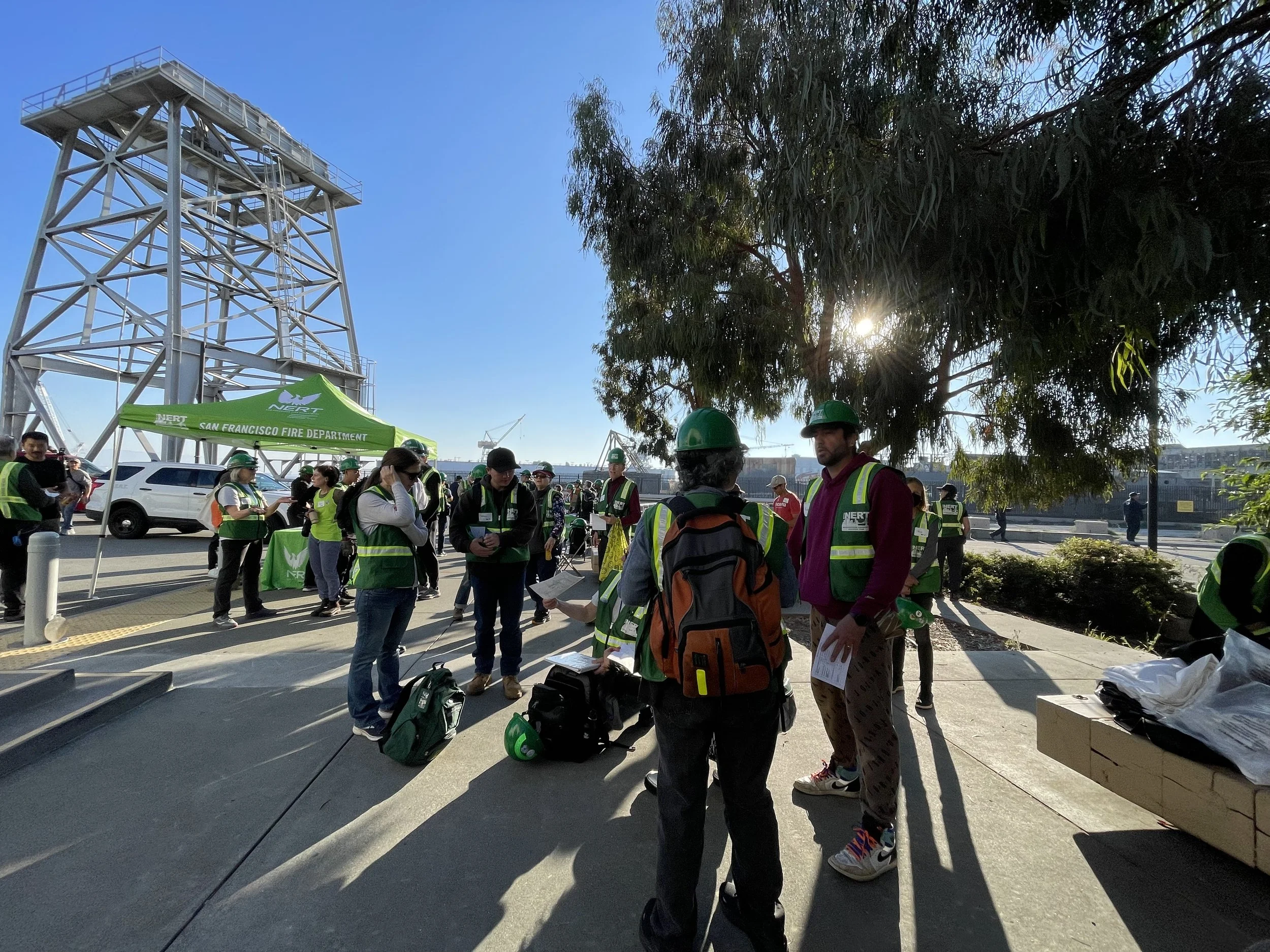
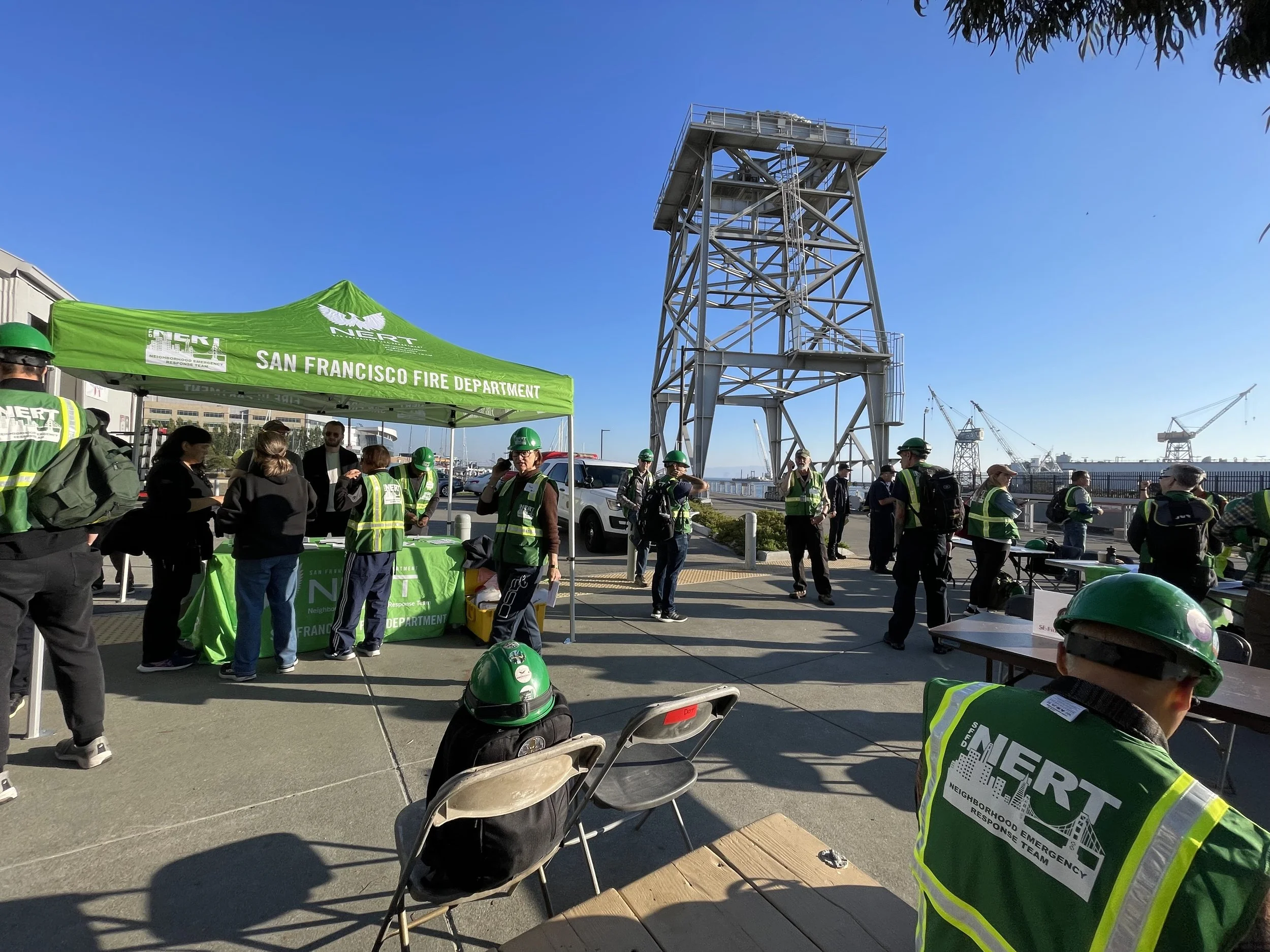
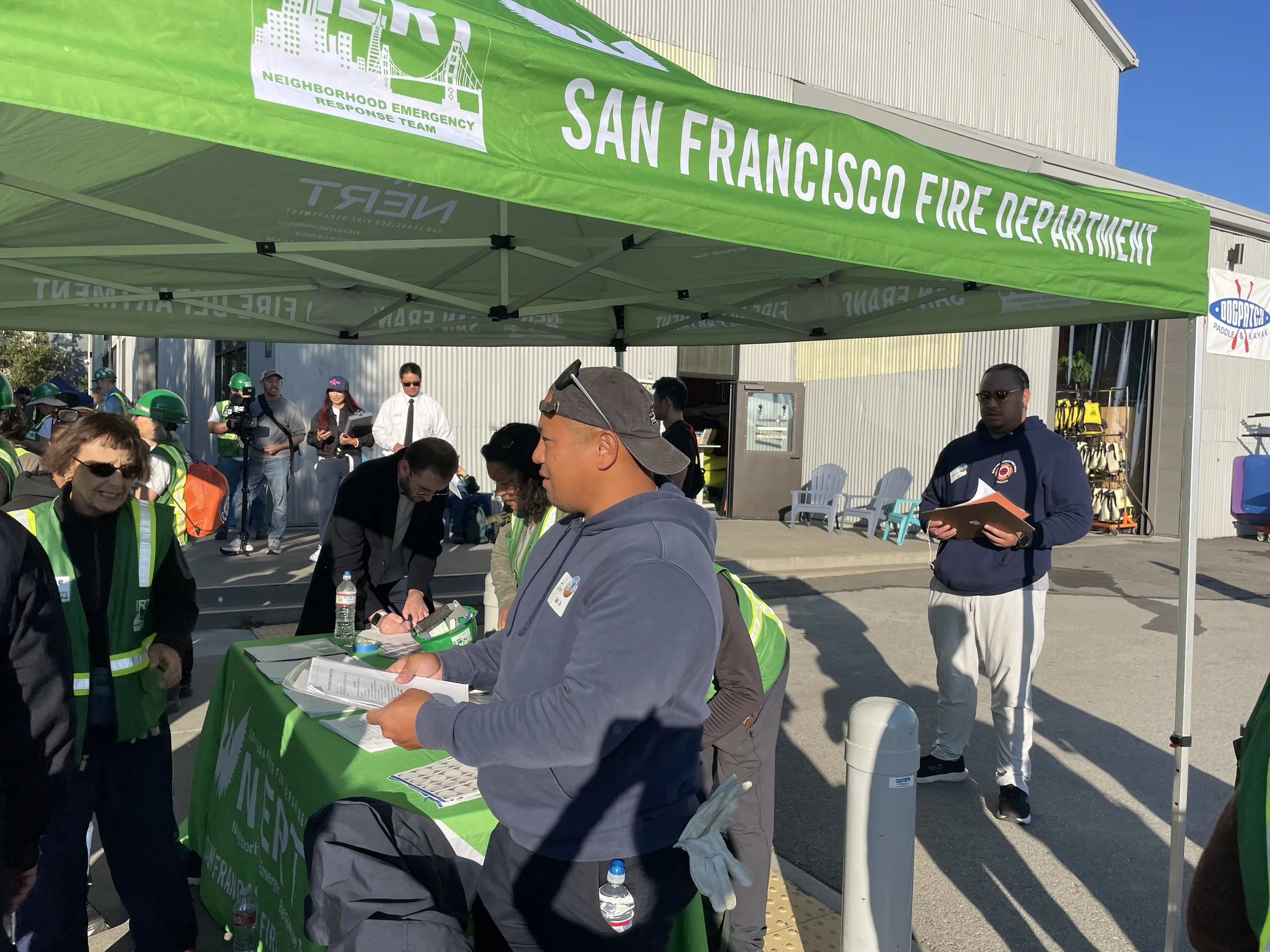
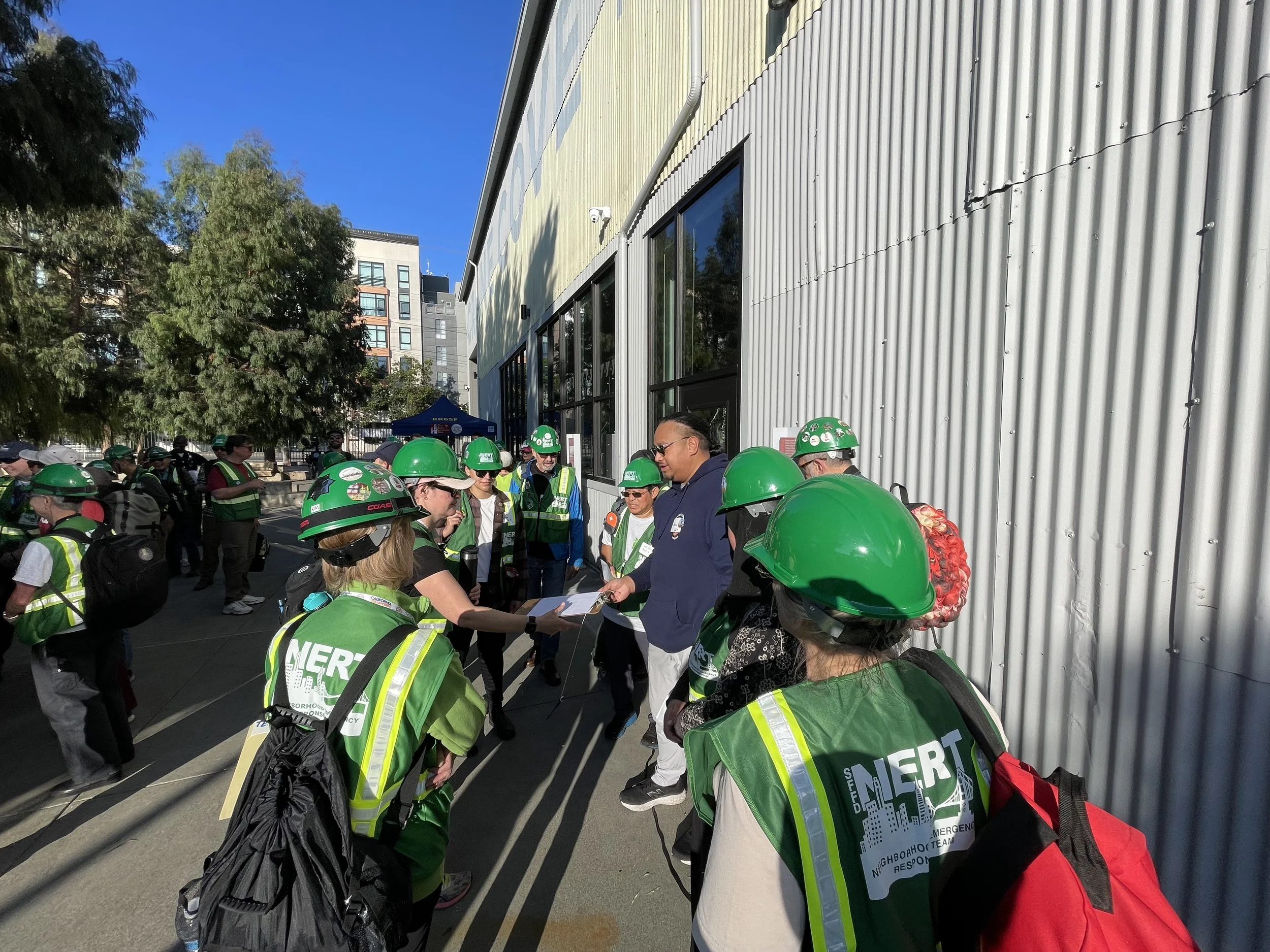
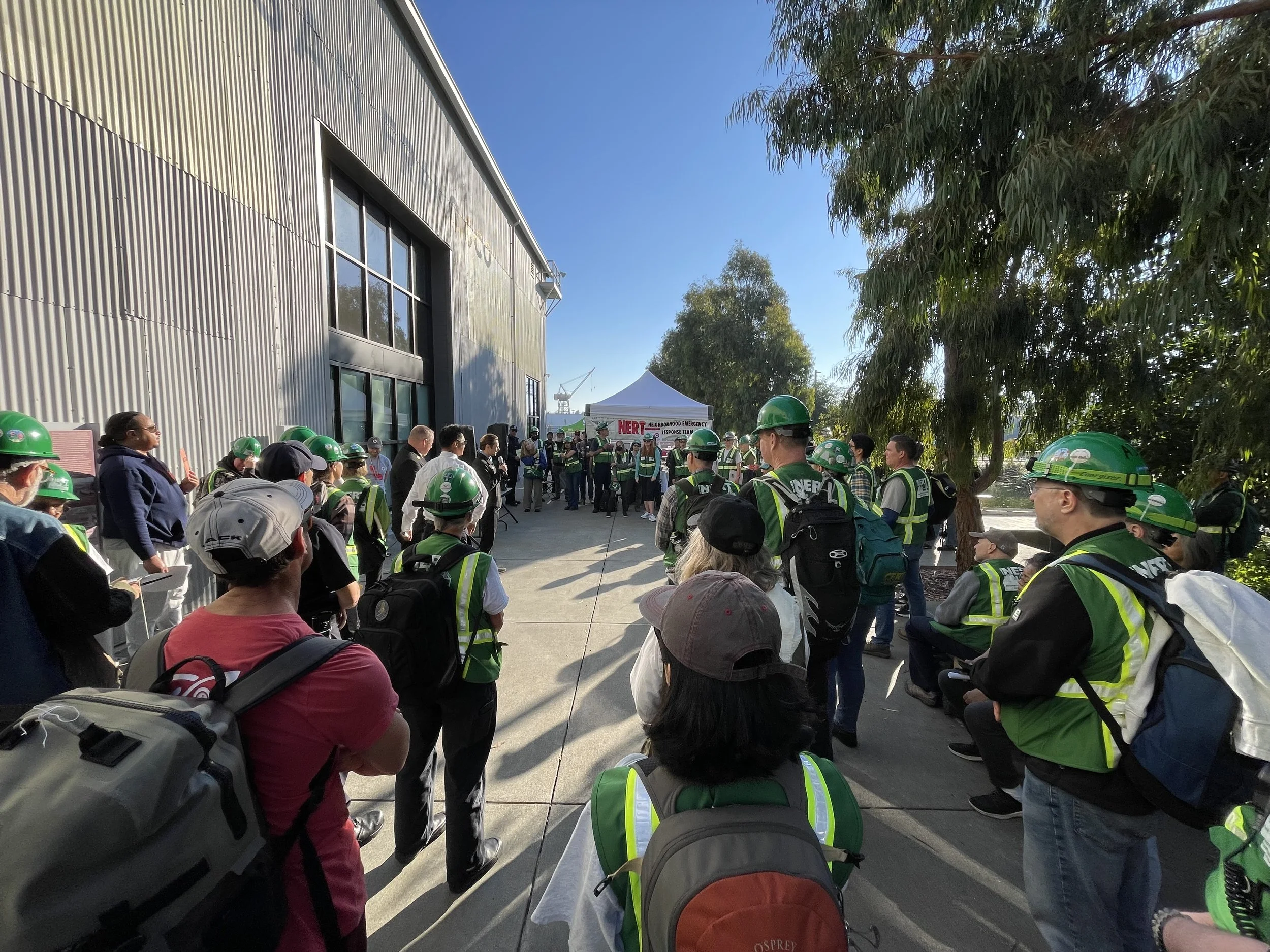
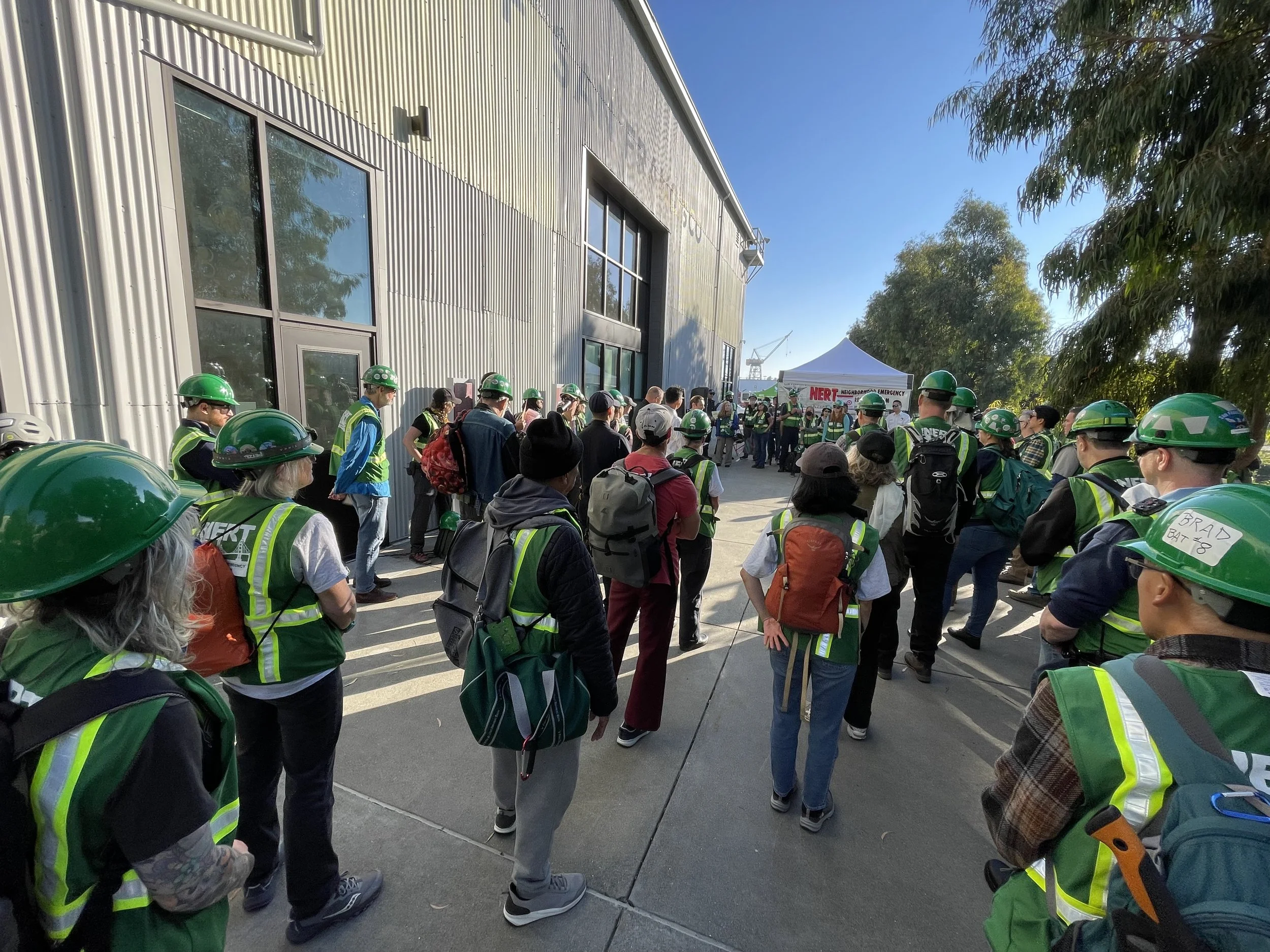
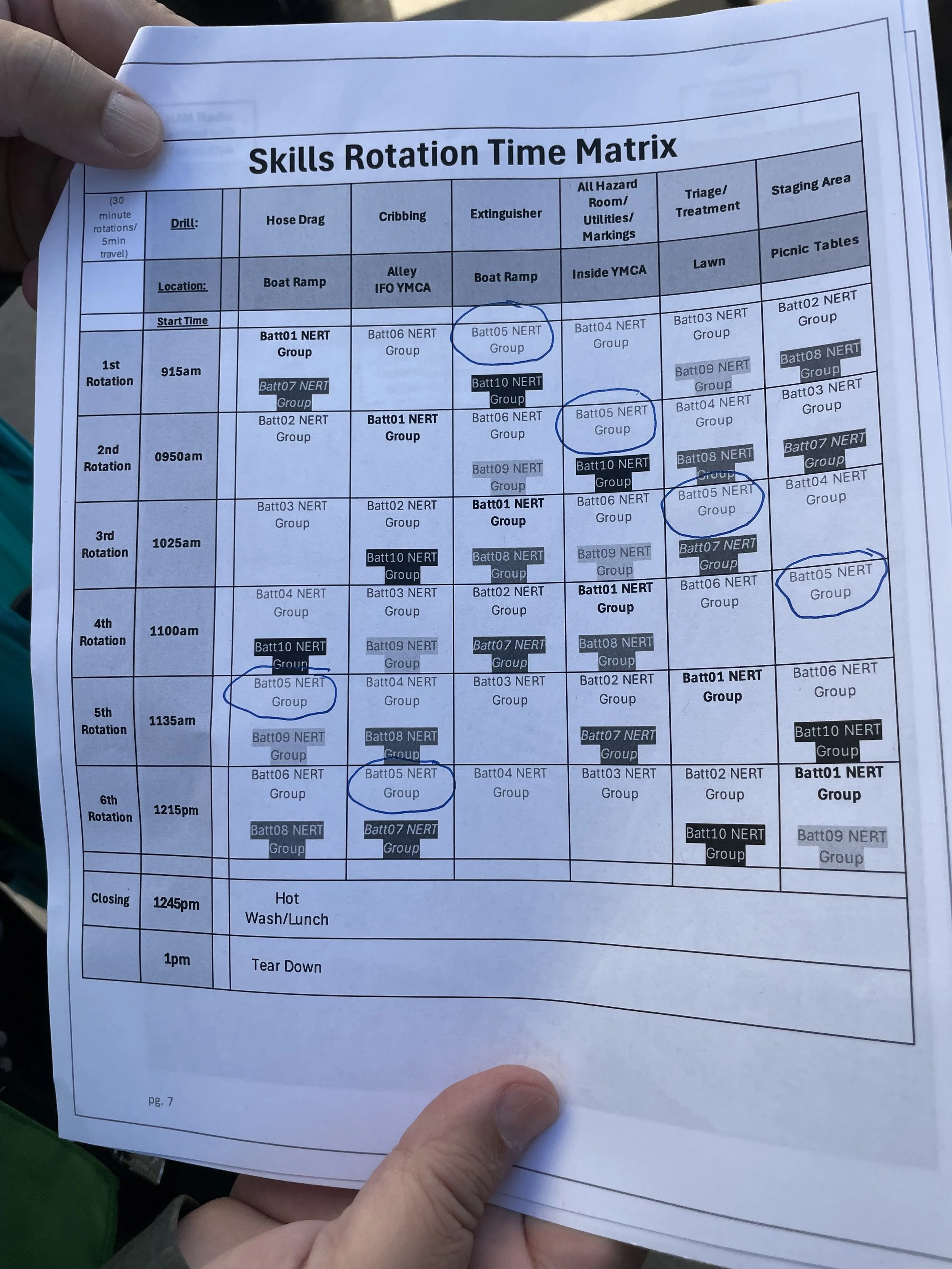
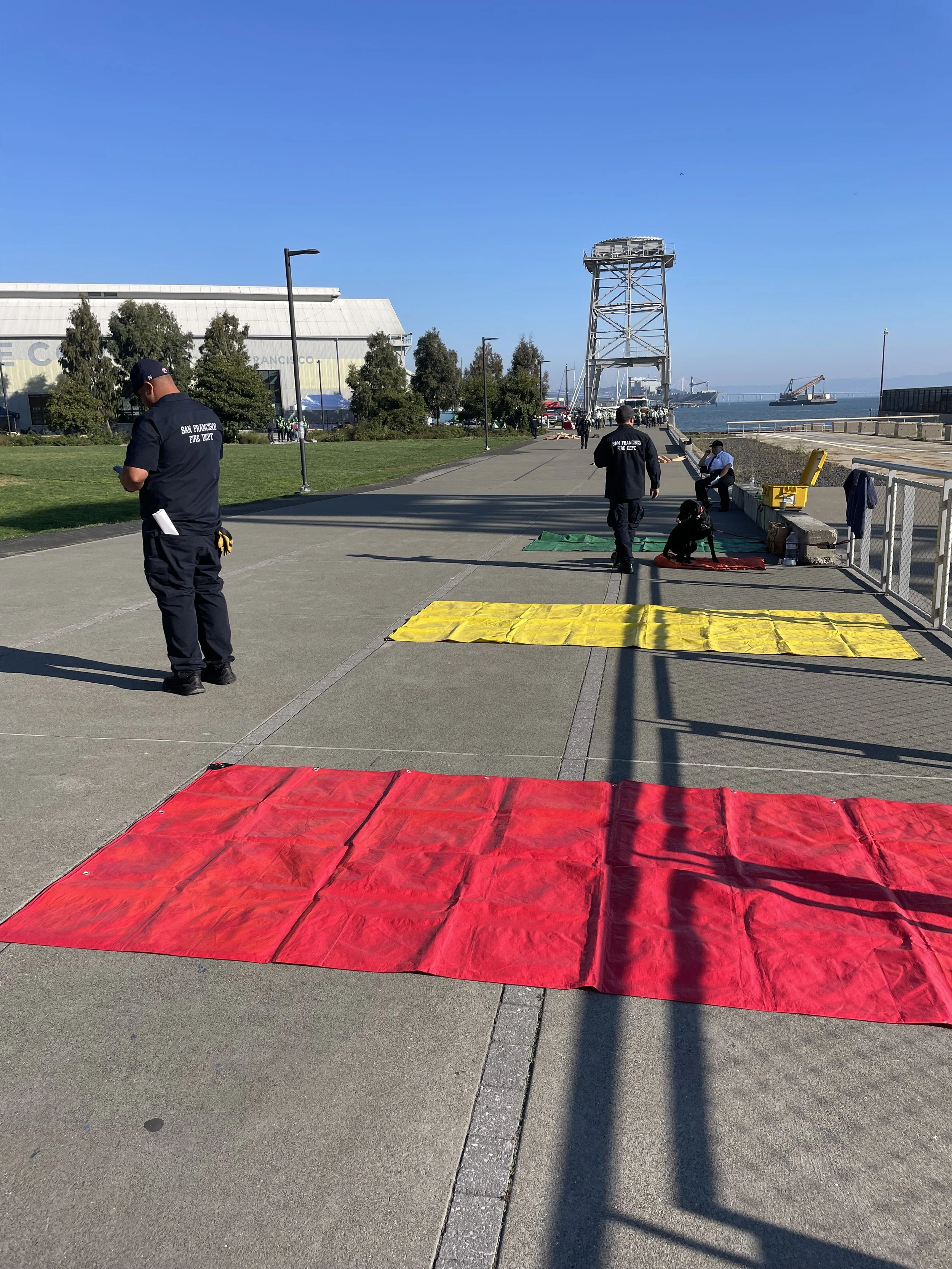
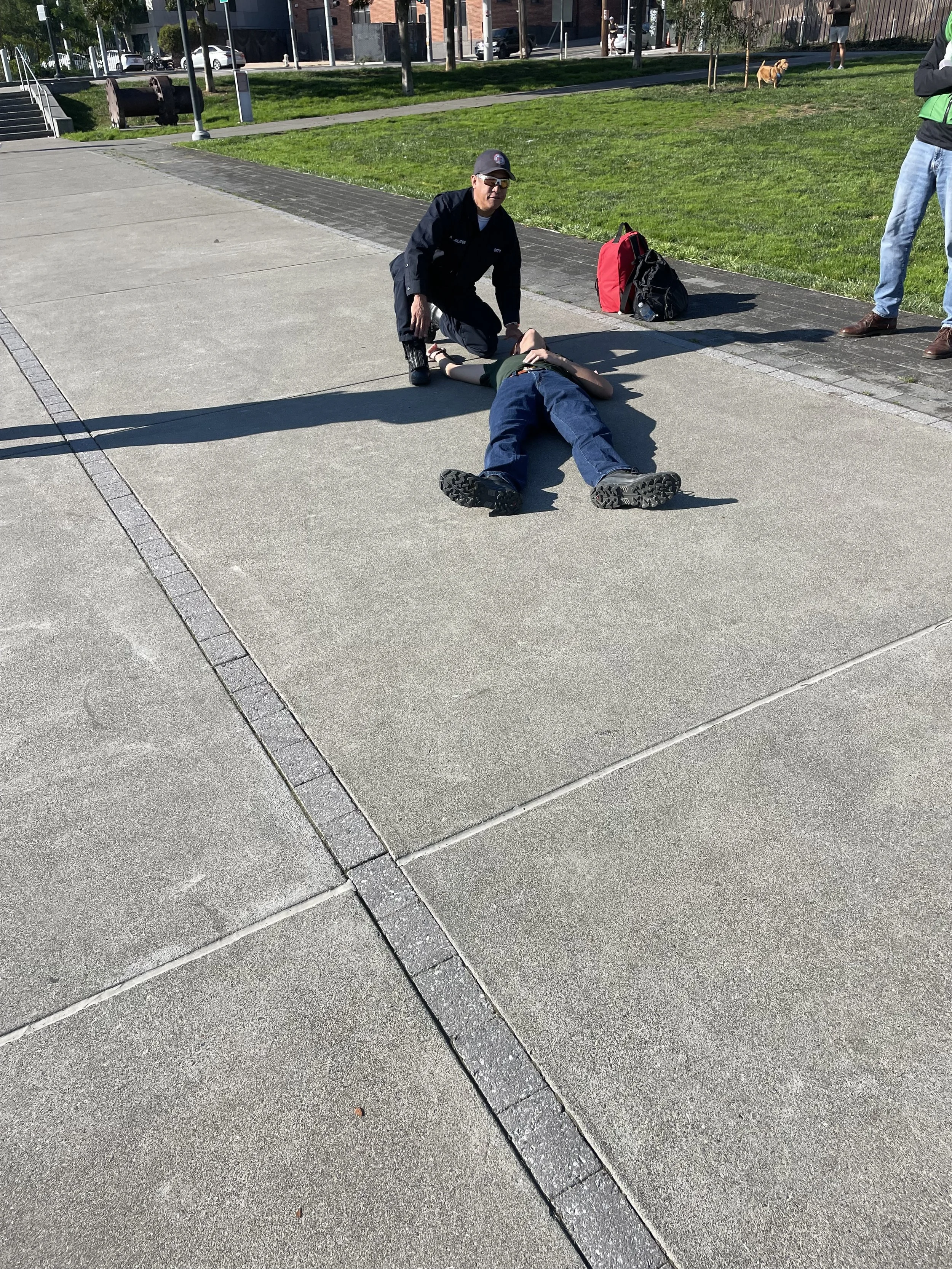
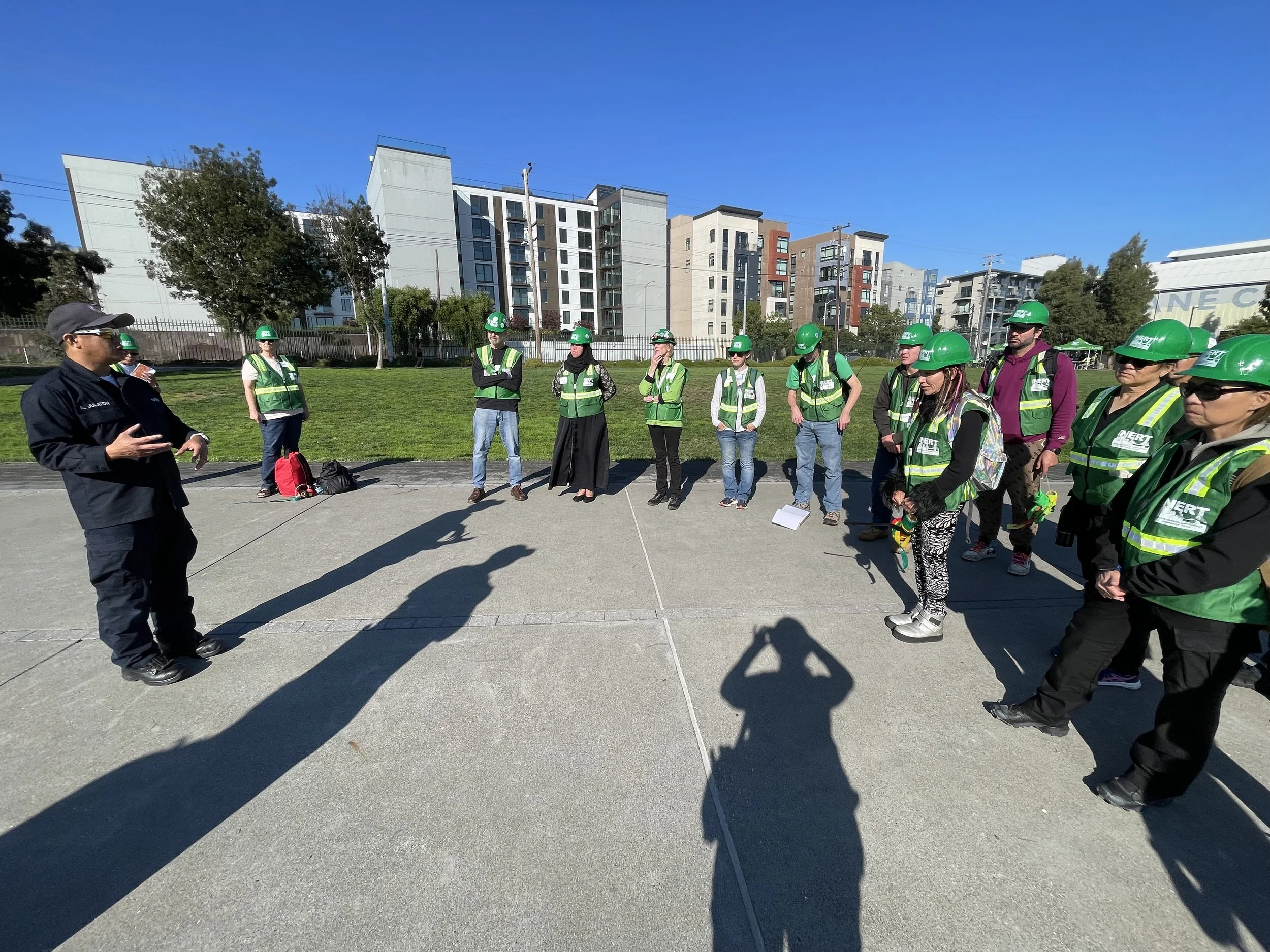
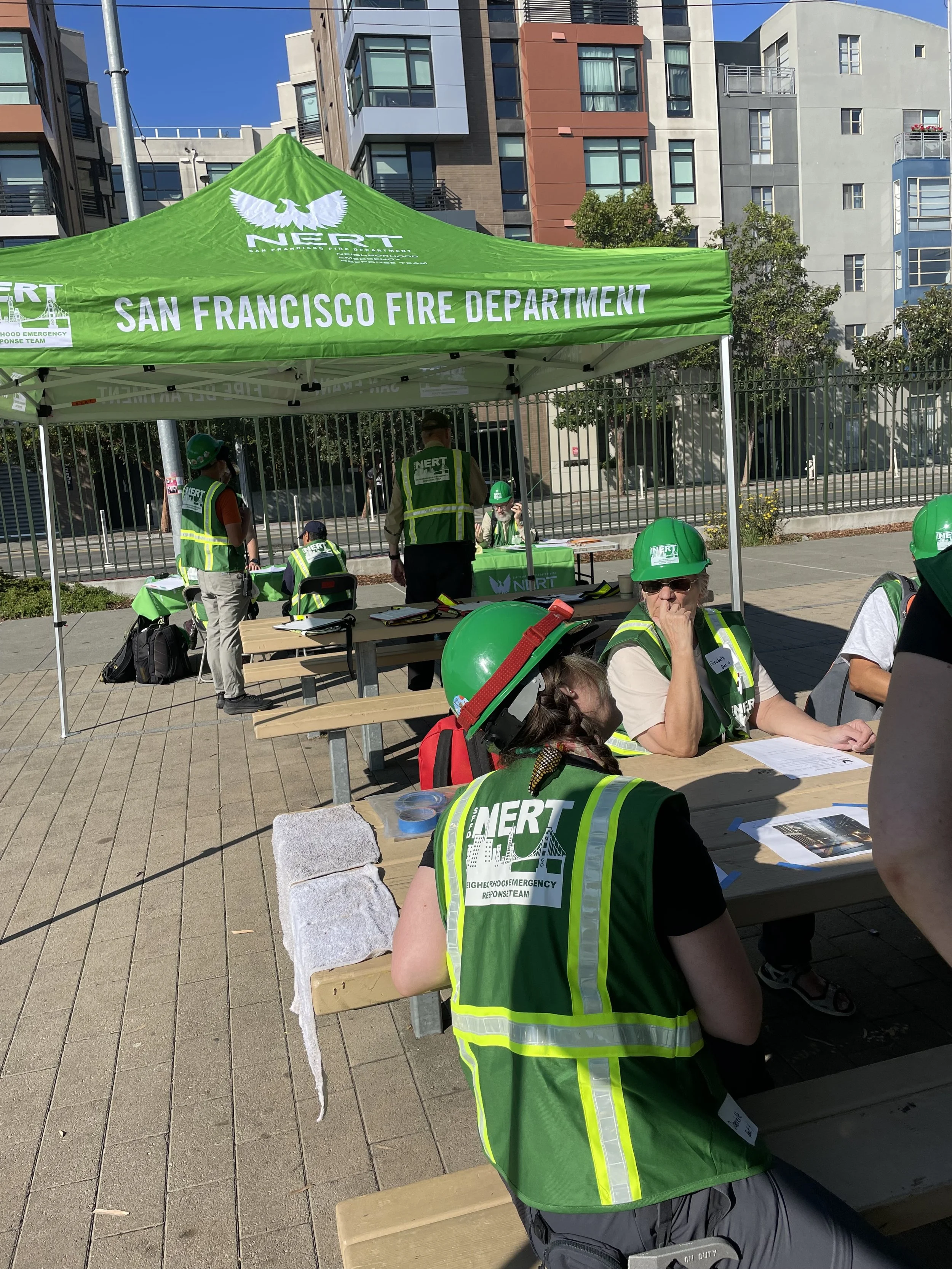
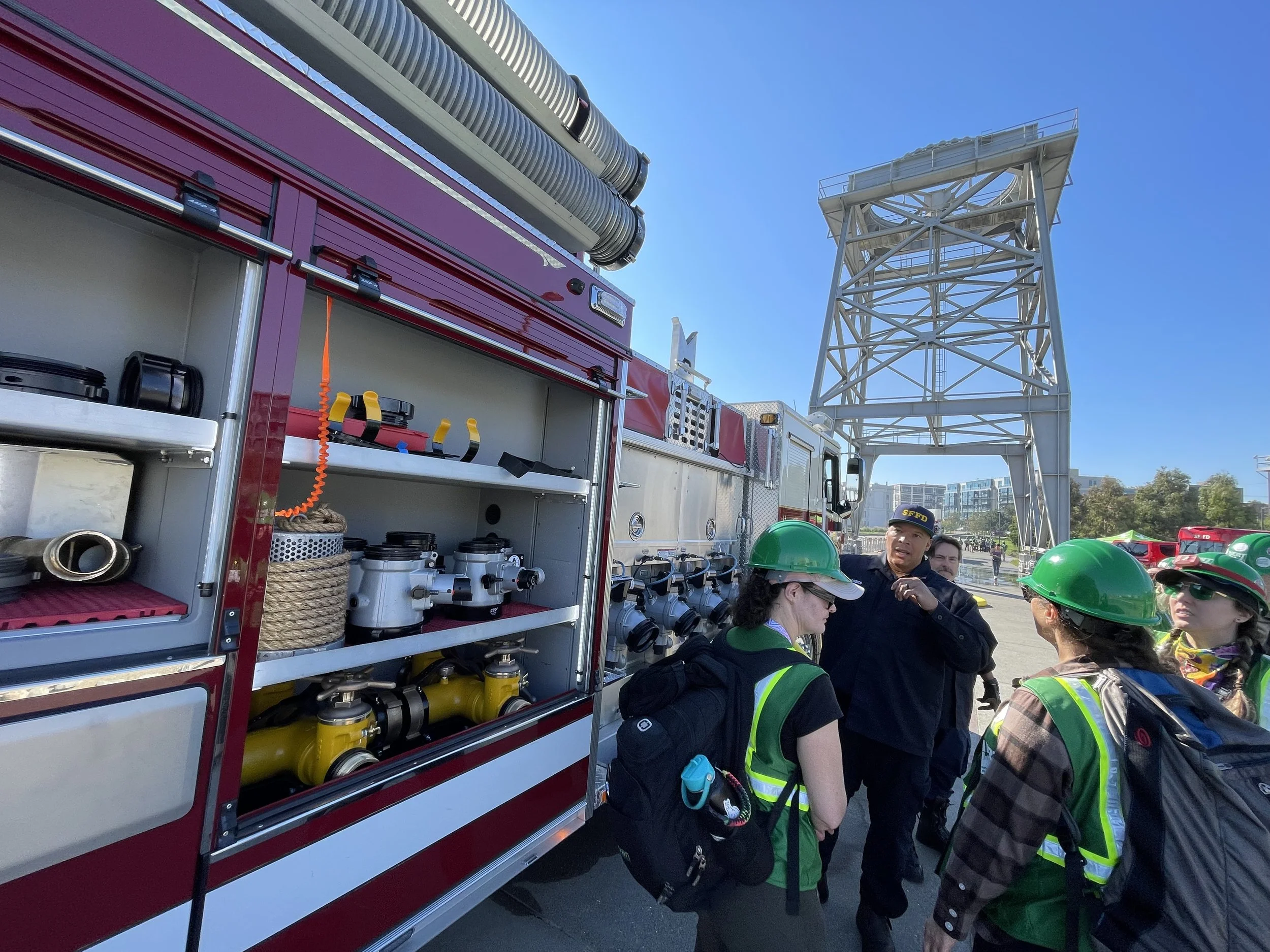
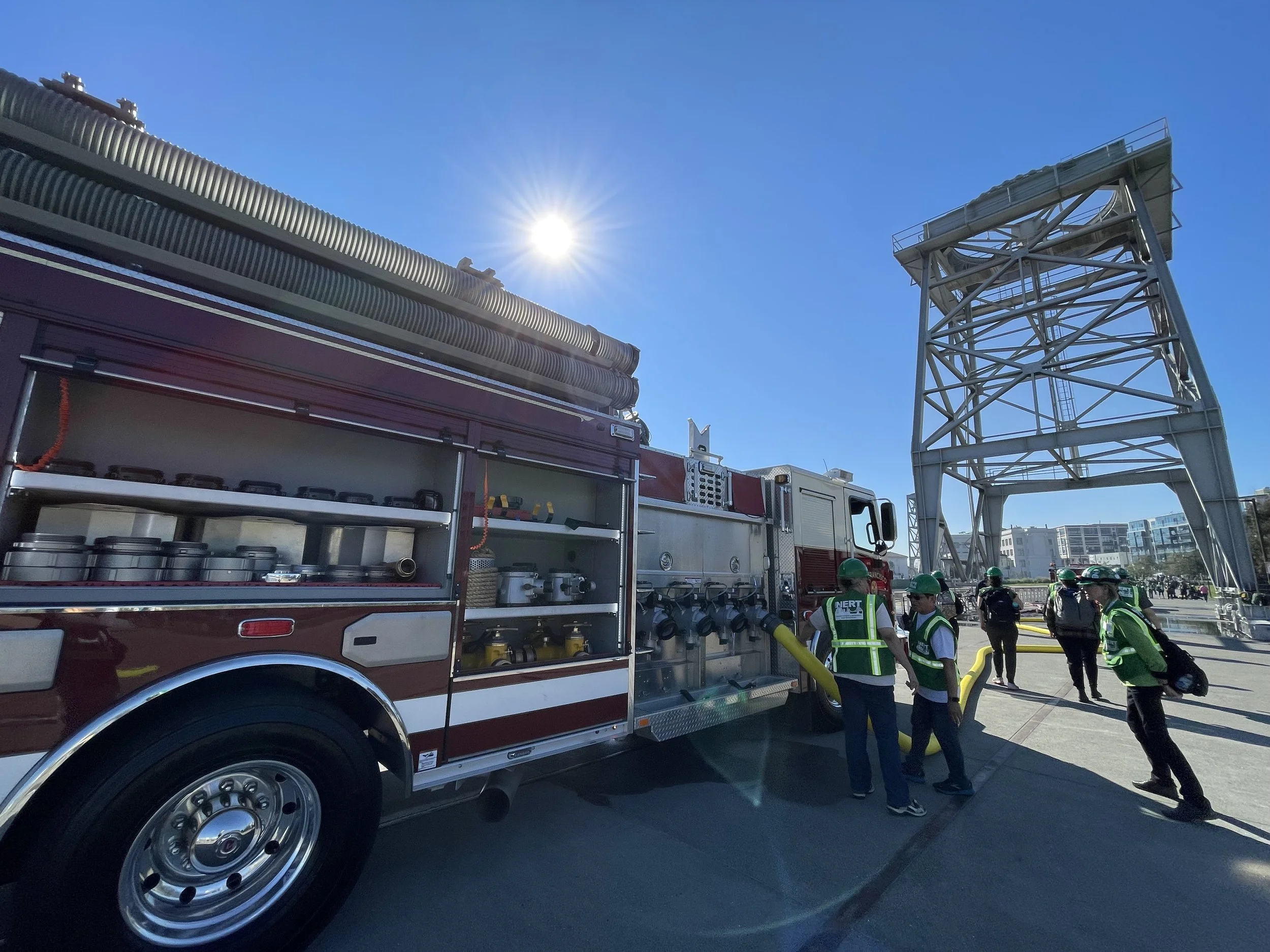
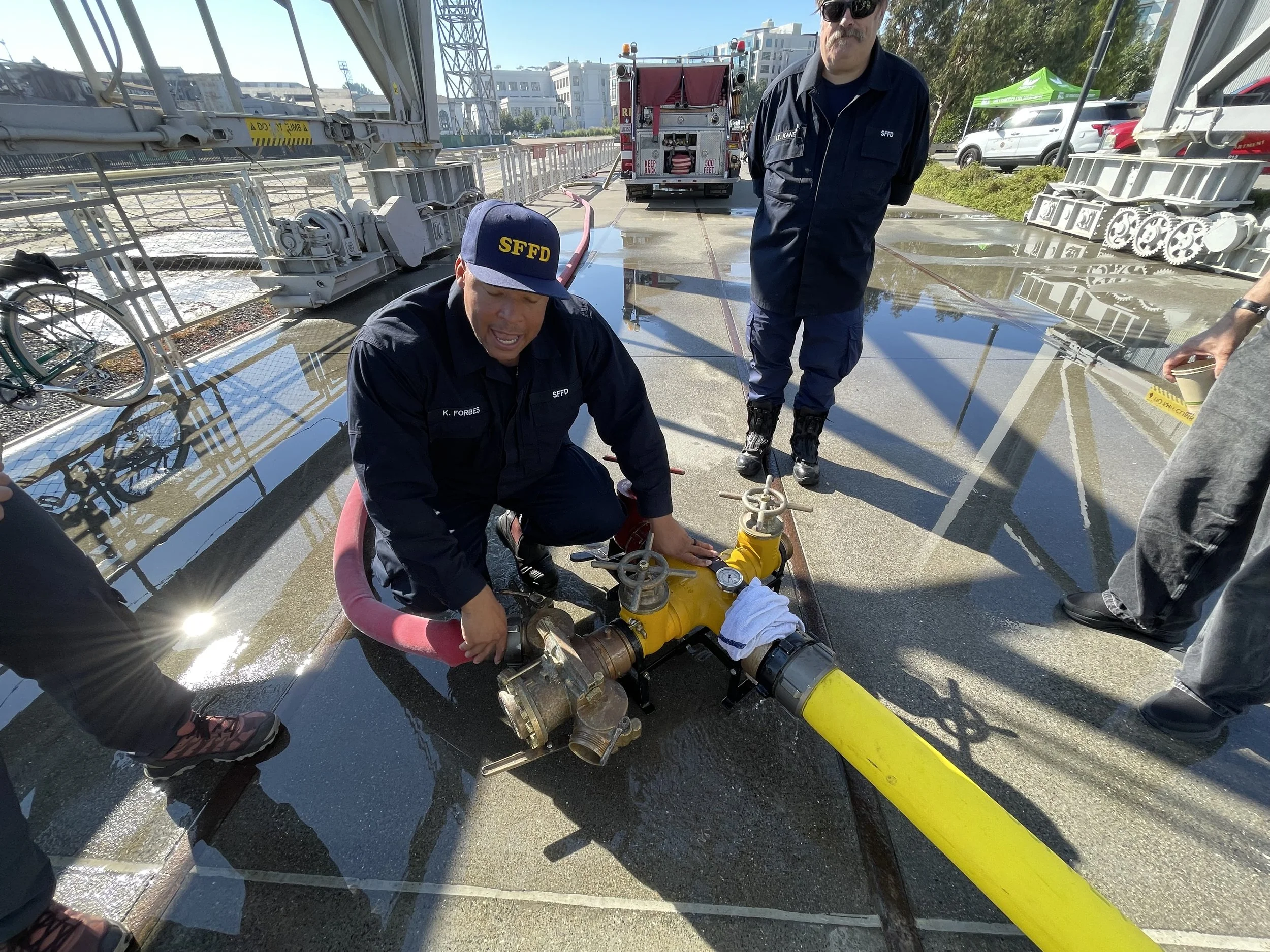
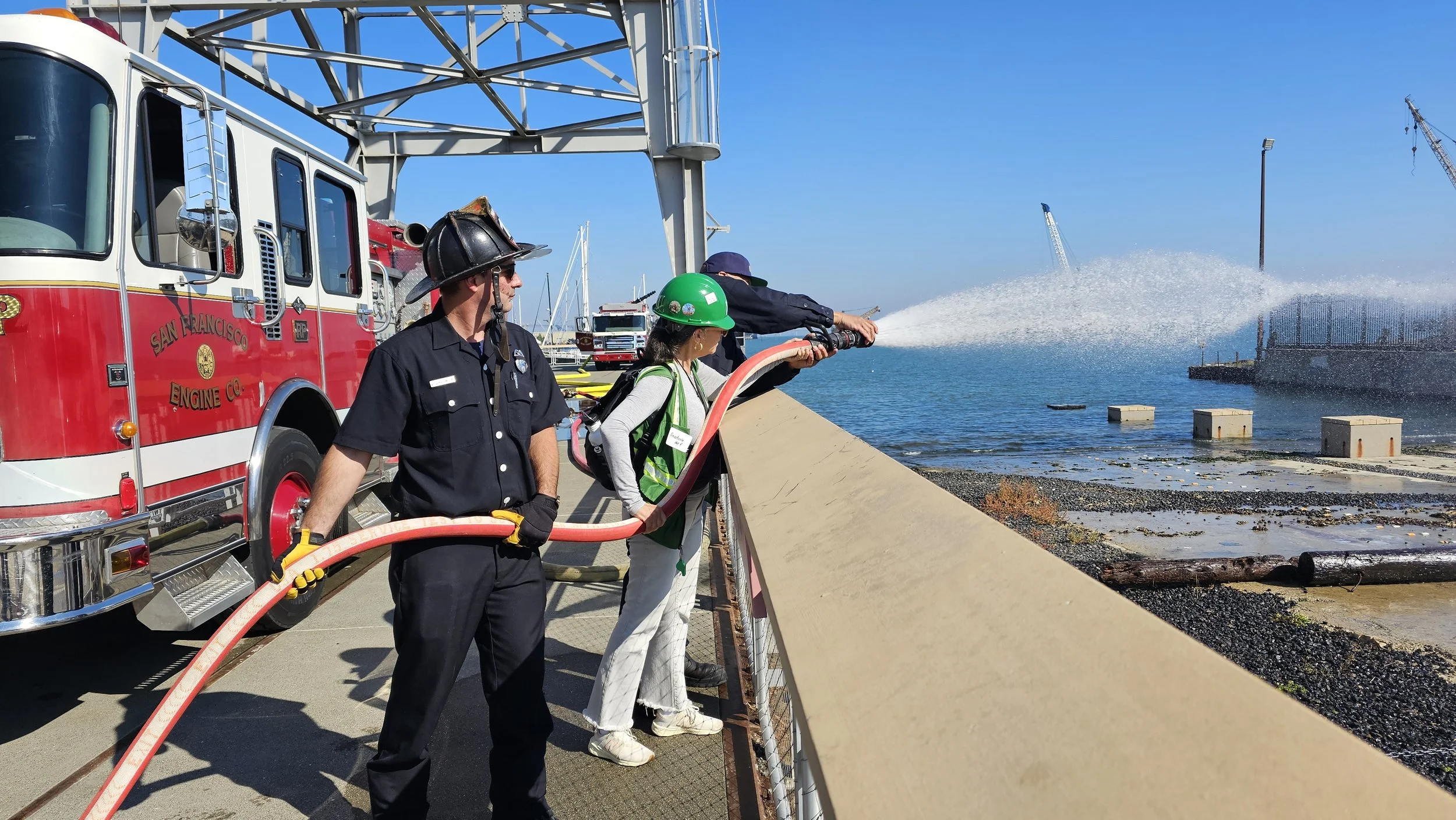
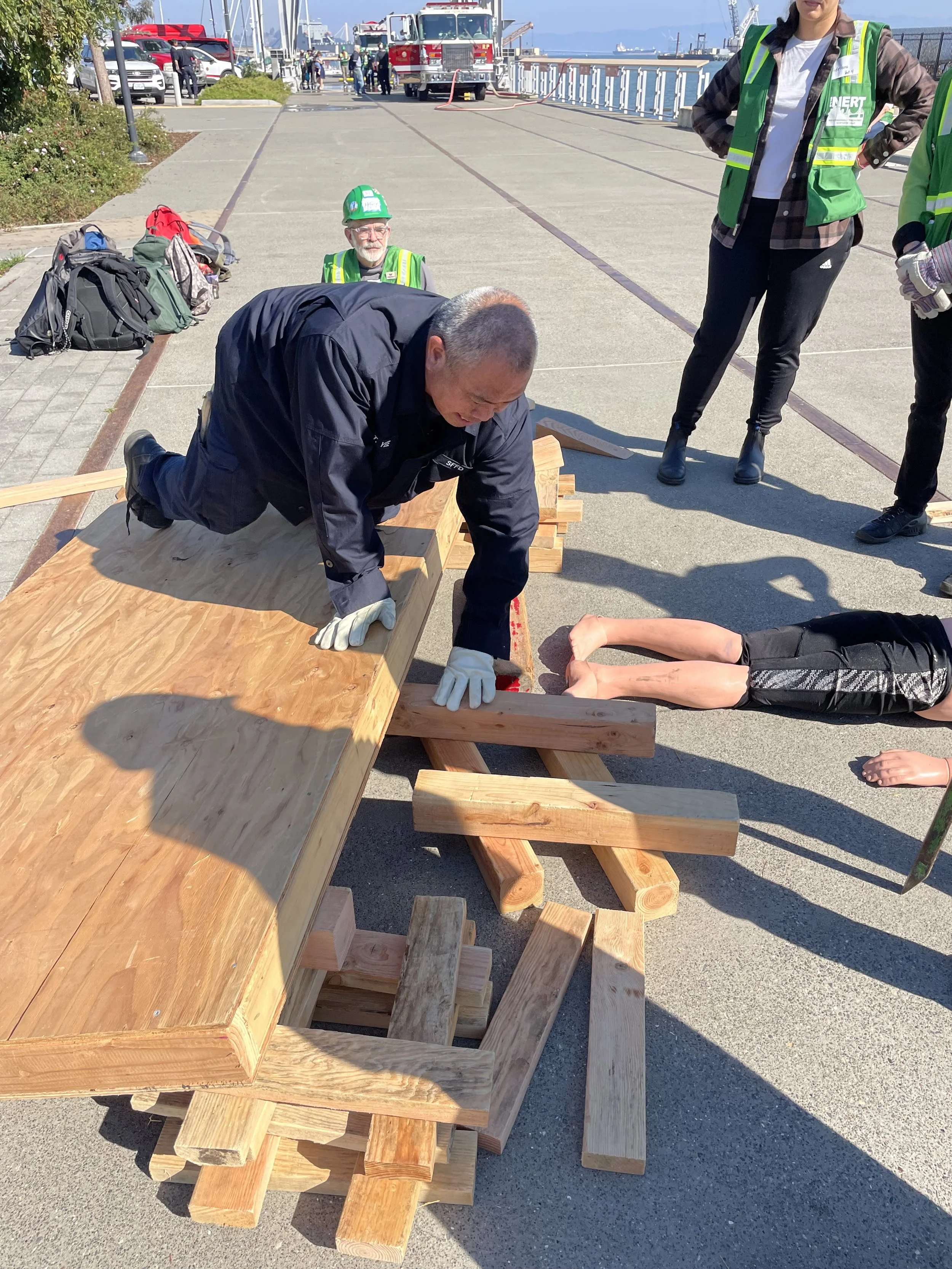
Practicing messaging during an incident, reporting key information to incident command with the LCAN format. LCAN stands for Location, Conditions, Actions, and Needs. A takeaway from this drill was that sometimes you have location, conditions, and actions but no needs. In that case, you log it at your own command and you don’t report it up the chain to battalion. Battalion only wants to know what we need, not what we’re finding and handling ourselves in the field. Later the activity logs will be filed. All these messages will be logged. Updates will be logged and filed. There’s a lot of paperwork and systems to learn.
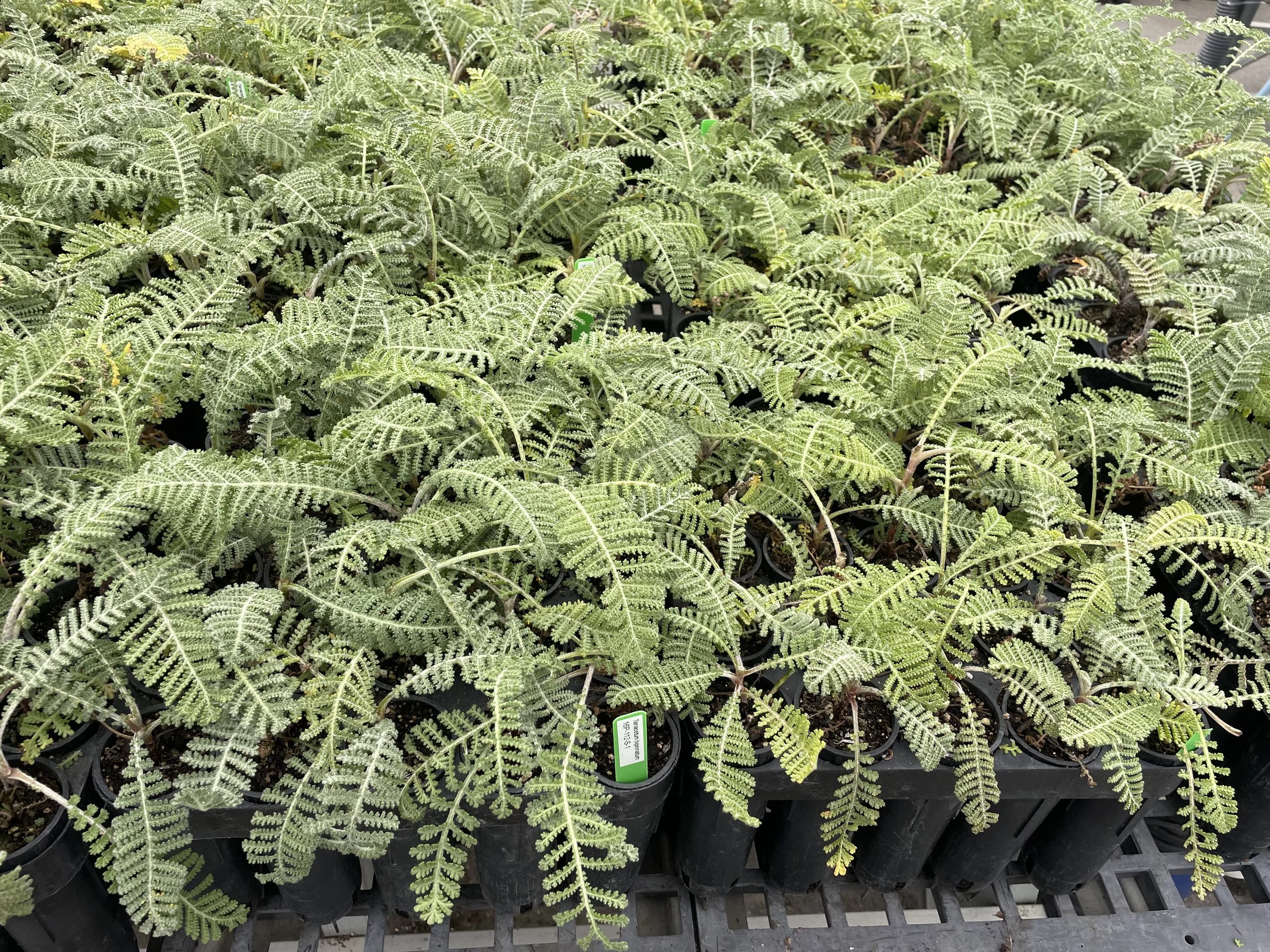
It was time to prune the tansies
The season is changing and these plants needed to be trimmed down in height and air space cleared between them for the rains ahead. Touching the dune tansy (tannacetum bipinnatum) released their scent which was likened to “focaccia”, a slight hint of rosemary, green oil, yeast. Delicious work.

They smelled “like focaccia”
Pruning the DUNE tansy at a special catch up program
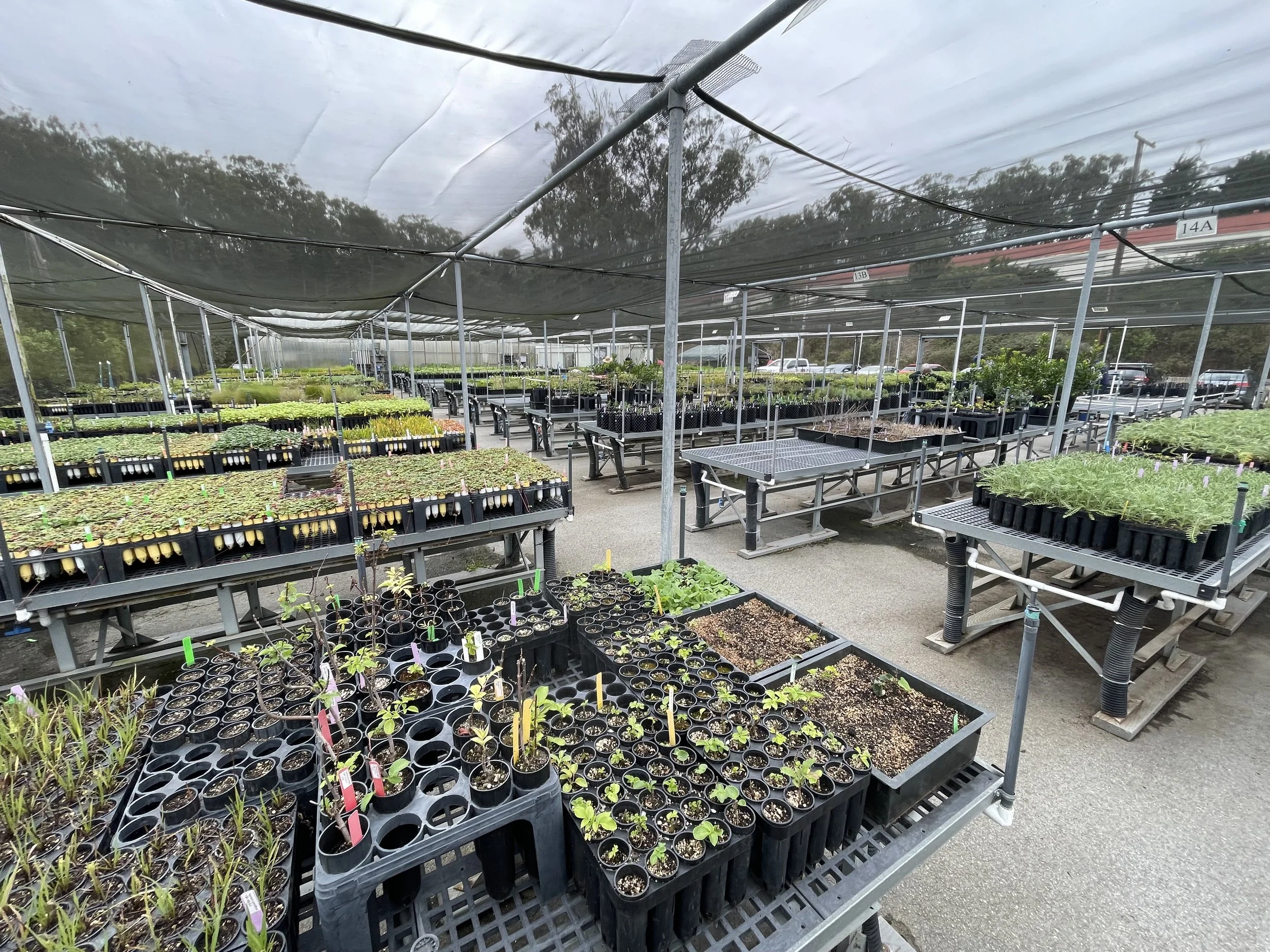
In 10 days of government shutdown alone, the Presidio Nursery had to cancel 205+ hours of volunteer help at a critical season in plant care. To catch up, they called on experienced volunteers who worked with the Nursery before to come and focus on potted plant care within the greenhouse and shadehouse: pruning, demossing, weeding-in-pots, and fertilizing.
I’ve been a volunteer at the indigenous plant nursery in the Presidio since 2023. The nursery is a cooperative program of Golden Gate National Parks Conservancy, National Parks Service, and Presidio Trust.

Touring Station 38 With The Battalion Chief: “it’s controlled chaos”
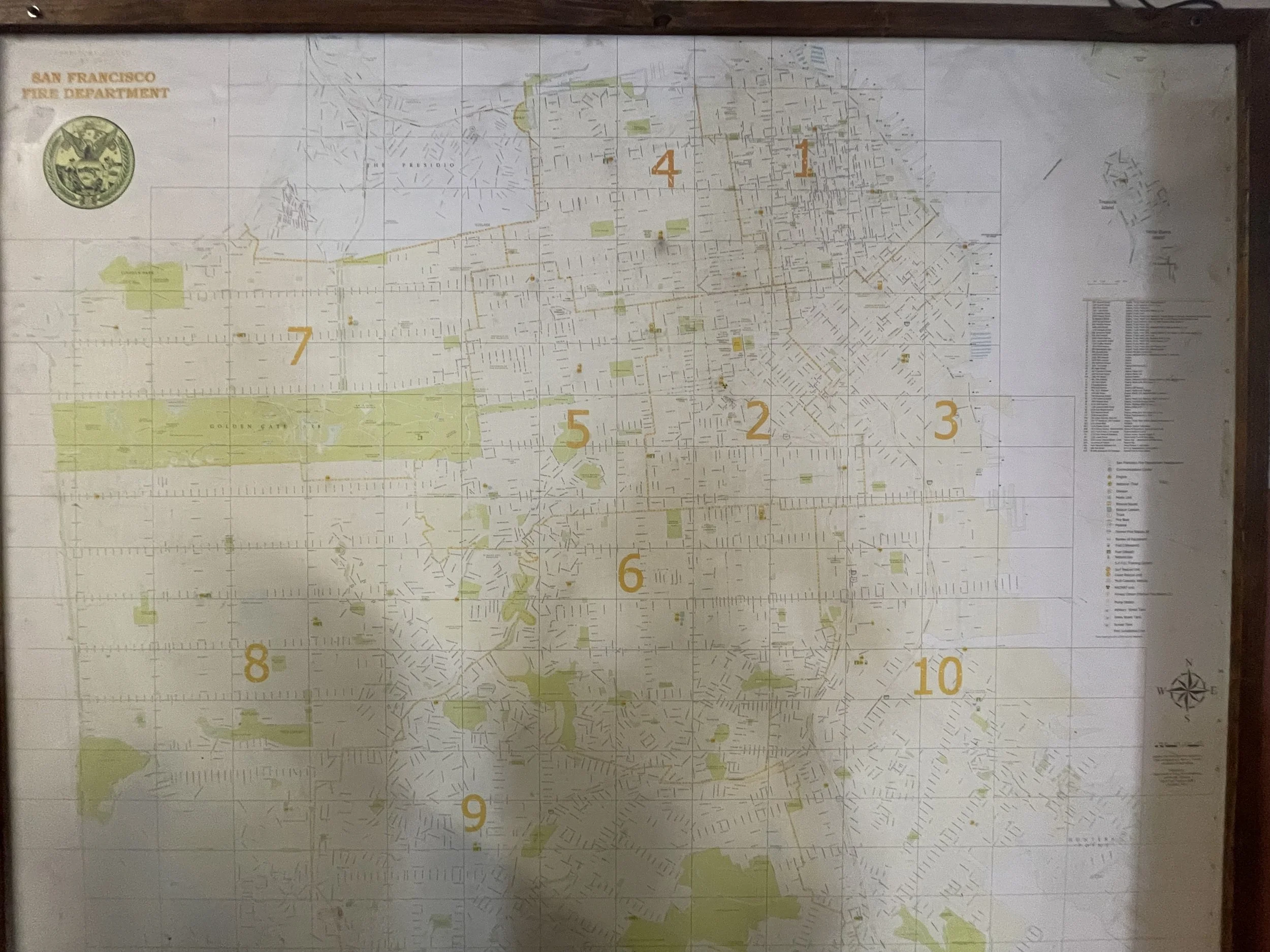
San Francisco is divided into 10 Fire Battalions. This week Neighborhood Emergency Response Team members (NERTs) from all reaches of Battalion 4’s neighborhoods came together to meet the Battalion Chief and tour Station 38.
Map of San Francisco’s 10 Fire Battalions
Thanks to Jon Kruse of the 4 Heights Group for arranging this rare tour with Captain Tom who is the NERT Program Coordinator, and the new Battalion Chief. They told us they are longtime associates in the department. They went to (fire?) school together 27 years ago!
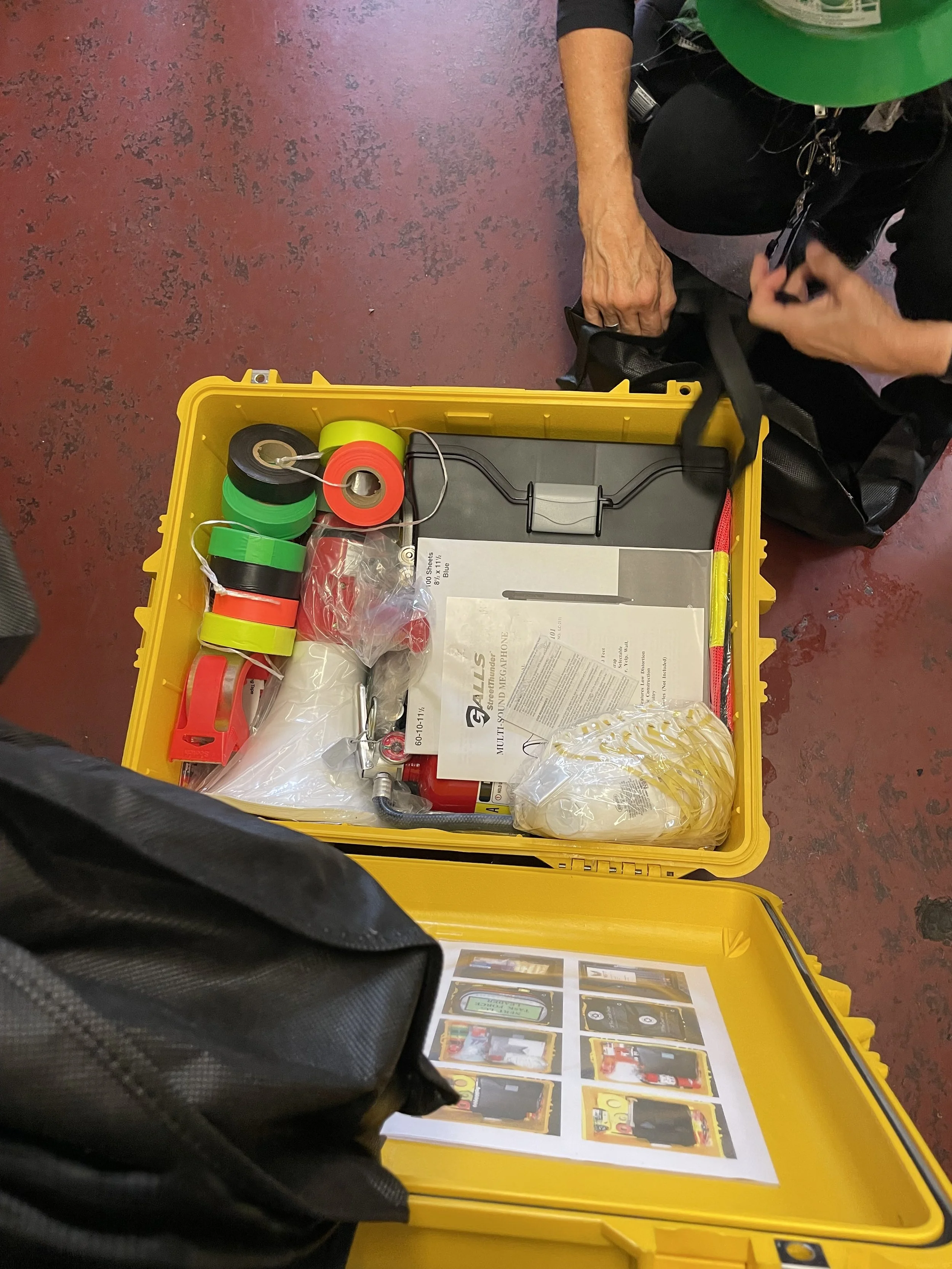
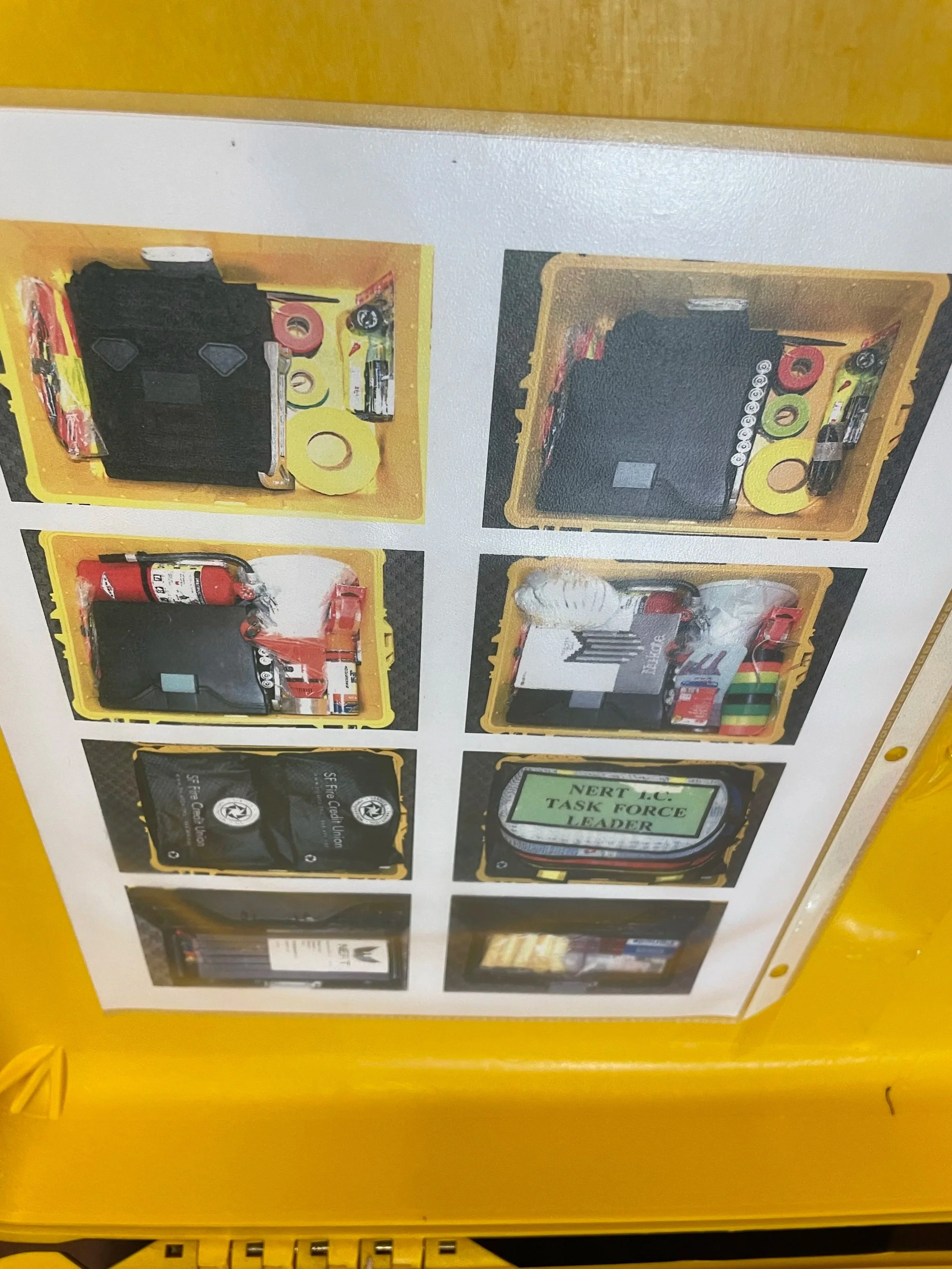
The yellow Pelican case holds our staging area materials. We also have a canopy stored here.
In the event of a disaster, this is the Battalion that our particular NERT groups will be assisting, and communicating with via the Auxiliary Communications Service by HAM radio, and by runner.
We will set up a staging area in nearby Lafayette Park to gather resources awaiting tactical deployment. We practice this at our citywide drills twice a year, and sometimes neighborhoods practice their own. In the Marina we don’t have enough active NERTs to man our staging area so we’ll stage with the Pacific Heights groups right around the corner from Station 38. Our yellow boxes of staging area materials is stored here.




The Chief, who comes from Battalion 3 in the Tenderloin - the busiest station in the nation? -, described the nature of his work.
“It’s controlled chaos.”
We learned among tasks that the department may need our extra on the ground help with is carrying the hose - and it’s heavy.
My international experience
I have lived and worked in numerous American cities and other countries, gaining firsthand insights into various cultural and social norms. As an expatriate in Muslim-majority countries in Southeast Asia and the Near East, I learned to read the fine print of each culture. My work included translating Turkish culture on live television for five million Americans and publishing a stereotype-busting book about Turkey. These international experiences enhanced my adaptability and cultural competence, allowing me to navigate diverse environments effectively. They also reinforced my understanding of global interconnectedness and the importance of cultural diplomacy.
Finding out if we can bring block readiness back to Cow Hollow & the Marina District….
Cow Hollow once had block captains. The Marina once had ALL of the San Francisco Fire Department’s certified neighborhood emergency responders.
That’s because after the destructive Loma Prieta earthquake, the Marina became the birthplace of the Neighborhood Emergency Response Team (NERT) program here in the city, and it has been a standard for the program spreading to other neighborhoods as 20,000 people have been trained in the past 30 years.
But the area’s readiness seems to have peaked and ebbed as people move away, follow other interests, age out of certain activities.
I have taken the pulse of the area as the official coordinator of Cow Hollow and Marina NERTs the past year and a half. I’ve discovered that NERT may have been born here after the Loma Prieta but there are only a handful of active NERTs left here.
I’ve had a chance to connect with former block captains and longtime NERTs in the area. “I couldn’t find anyone to take over from me,” one 80-year old block captain and former NERT told me. “The only person I still know on the block is 90.”
We have to take the baton from earlier neighbor responders, and pass it on to our neighbors of today. The people next door and the people across the street.
And there’s only one hour we need to focus on: The Golden Hour.
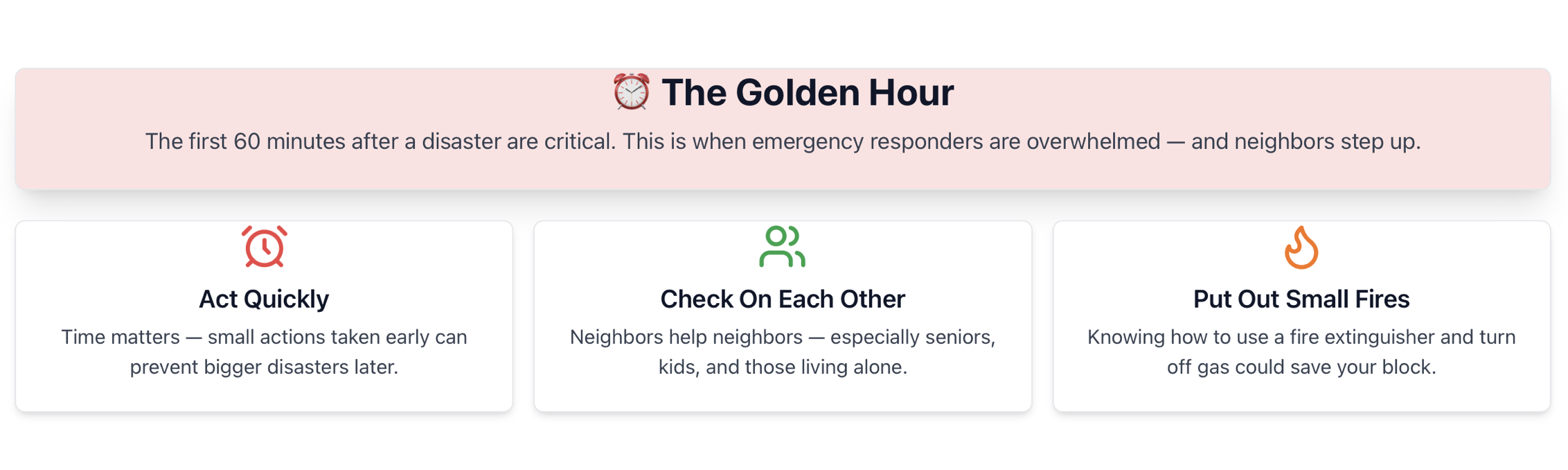
The Golden Hour, or first 60 minutes after a disaster happens, is when neighbors rely on each other. We can check on each other, treat minor injuries, and put out small fires.
The first 60 minutes after a disaster happens is when neighbors rely on each other. We can check on each other, treat minor injuries, and put out small fires.
A block - both sides of the street, about 20 homes - can learn to work together in “the Golden Hour” where we can make the most impact as neighbors.


Can we bring block readiness back to Cow Hollow & the Marina District? To do so, groups and leaders in our district can use this easy and free 9 step neighborhood response plan class that the SF Fire Department supports.
“Do you know how to turn off your neighbor’s gas?”
Do you know how to stop a small fire from spreading from one home to the next home? How to shut off the water main so pollutants don’t enter your system? Or how to alert your neighbors you might need help?
Each block in our district and the city can learn these life-saving and property-protecting skills.
You can learn it in a free 9-Step block-by-block readiness program, like the one offered last week at the Golden Gate Valley Branch Library.
According to this SF Fire Dept preparedness program called Map Your Neighborhood (MYN), we do better in disaster response when we know each other.
As a NERT, the first households I am most likely to be able to reach and work with for emergency resilience are on my own block: gas turn offs, fire extinguisher shares, staging and gathering areas in homes and garages.
A year ago I took this 90 minute class, it covers what happens BEFORE NERTs deploy to help the wider neighborhood. We check our household, our building, our block.
I am probably the only person on my block to take the class, I believe I am the only NERT on my block. I wish I weren’t the only one who knows this. I see that NERT is a commitment and our area could start with something lighter weight like MYN. It’s an easy way to increase a block’s readiness for emergency situations that gets neighbors talking to each other about how we can each help. You can read about it here.
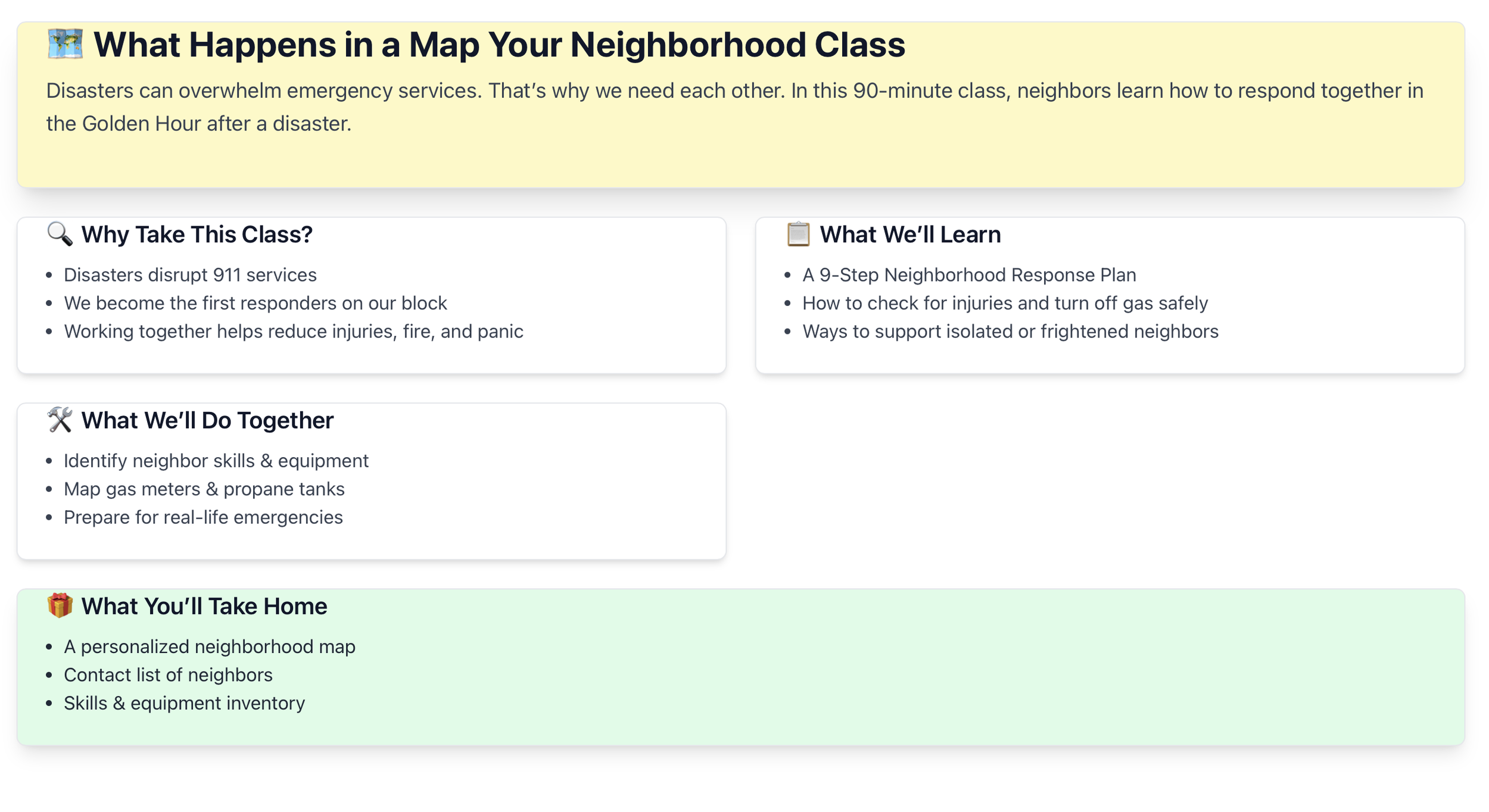
My takeaway from the class? I thought, “I’m not ready to tell my neighbors! That means….my block is definitely not ready.”
I can’t deploy as a NERT before I have taken stock of my own area. Since taking the class, I’ve been mapping my own block. I started talking to local neighbor associations about spreading the response plan to larger groups of neighbors.
Last week I attempted the next step: telling my neighbors about it (I even printed out flyers!) and inviting them to a class thanks to the dedication of the instructor of the class, fellow NERT Sue Brown. She is committed to making a regular schedule of events and bringing this class to a person on every block, and then to all the neighbors on that block — the class is a funnel of sorts, inducting us into a plan that only works if our neighbors know about it and take part.
I invited every household on my block to consider attending this event or another one upcoming. We can’t do the plan if they don’t know the plan.
“In a disaster, when emergency responders like 911, fire, police, utilities, EMS are overwhelmed, we are the responders.”

We can revitalize our block readiness
With a free and regularly offered 9 STEP PROGRAM supported by the SF Fire Department. Pictured at Golden Gate Valley Library with District 2 Supervisor Stephen Sherrill
I invited community leaders to take the class.
I also invited our new District 2 Supervisor, Stephen Sherrill, who joined the class. Supervisor Sherrill reminded me that he led hurricane response in the Office of Mayor Michael Bloomberg in New York, and then two hurricanes hit the city, so he knows why we need neighborhood readiness training and he’s interested in what we NERTs are doing in Cow Hollow and Marina.
I invited Rich Goss, a member of the security committee of the Cow Hollow Association, to join the class to see how the free fire department readiness class can kick off block-level readiness in our district.
I hope to raise awareness on my block - and all the blocks - to let people know we have a 9-step plan to increase readiness with our neighbors. We just need to be walked through it. This class does that.
All it takes to get started with district readiness is one person from one block to attend the 90 minute class.
The next classes will be at the Fire Department, Folsom & 19th, June 21 9am and 11 am. If you’re interested, but unable to attend these sessions, please contact Sue Brown, suebrown21@yahoo.com, for information on other sessions. If you’re in my district or neighborhood and interested, you can let me know too!
There’s also a Zoom MYN on June 19. Sign up here.
TBT: I applied for a patent for social discovery on a short form mobile streaming platform
When I was a cofounder of a mobile streaming platform called Second Screen - later we called it “10 Block” to represent the blocks of 10 minute video it could stream to social viewers on our platform - our final chapter was an M&A journey. To document our novel idea, we applied to the U.S. Patent & Trademark Office in 2019.
As the chief operating officer of our early stage startup, I led the initiative to create our patent application with a patenting law firm. The project had unusual demands, as entrepreneurs so often face, and faced budget restrictions as well.
“I found a Vietnamese-speaking entrepreneur who could interview the tech team in Vietnam and produce a technical sketch of our system.”
My work on this initiative included producing technical sketches of the system. This particular challenge involved locating a technically-minded entrepreneur familiar with patenting who could speak Vietnamese to interface with the development team in Vietnam who built the platform long before I joined the company. The sketches never existed, and the team had never produced a sketch.
Thanks to Gigi Wang at UC Berkeley’s School of Engineering Sutardja Center, I was able to connect with a local founder of a technical company who just graduated Berkeley with a PhD. She’s a brilliant woman who is currently CEO of her own startup addressing cognitive impairments with light and sound. Mai Nguyen had the skills and experience to be able to capture an accurate first sketch after just a half an hour call with the development team.

I’m not a technical person but I’m creative who can learn from a model and replicate it so once I had the first technical drawing I was able to produce all the rest of the drawings needed to make our patent application.

Our provisional application was filed in January 2020 with fellow 10 Block inventors Marc Lopez and Jade Gabriel.