My 5th Great-Uncle Died In The Duke’s Licorice Factory
A death record from Calabria connects my relative, a duke, and a black candy that somehow made it to the Smithsonian…
Nobody in my family ever told me a story about Francesco. I had heard the name Salerno from my grandfather. They were legendary, those Salernos. What did he tell me? I cannot recall a thing.
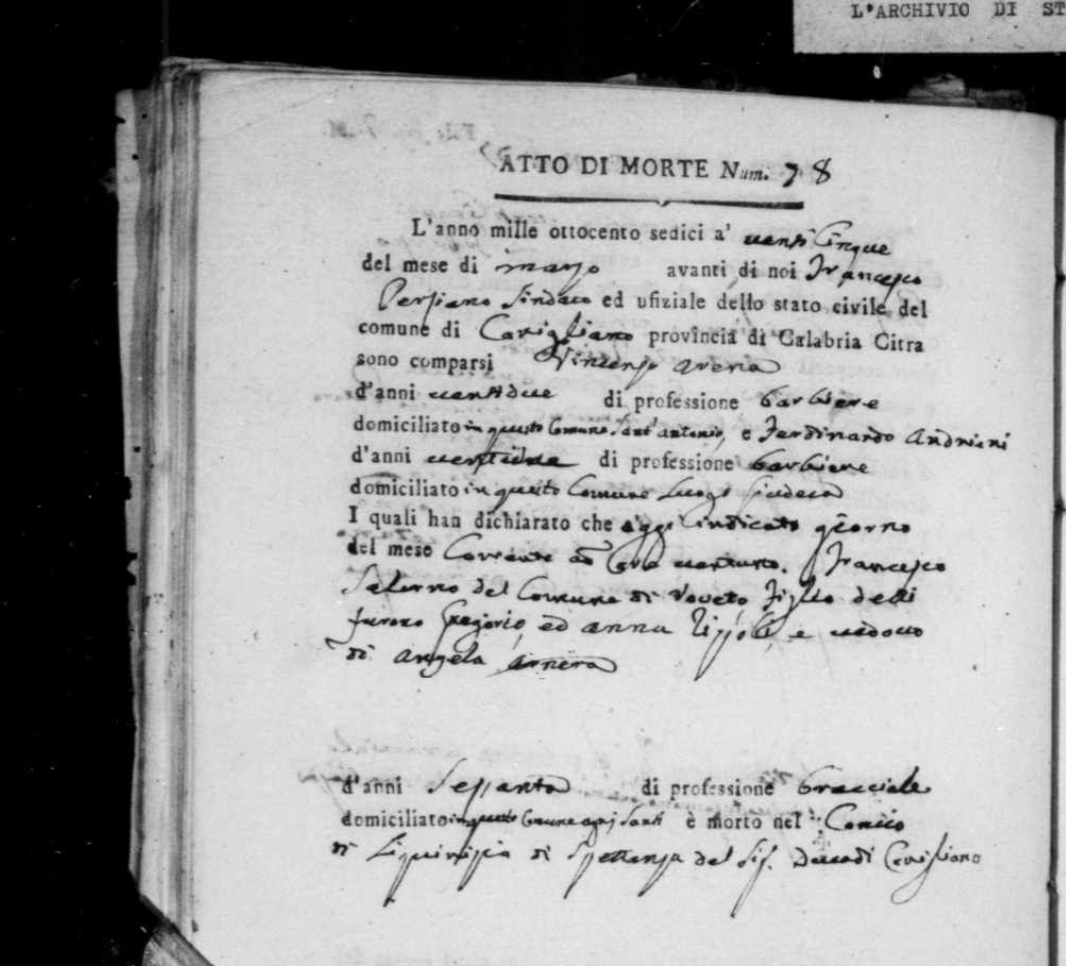
Francesco Salerno’s death record in the National Archives of Cosenza
But I know where Francesco died.
He spent his last day in a licorice workshop belonging to the Duke of Corigliano.
On January 5, 1817, Francesco was sixty years old and working as a laborer when he died in the concio della liquirizia, the Duke’s licorice-processing workshop in Calabria.
Naturally, I stopped researching Francesco and started researching licorice.
My sisters and I were licorice fiends so I’m not a newcomer to licorice. No one ever connected our fixation on this candy to a family story. The duke was news.
It turns out this was not some eccentric duke making candy in his kitchen. A century earlier, the Duke of Corigliano had established one of Calabria’s earliest conci, helping turn the wild licorice root there into a regional industry.
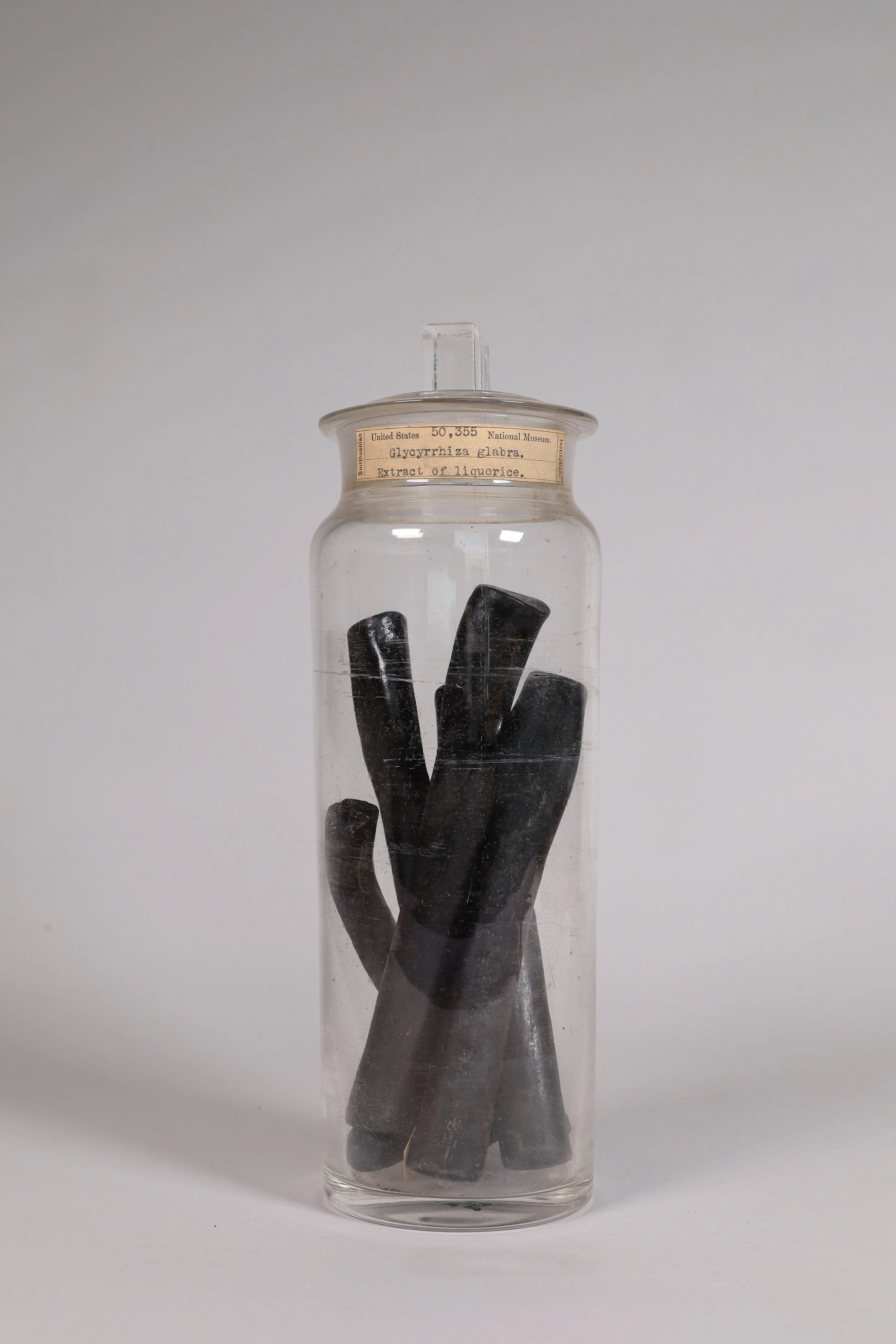
Duca di Corigliano Licorice Sticks, at the National Museum of American History, Smithsonian Institution. These date to about 1885, nearly seventy years after Francesco died in the Duke of Corigliano’s licorice workshop.