My 5th Great-Uncle Died In The Duke’s Licorice Factory
A death record from Calabria connects my relative, a duke, and a black candy that somehow made it to the Smithsonian…
Nobody in my family ever told me a story about Francesco. I had heard the name Salerno from my grandfather. They were legendary, those Salernos. What did he tell me? I cannot recall a thing.
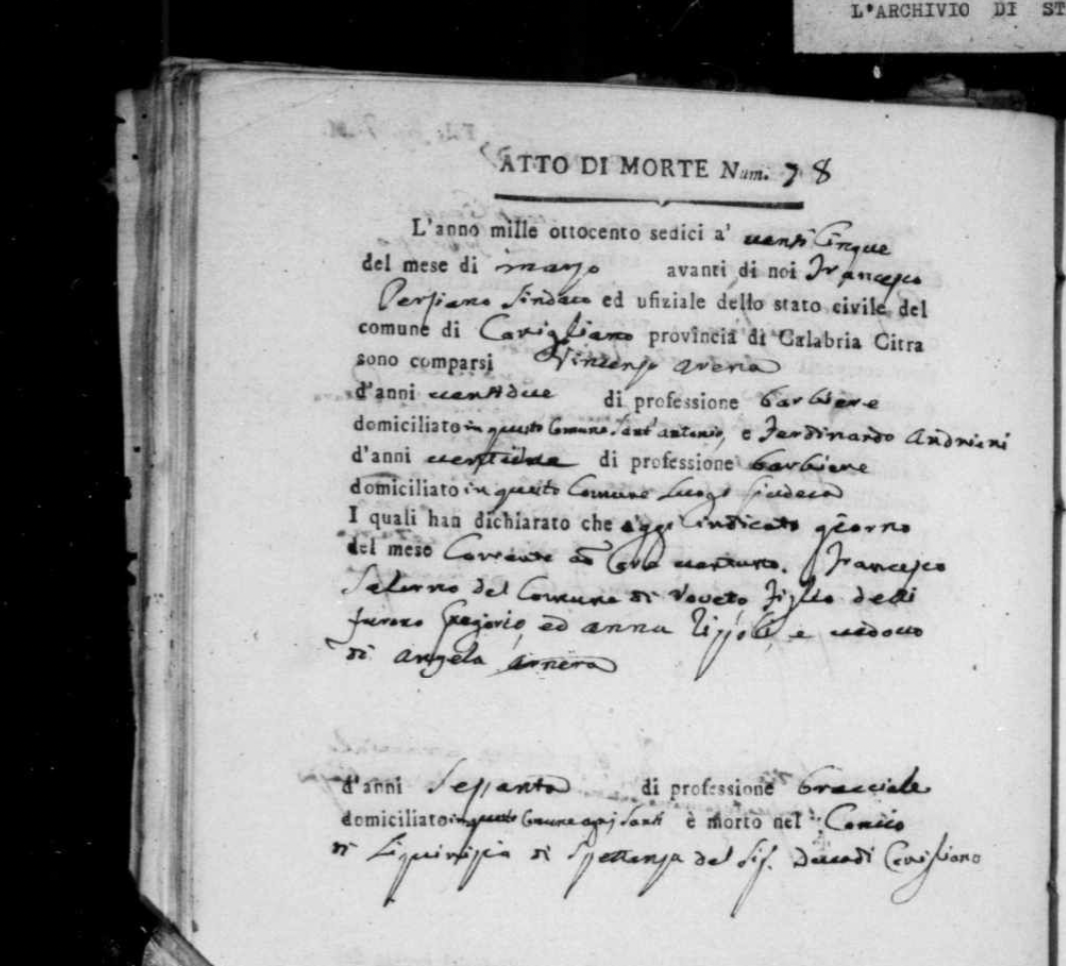
Francesco Salerno’s death record in the National Archives of Cosenza
But I know where Francesco died.
He spent his last day in a licorice workshop belonging to the Duke of Corigliano.
On January 5, 1817, Francesco was sixty years old and working as a laborer when he died in the concio della liquirizia, the Duke’s licorice-processing workshop in Calabria.
Naturally, I stopped researching Francesco and started researching licorice.
My sisters and I were licorice fiends so I’m not a newcomer to licorice. No one ever connected our fixation on this candy to a family story. The duke was news.
It turns out this was not some eccentric duke making candy in his kitchen. A century earlier, the Duke of Corigliano had established one of Calabria’s earliest conci, helping turn the wild licorice root there into a regional industry.
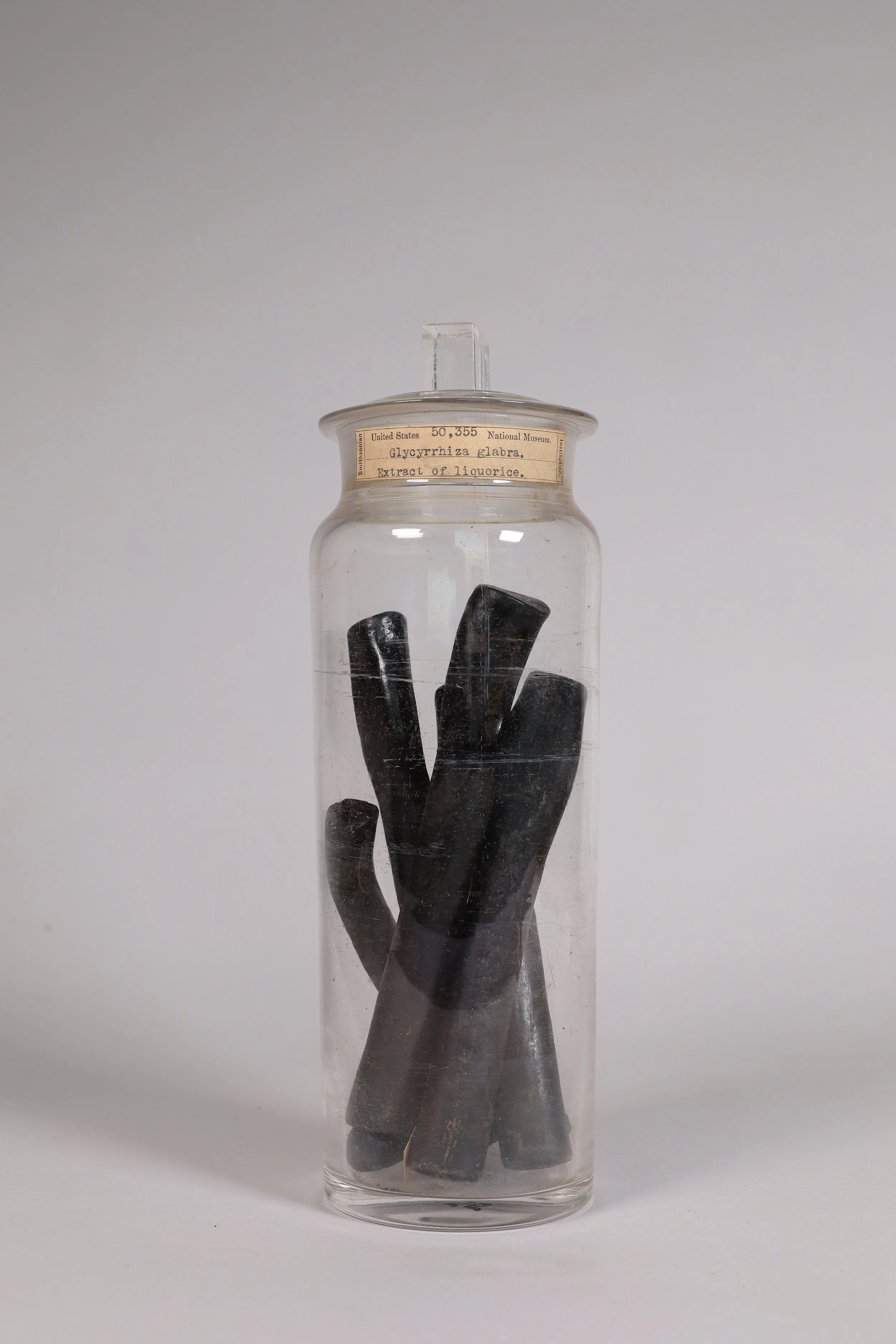
Duca di Corigliano Licorice Sticks, at the National Museum of American History, Smithsonian Institution. These date to about 1885, nearly seventy years after Francesco died in the Duke of Corigliano’s licorice workshop.
And then I found this exhibit at the Smithsonian: Duca di Corigliano Licorice Sticks.
These sticks were made seven decades after Francesco died, carrying the same Corigliano name into the American historical record.
I have no story about Francesco. But I know where he spent his final day. I know what factory he died in and what they did there: crushing, boiling, extracting sweet black liquid from roots.
And I now know exactly where in Calabria I need to go.

Father, Mother + Boss Arrigo
Family of Mine reconstructs a South Italian network spanning migration, neighborhood commerce, political power, and organized crime, then follows how its history was stripped away as its outcomes became respectable American inheritance.
A family photograph preserved the title. The explanation did not survive with it.
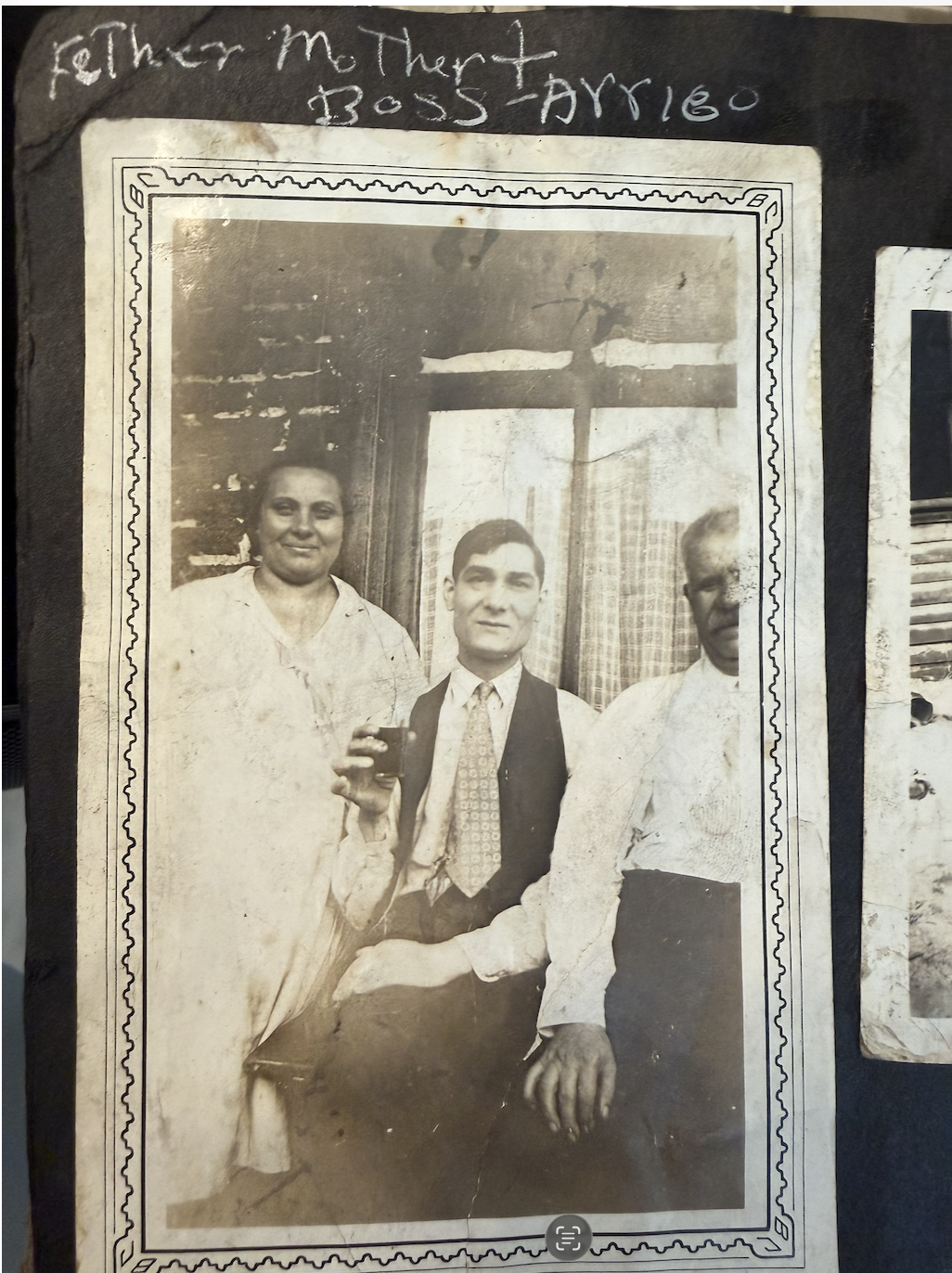
1929, Little Italy, Chicago. © 2026 Anastasia Ashman
The handwritten caption above one photograph in my grandmother’s album reads:
Father Mother + Boss Arrigo.
As a child, I would stop at this page and wonder about the final name.
Why Boss?
Boss of what?
The photograph shows my great-grandmother standing beside two seated men. My great-grandfather sits in the middle. The older, mustachioed man on the right is half cut out of frame, and identified only by his surname and title.
Nothing else in the album explains who he was, what authority he held or why my grandmother expected the word Bossto be understood. This is where the project begins: not with something I remember, but with something the family record preserved and could no longer explain.
The photograph preserved the moment, the people, and the title but not the world that made the title meaningful.
Decades passed. Recently, I dug into this photo. My research placed this 1929-dated scene in Chicago on the back porch of my grandmother’s building. For the first time, I looked up the address shown in the Census reports. A mixed-use brick structure on South Racine Avenue with a four story wooden porch on the rear. Two Sicilian Arrigo brothers purchased the property in 1910 and lived there with their families. My great-grandparents rented an apartment in the building for decades. It stood on a major commercial artery between in Chicago’s Near West Side, in the immigrant neighborhood called Little Italy. The building still stands today and is landmarked on the National Register of Historic Places as the Jennie Foley-Victor A. Arrigo Building.
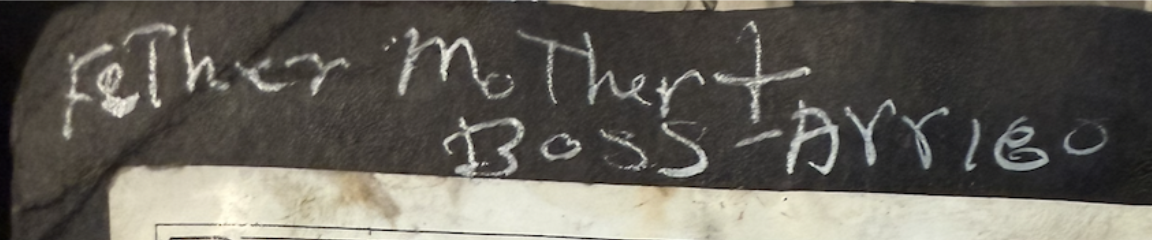
My grandmother’s scrawl
Those facts answered where the photograph had been taken and established one relationship between the families.
They did not explain the caption.
That gap became one of the starting points for my book-in-progress, Family of Mine.
This is not a story passed down. It’s assembled after the fact.
What began as family-history research grew into Family of Mine, a narrative nonfiction investigation using photographs, genealogy, newspapers, government files and physical places to recover a history that survived without its explanation.
This blog shares individual pieces of that investigation. The book connects the larger system; here, each post begins with one photograph, object, document, place, sentence or question.
The first clue was a single word written above a family photograph:
Boss.
Research notes from Family of Mine, a narrative nonfiction investigation using photographs, genealogy, public records and institutional archives to examine migration, informal economies and the making of American respectability.