Getting answers I wasn’t looking for, Summer 2026
It’s been a season of annotated conversations. Since I started publishing Family of Mine on Substack this summer, other people’s posts have kept changing what I can see in my own archive.
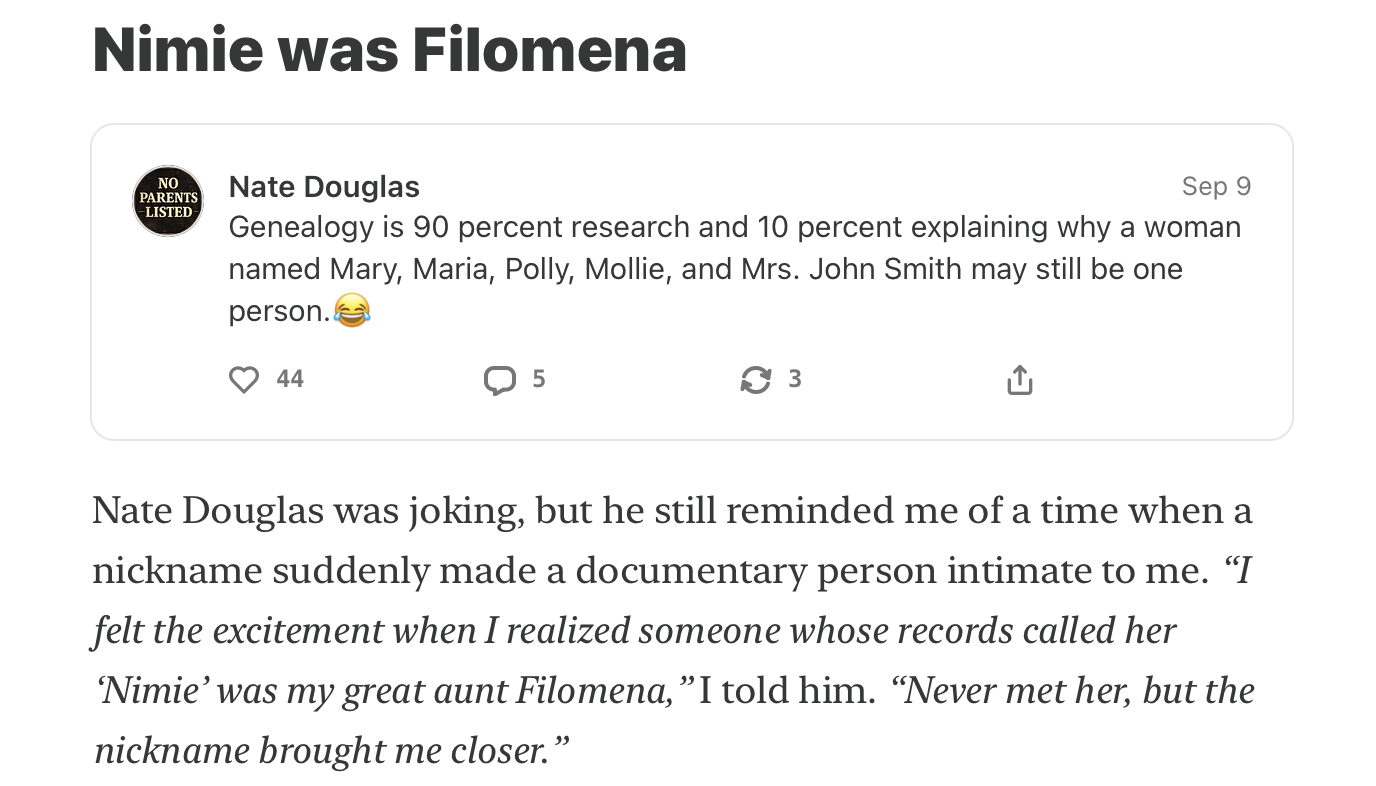
A quickie-marriage town. A nickname. An unidentified wedding couple. Murder verdicts. Novena cards over tomatoes. A map that made power look like walking distance.
Something catches, and I go back.
Here’s where you can read the whole thing at Substack. Please visit!
And here’s a selection from it:
Chicago Heights enters the conversation
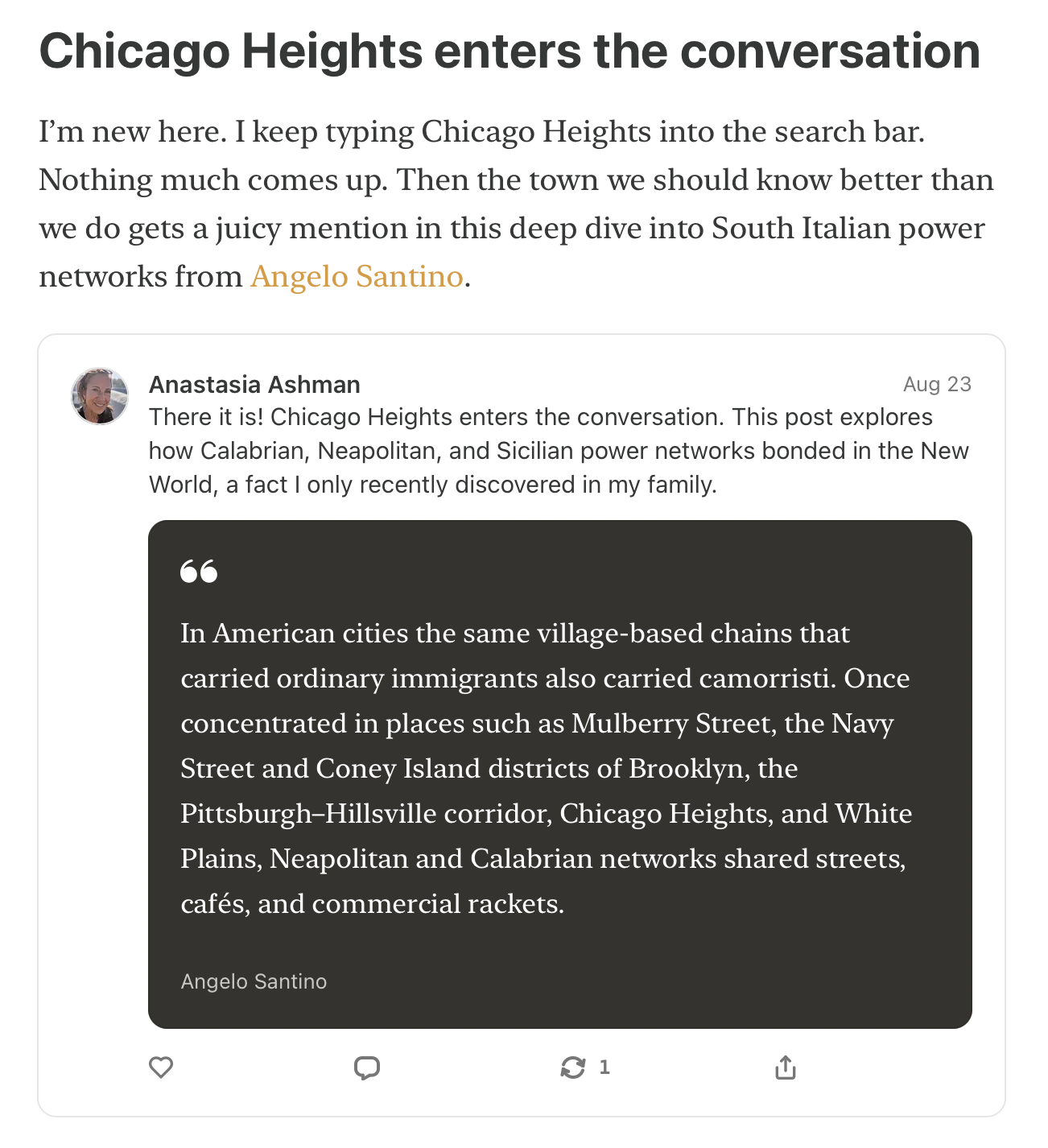
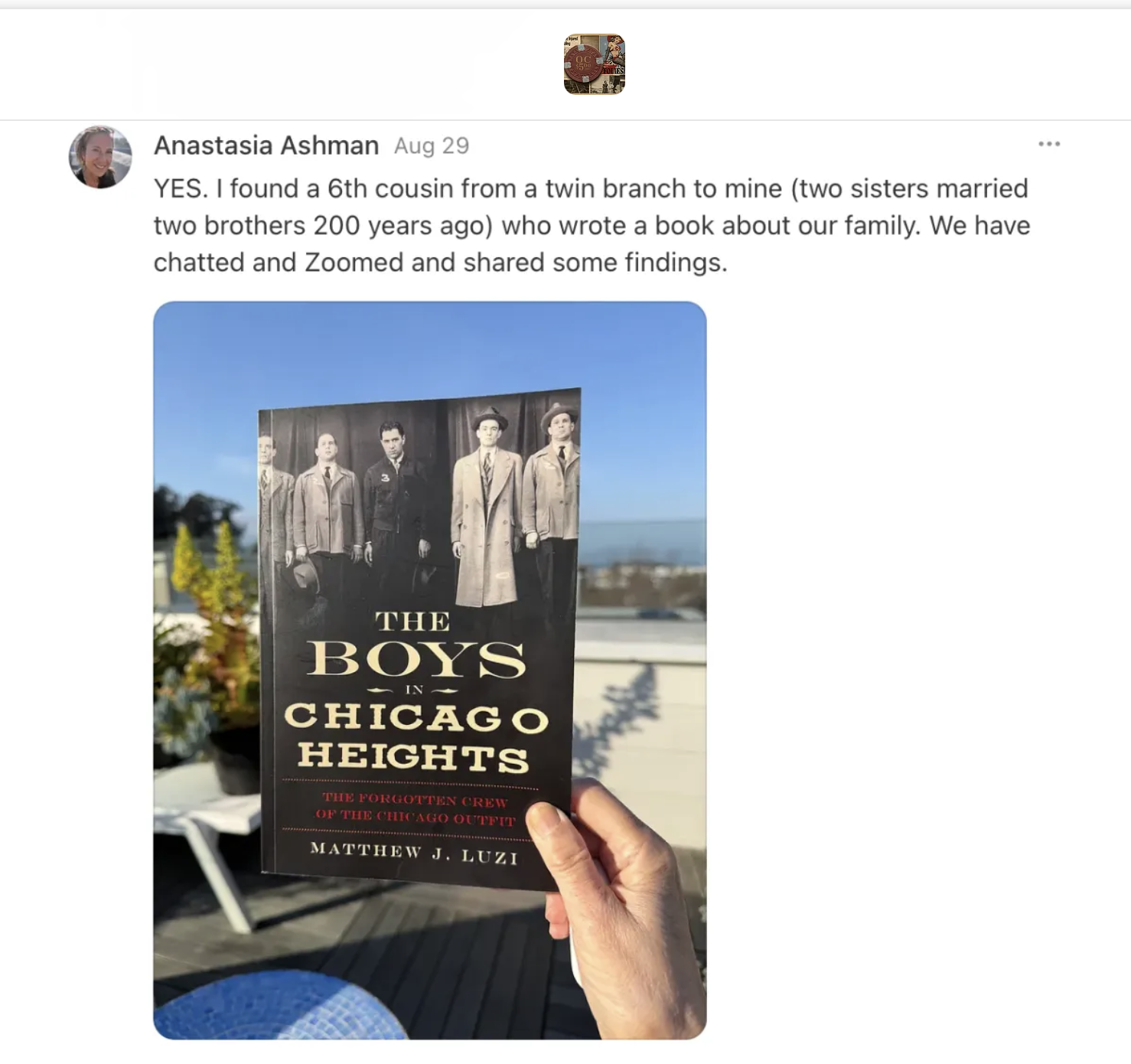
I’m new over on Substack. I keep typing Chicago Heights into the search bar, looking for my people. Nothing much comes up. Then the town we should know better than we do gets a juicy mention in this deep dive into South Italian power networks.
Getting an inside look at Jeffersonville
Jeffersonville is another town I didn’t expect to matter.
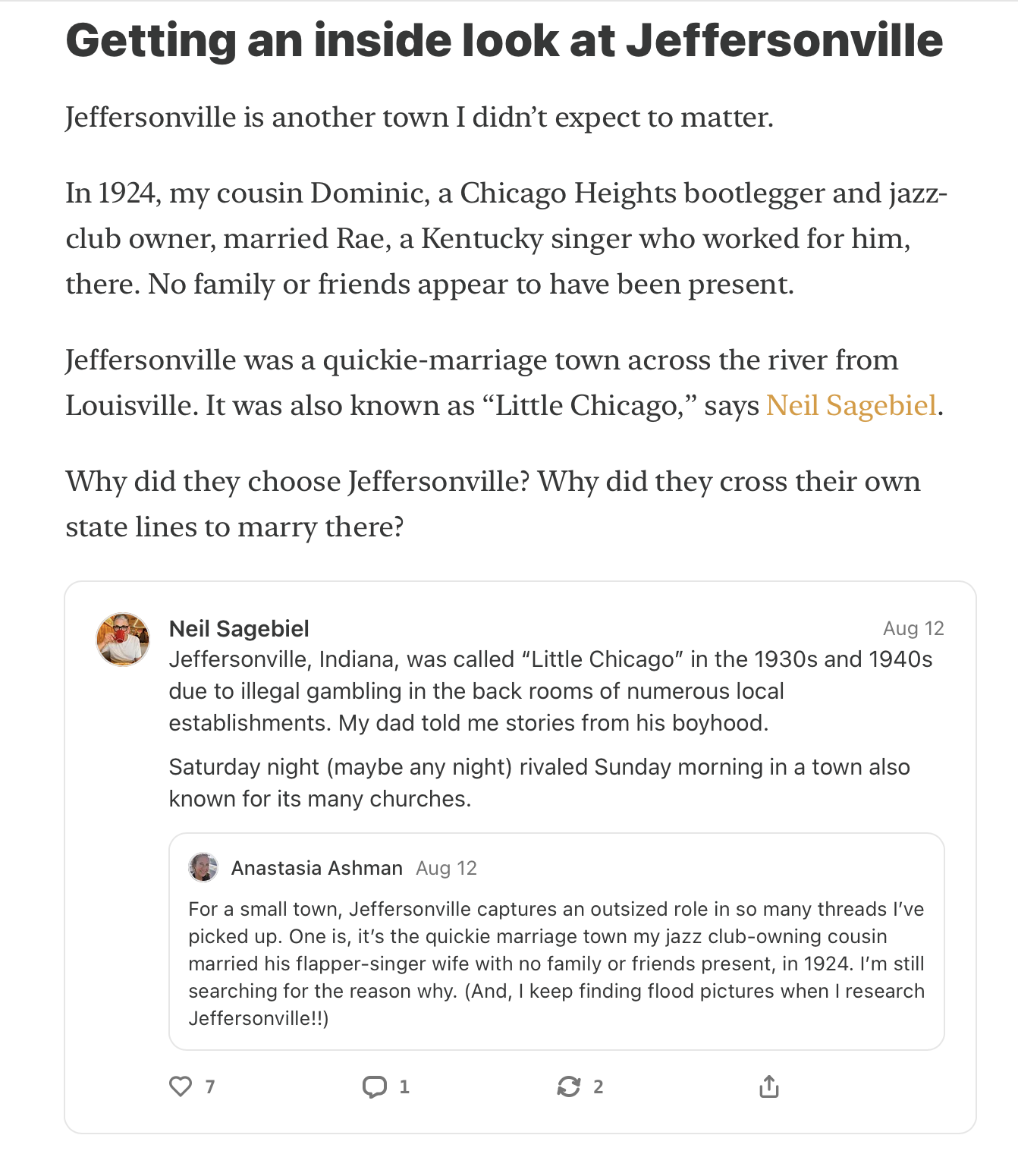
In 1924, my cousin Dominic, a Chicago Heights bootlegger and jazz-club owner, married Rae, a Kentucky singer who worked for him, there. No family or friends appear to have been present.
Jeffersonville was a quickie-marriage town across the river from Louisville. It was also known as “Little Chicago.”
Why did they choose Jeffersonville? Why did they cross their own state lines to marry there?
For a small town, Jeffersonville captures an outsized role in so many threads I’ve picked up. One is, it’s the quickie marriage town my jazz club-owning cousin married his flapper-singer wife with no family or friends present, in 1924. I’m still searching for the reason why. (And, I keep finding flood pictures when I research Jeffersonville!!) - me
Nobody has named the couple yet
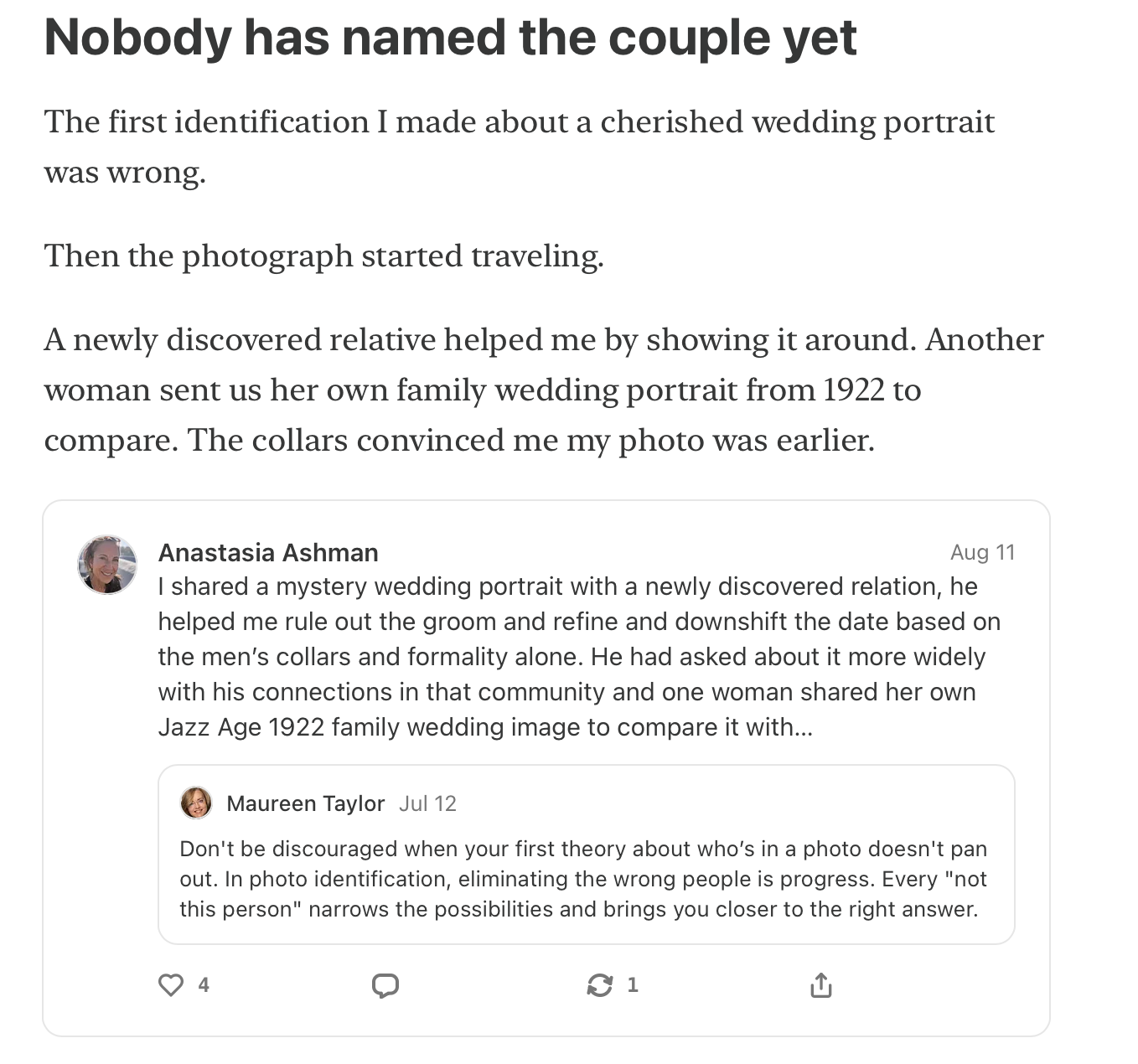
The first identification I made about a cherished wedding portrait was wrong.
Then the photograph started traveling.
A newly discovered relative helped me by showing it around. Another woman sent us her own family wedding portrait from 1922 to compare. The collars convinced me my photo was earlier.
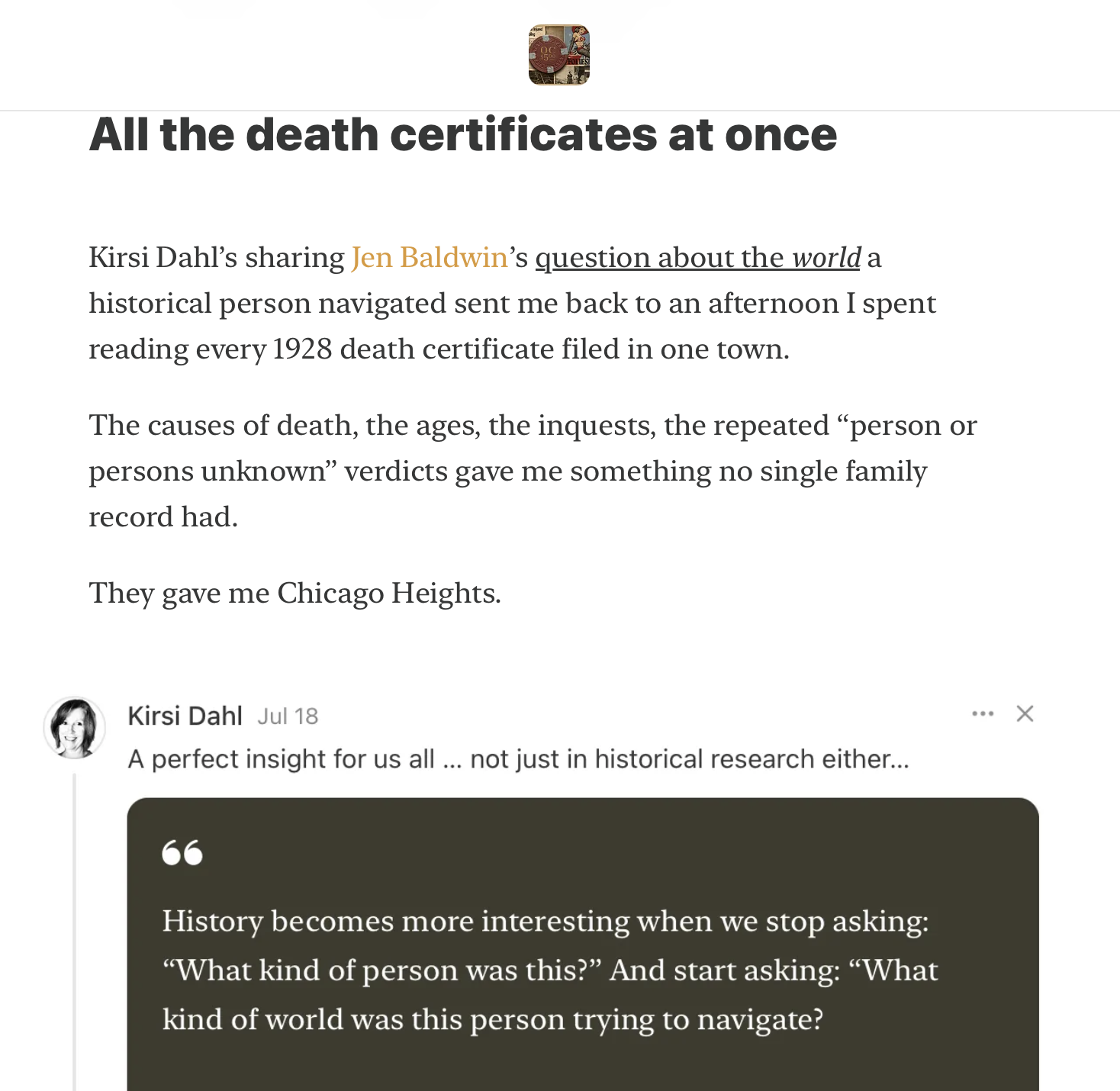
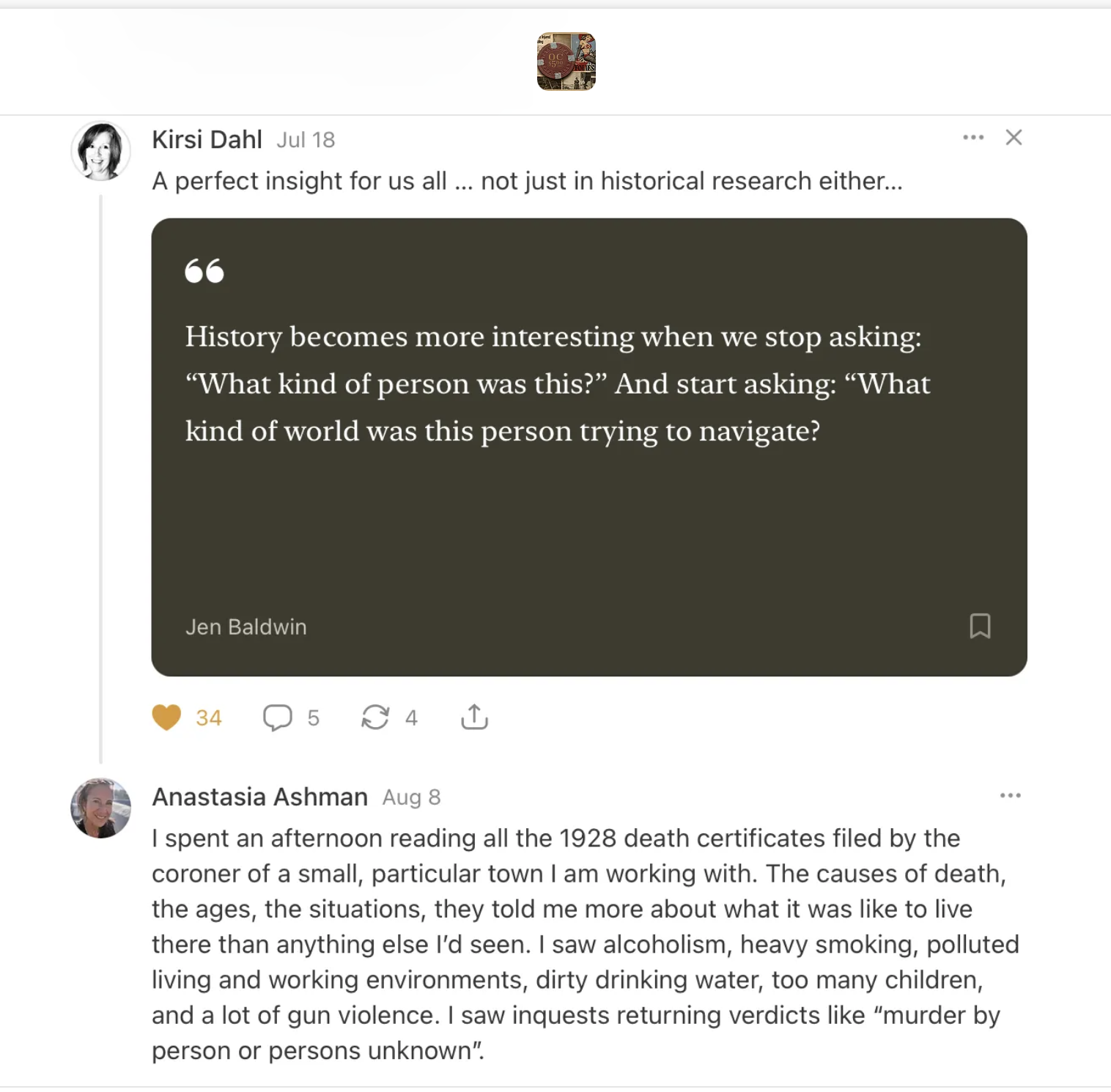
A question about the actual world a historical person navigated sent me back to an afternoon I spent reading every 1928 death certificate filed in one town.
The causes of death, the ages, the inquests, the repeated “person or persons unknown” verdicts gave me something no single family record had.
They gave me Chicago Heights.
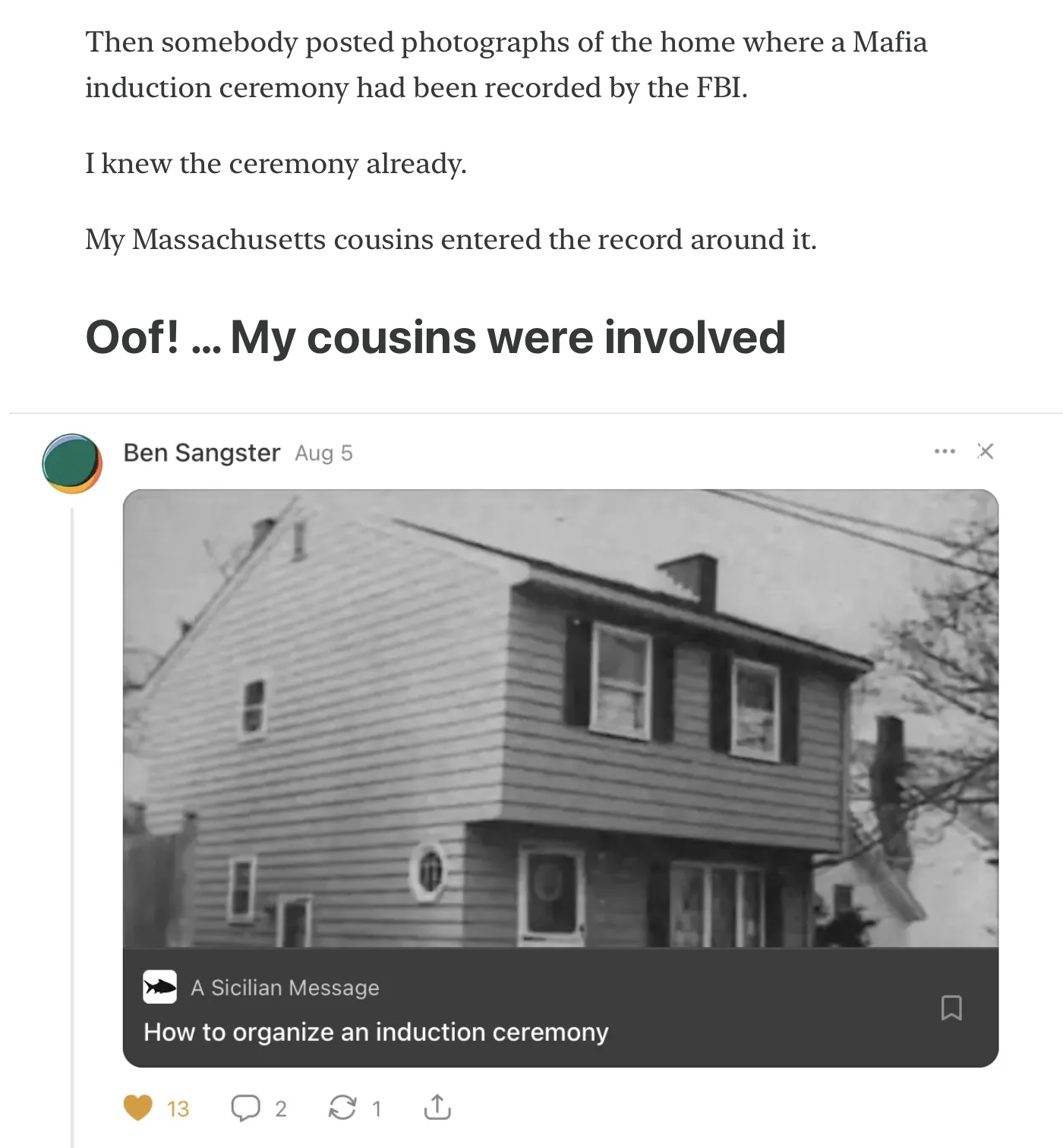
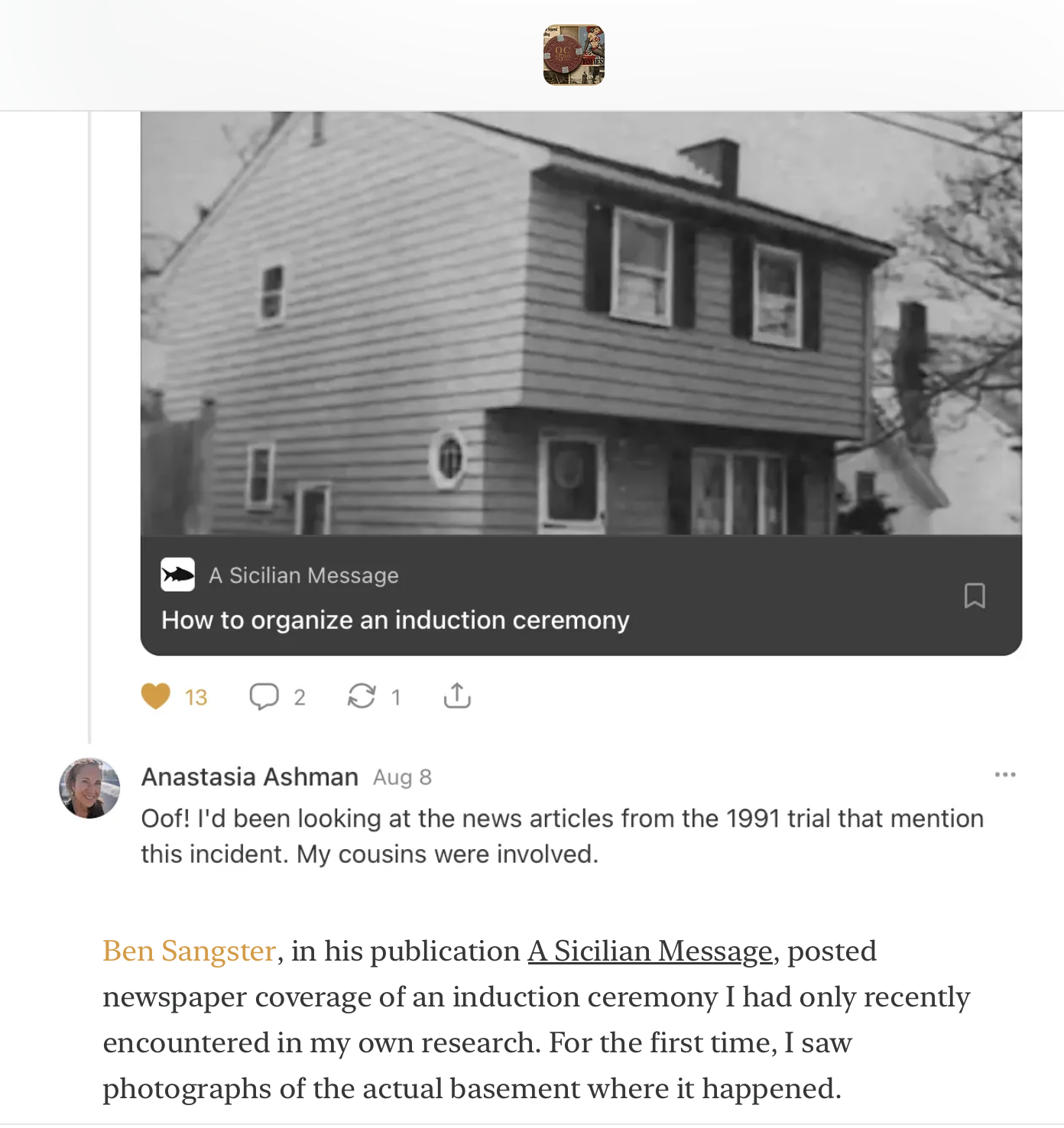
Oof! … My cousins were involved
Then somebody posted photographs of the home where a Mafia induction ceremony had been recorded by the FBI.
I knew the ceremony already.
My cousins entered the record around it.
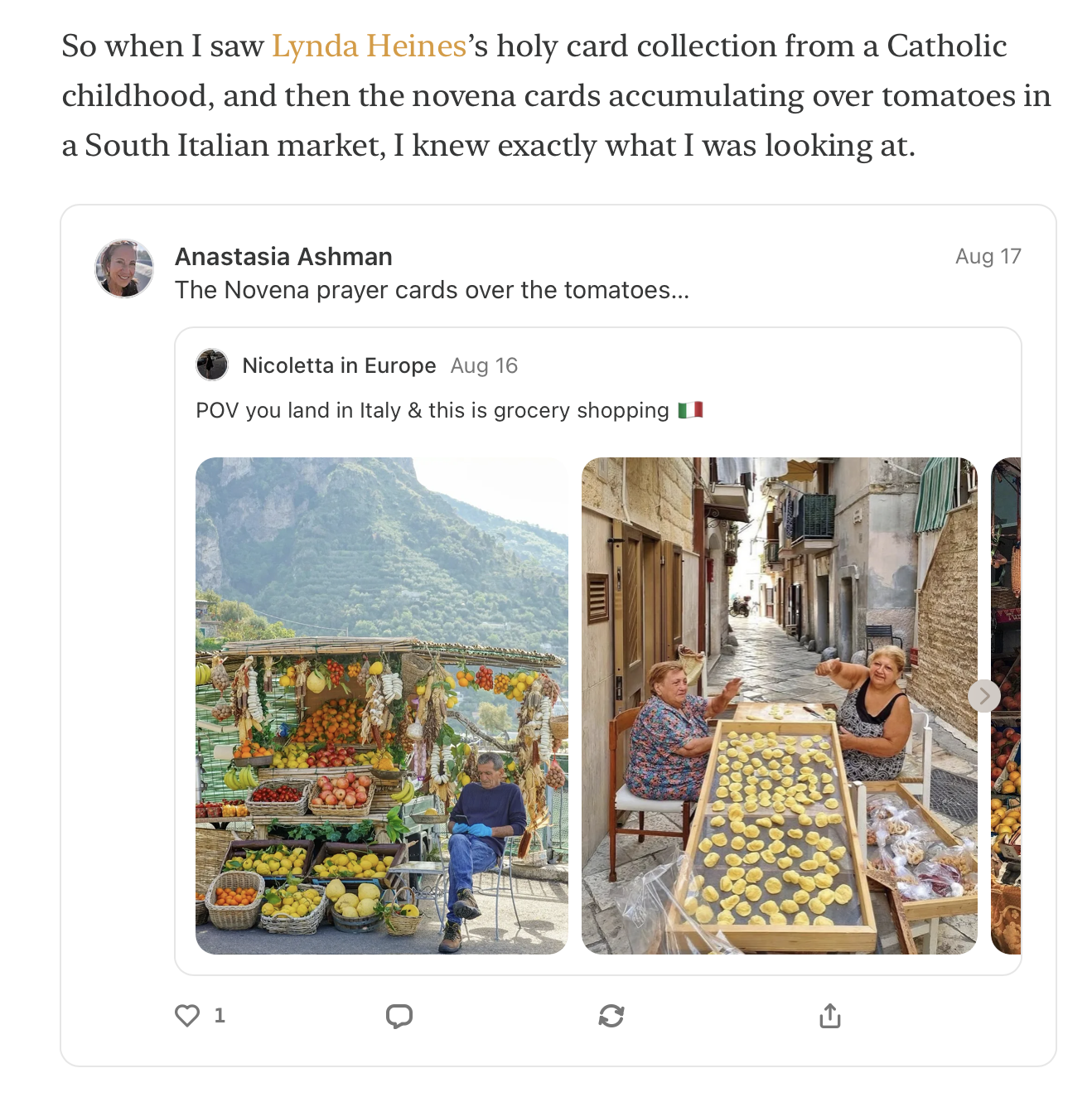
Novena cards over the tomatoes
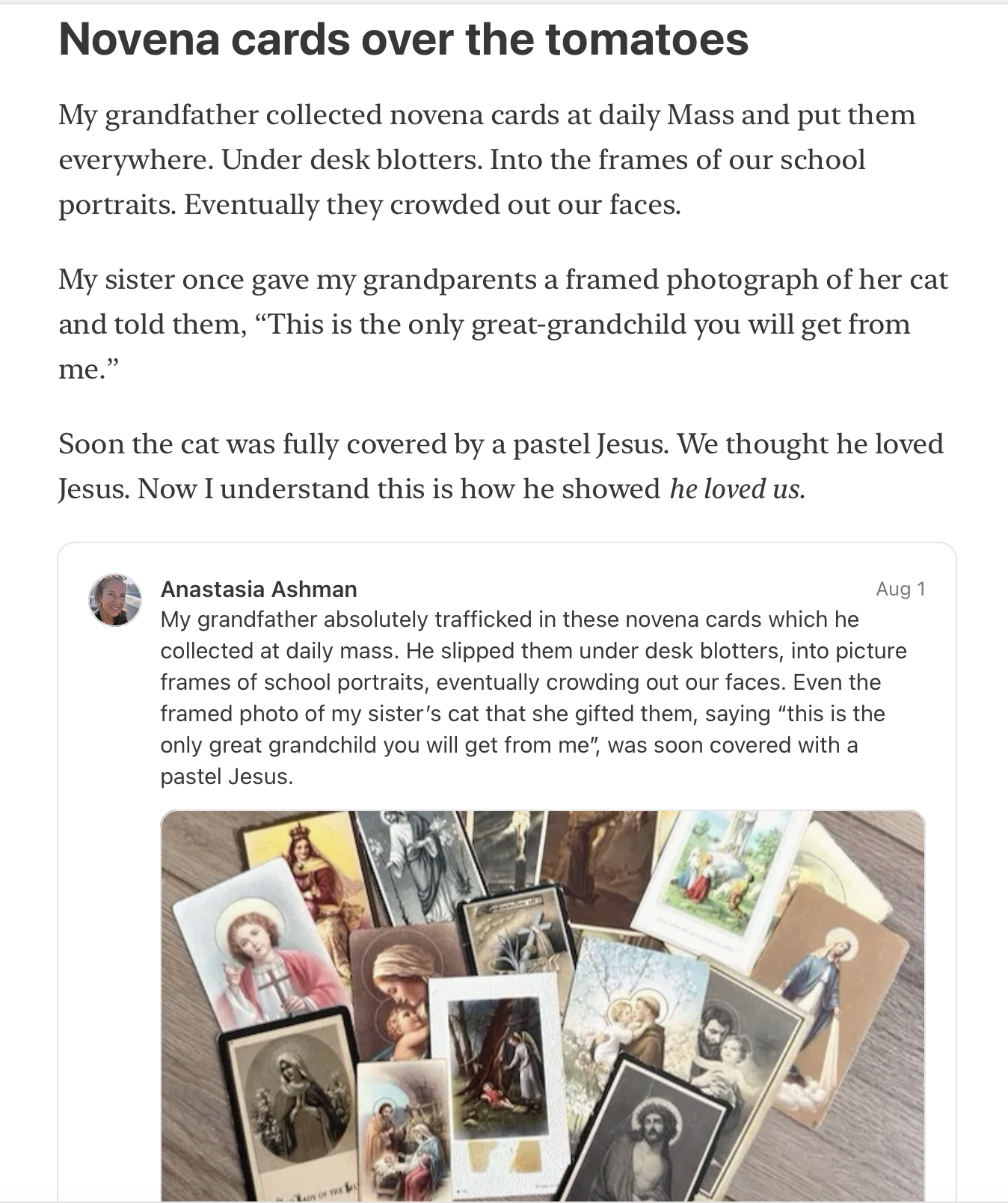
My grandfather collected novena cards at daily Mass and put them everywhere. Under desk blotters. Into the frames of our school portraits. Eventually they crowded out our faces.
My sister once gave my grandparents a framed photograph of her cat and told them, “This is the only great-grandchild you will get from me.”
Soon the cat was fully covered by a pastel Jesus. We thought he loved Jesus. Now I understand this is how he showed he loved us.
My grandfather absolutely trafficked in these novena cards which he collected at daily mass. He slipped them under desk blotters, into picture frames of school portraits, eventually crowding out our faces. Even the framed photo of my sister’s cat that she gifted them, saying “this is the only great grandchild you will get from me”, was soon covered with a pastel Jesus. - me
Assembled. After the fact.
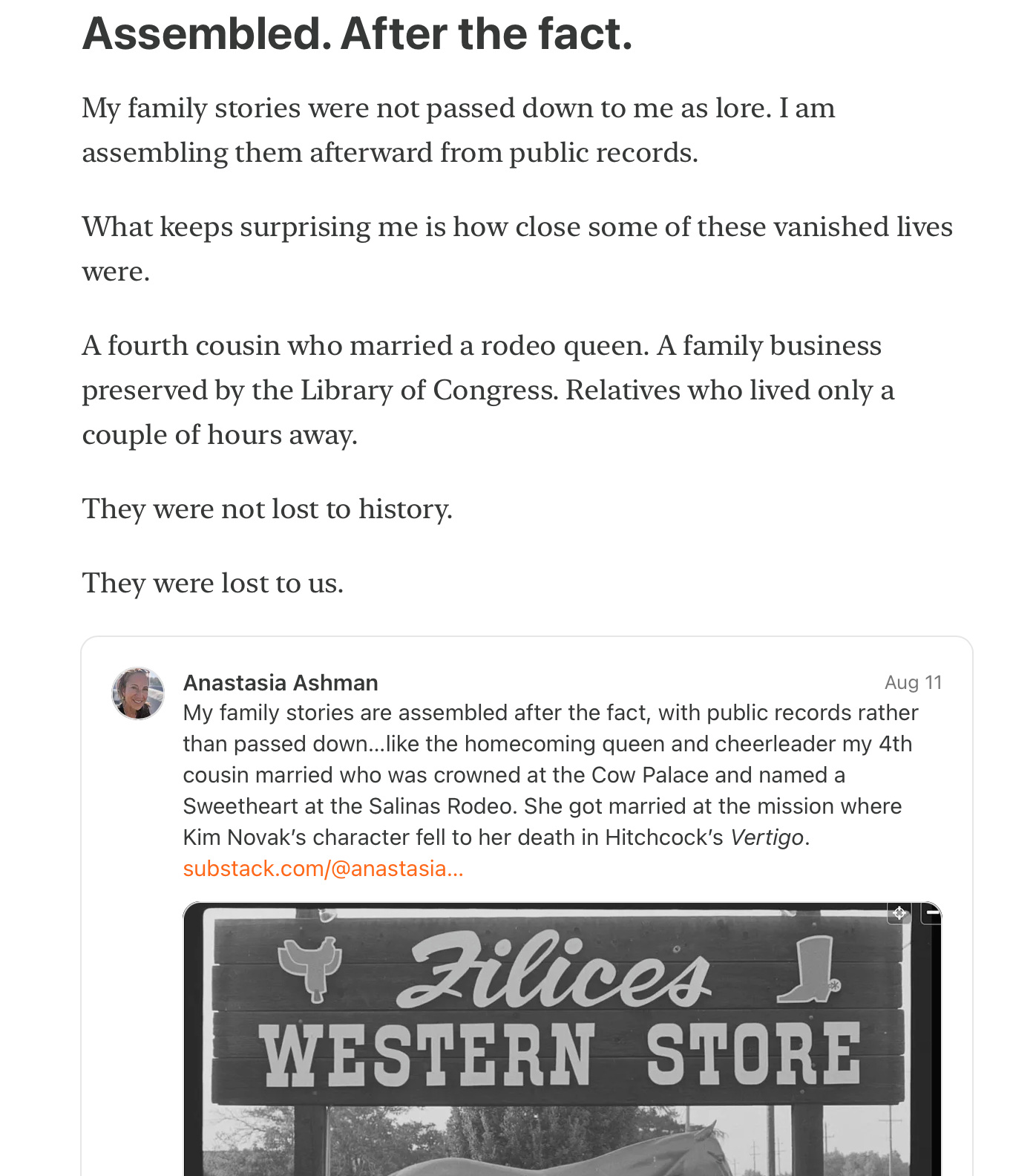
My family stories were not passed down to me as lore. I am assembling them afterward from public records.
What keeps surprising me is how close some of these vanished lives were.
A fourth cousin who married a rodeo queen. A family business preserved by the Library of Congress. Relatives who lived only a couple of hours away.
They were not lost to history.
They were lost to us.
Power networks within walking distance
So much was within walking distance.
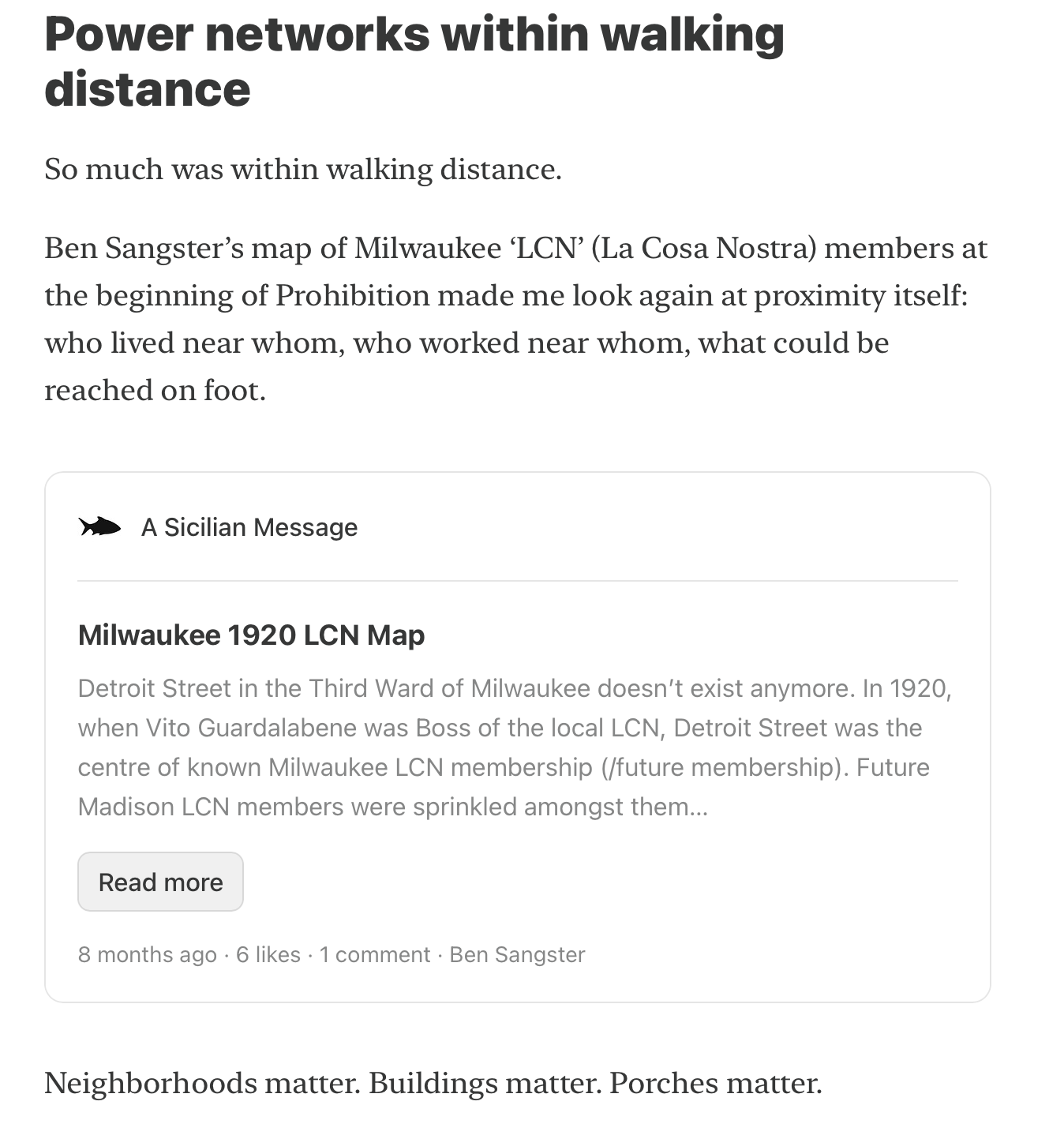
Ben Sangster’s map of Milwaukee LCN members at the beginning of Prohibition made me look again at proximity itself: who lived near whom, who worked near whom, what could be reached on foot.
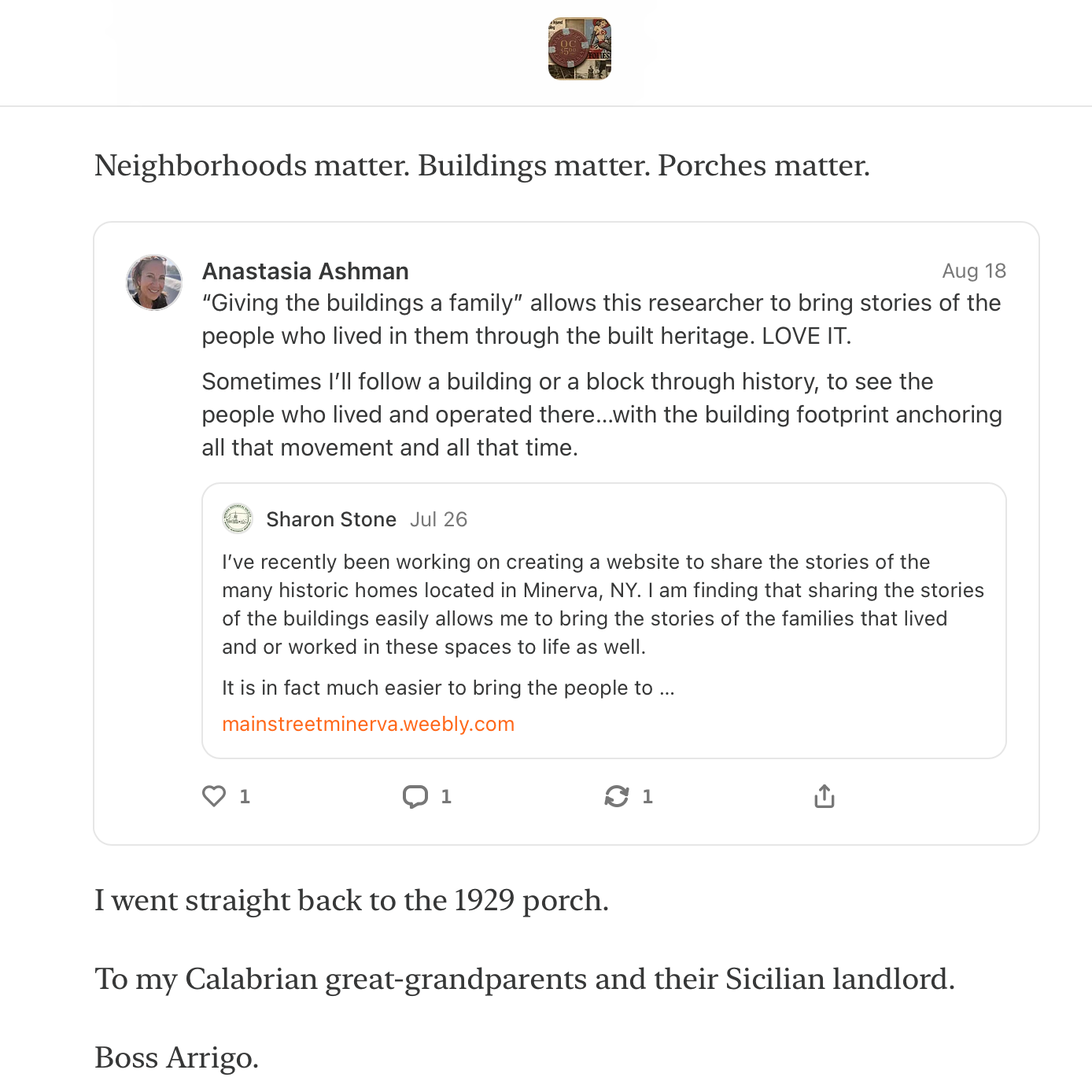
Neighborhoods matter. Buildings matter. Porches matter.
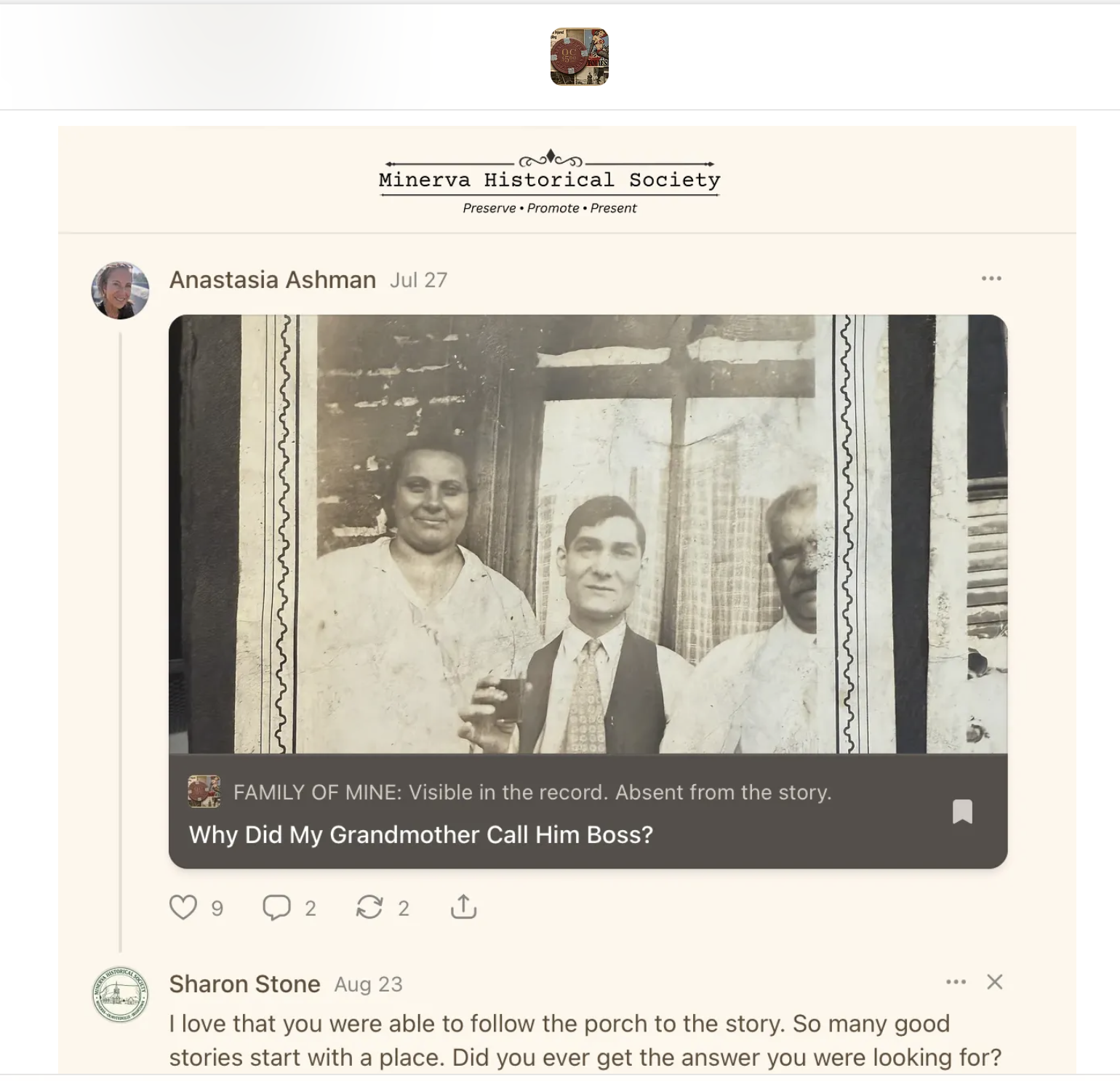
I went straight back to the 1929 porch.
To my Calabrian great-grandparents and their Sicilian landlord.
Boss Arrigo.
Did I get the answers I was looking for, someone asked me.