Judging winning venture ideas at UC Berkeley: how about a toothpaste that fills in your cavities?
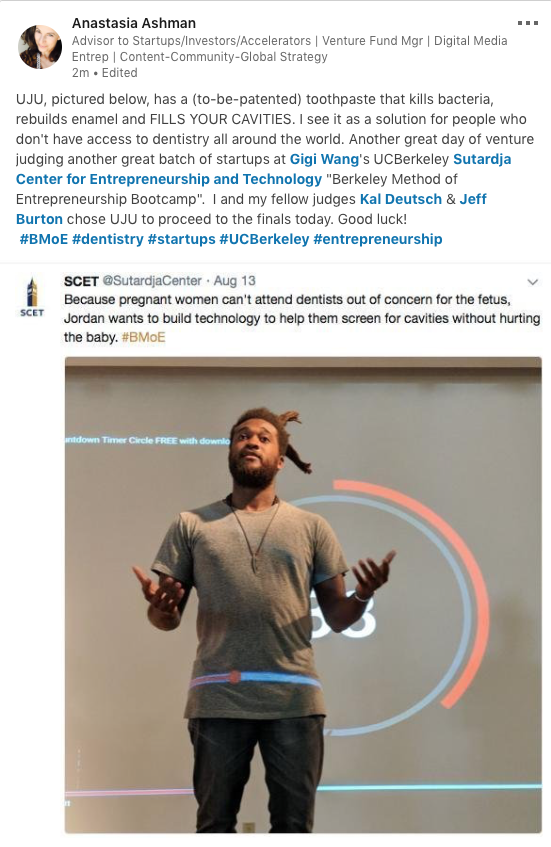
Called it! Congratulations to UJU for winning best of the Berkeley-based teams at BMOE Summer 2018.

And, an algorithm called it too?

Good time at Jason Calacanis's Founder University

Got a lot out of this mini accelerator experience from Jason Calacanis, the founder of Silicon Alley Reporter (a fellow dotcom industry pub to the one I was once an editor at!) among other things, like the LAUNCH startup conference, festival, podcast This Week In Startups and LAUNCH Incubator.
I was among the 60 founders chosen from 300 applicants, and I was representing Second Screen, Inc. where I've been COO since January (icymi!). Founder University is a three-day curriculum for founders who have launched their product but haven't raised Series A.


The Wrap's Power Women Breakfast for Girls Who Code
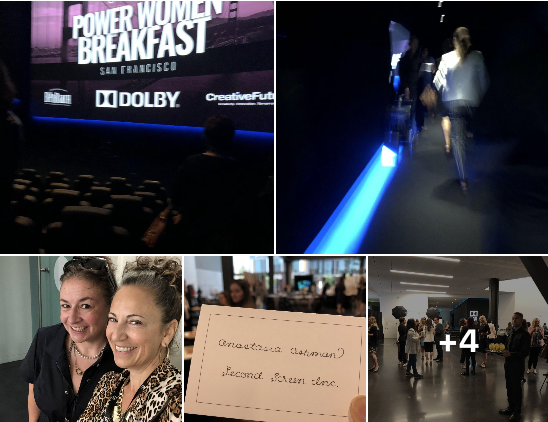
Good morning at TheWrap’s #PowerWomen2018 breakfast benefit for #GirlsWhoCode at Dolby Laboratories. Heard from #femalefounders of entertainment and technology ventures as well as the mayors of Oakland and Compton. #enttech #startups #wrapwomen
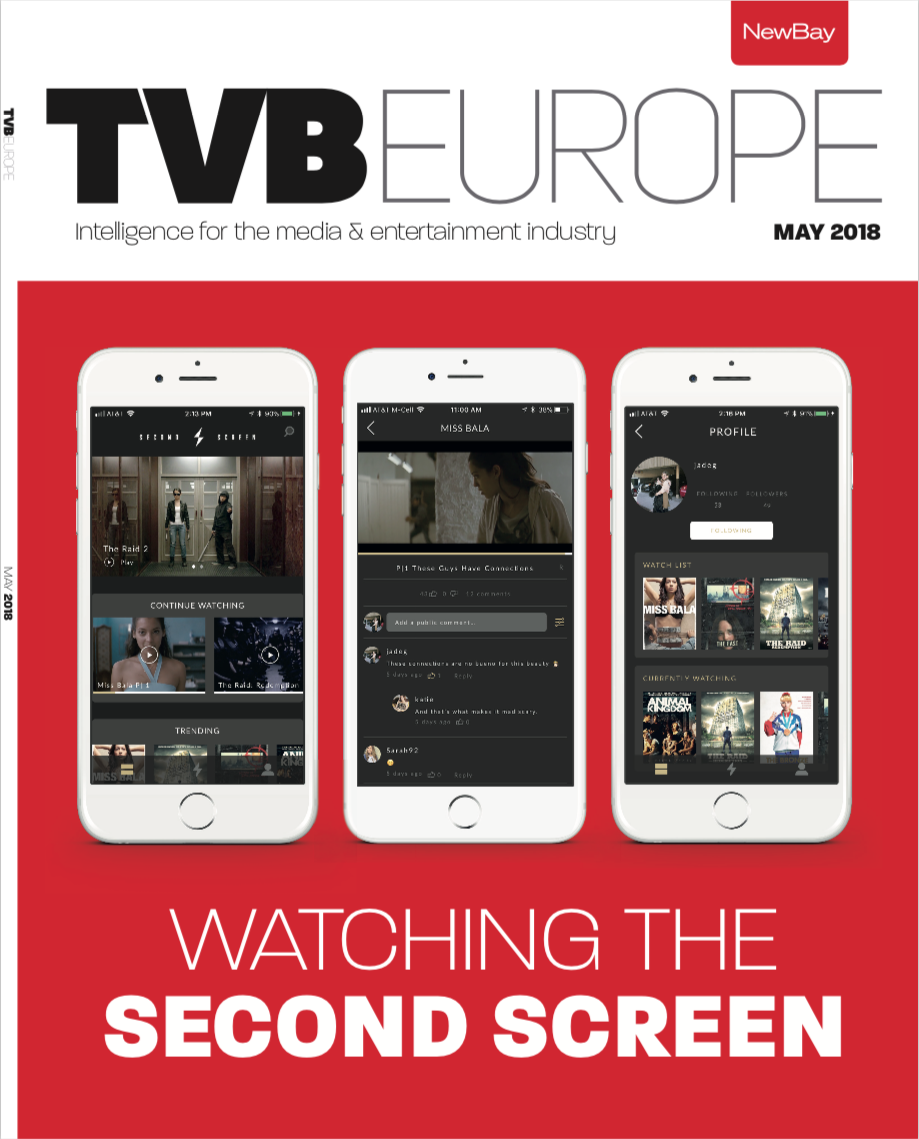
Second Screen featured in Europe's leading magazine for media & entertainment industry
In January I took a cofounder & COO role in Second Screen, a mobile startup in LA's Silicon Beach that aims to become the Netflix of bite-size series. Europe's magazine for the media & entertainment industry interviewed us for their May issue when they took a look at the adoption of second screen technology and other rapidly growing areas of mobile content.
Today they made the Second Screen app their cover star. Thanks to TVB editor Jenny Priestley for the interview of Second Screen's founder & CEO Estella Gabriel.

"Wouldn't the clever idea be to create an app where viewers can watch content but also comment about it?" asks TVB Europe's editor in her note prefacing the magazine.
Estella talks about social discovery: "Instead of an algorithm like Netflix has, we use a referral system. You can see what your friends are watching."


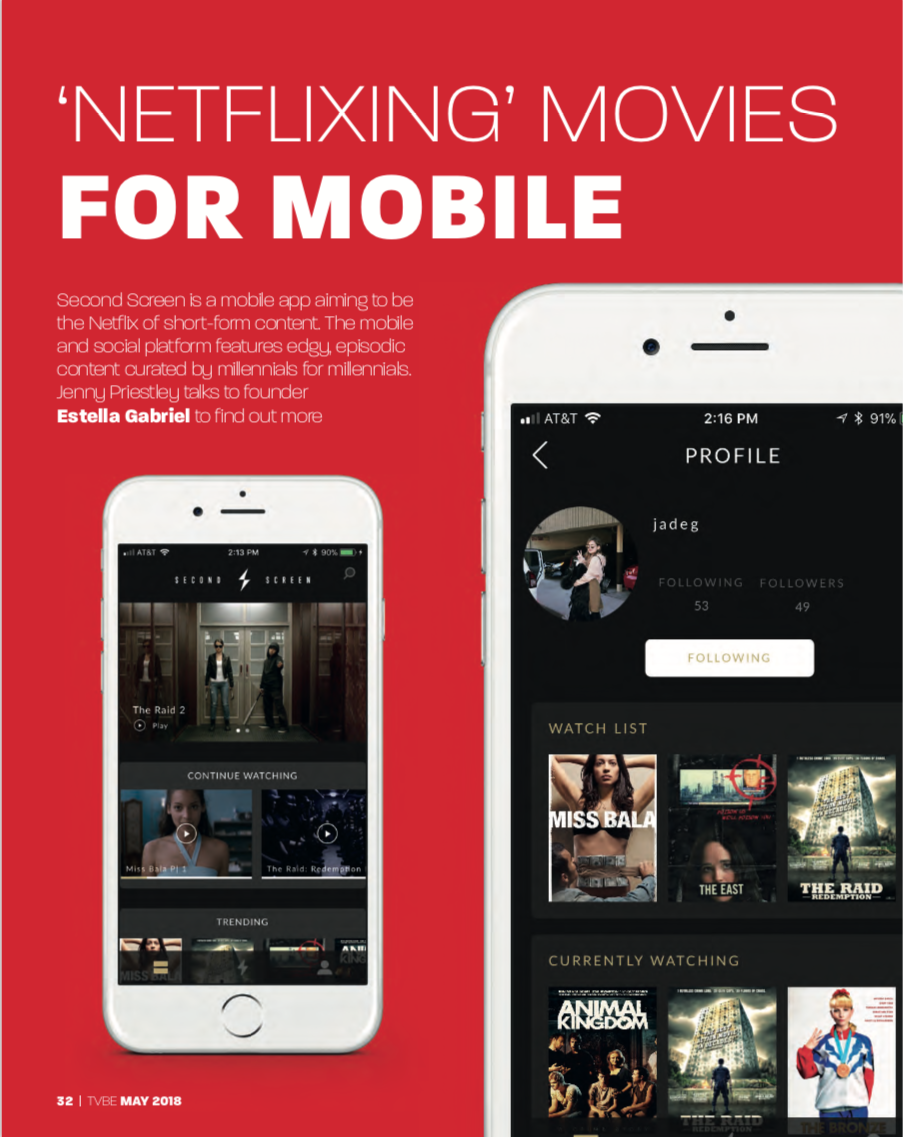
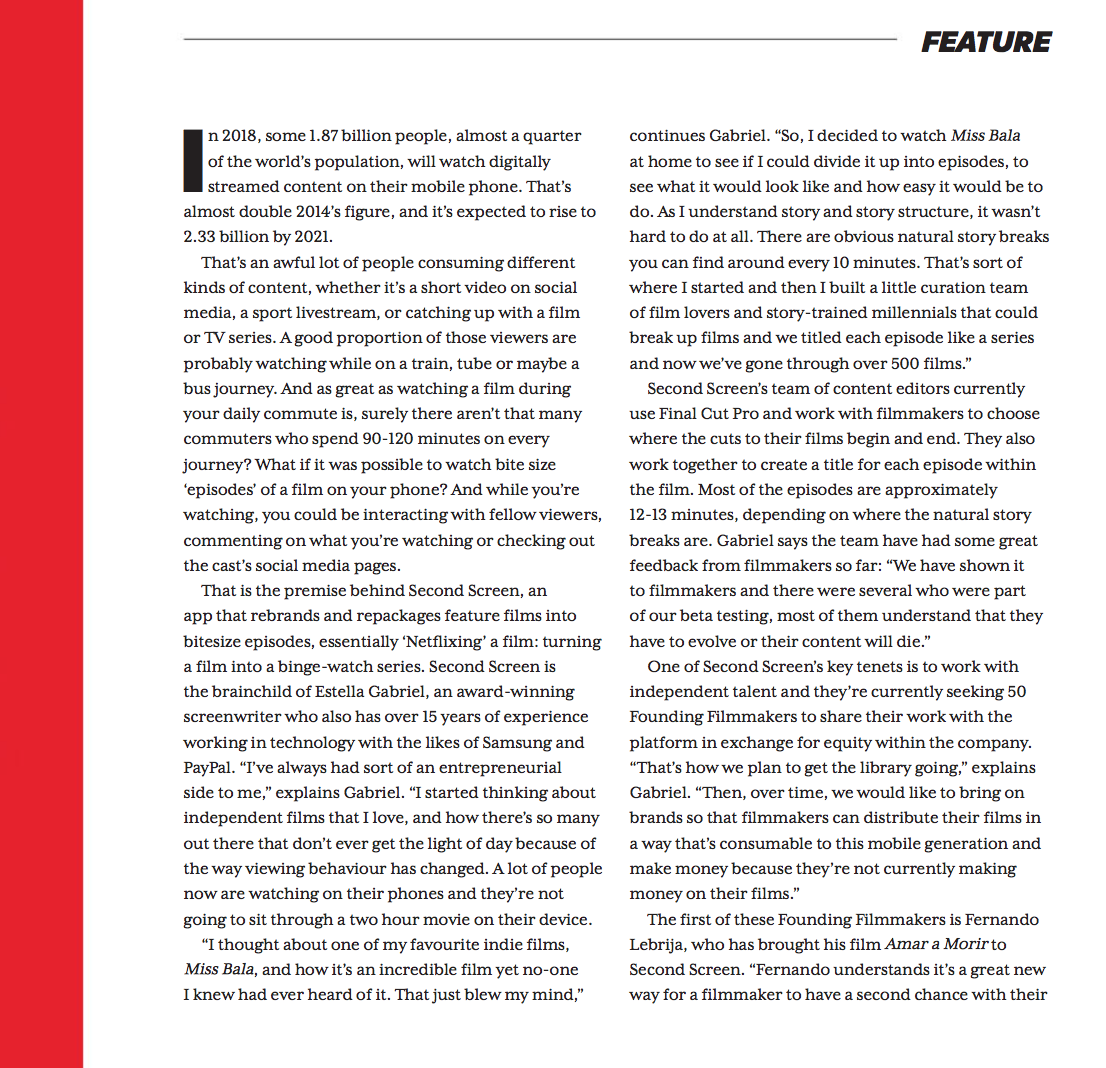
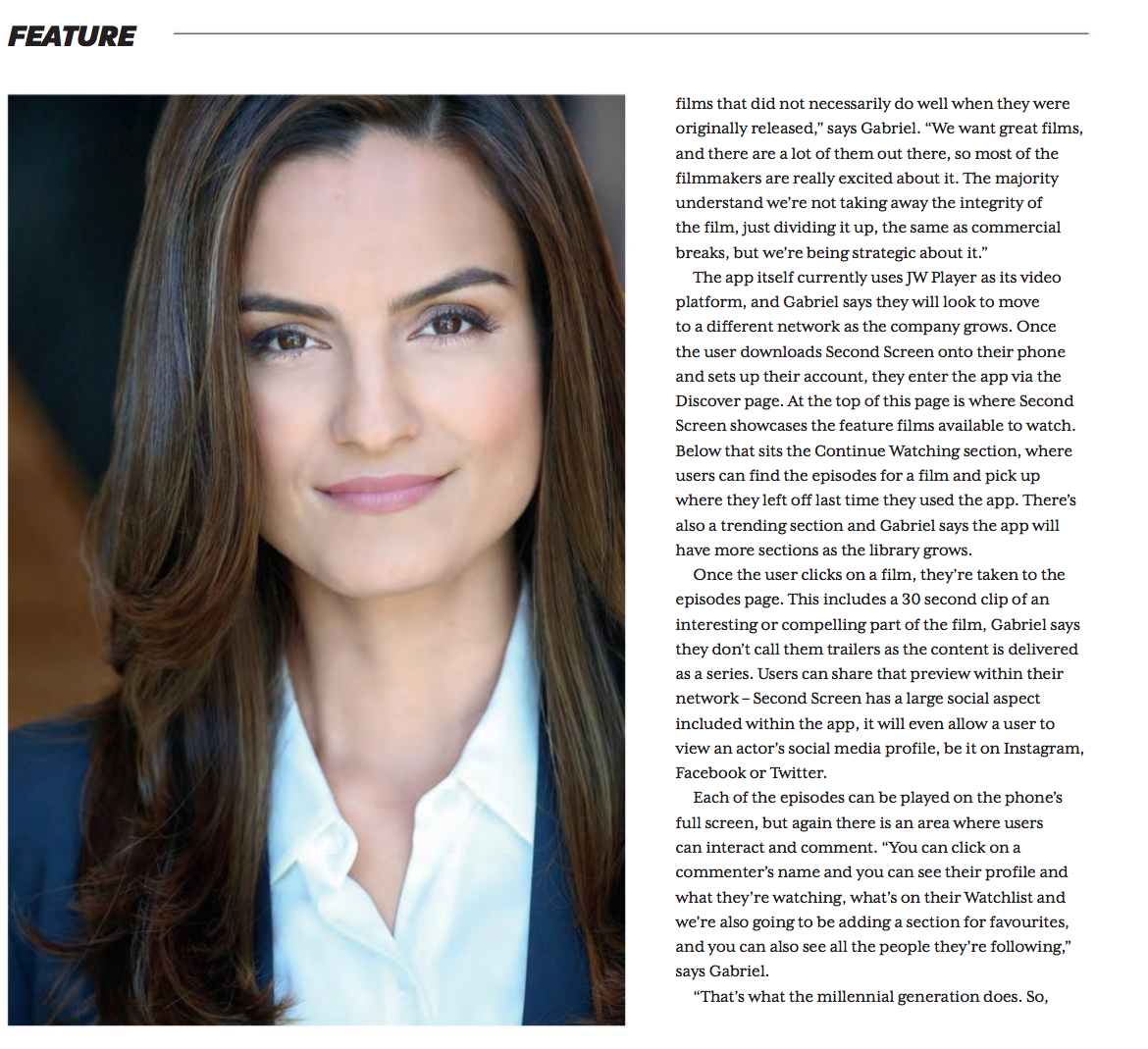
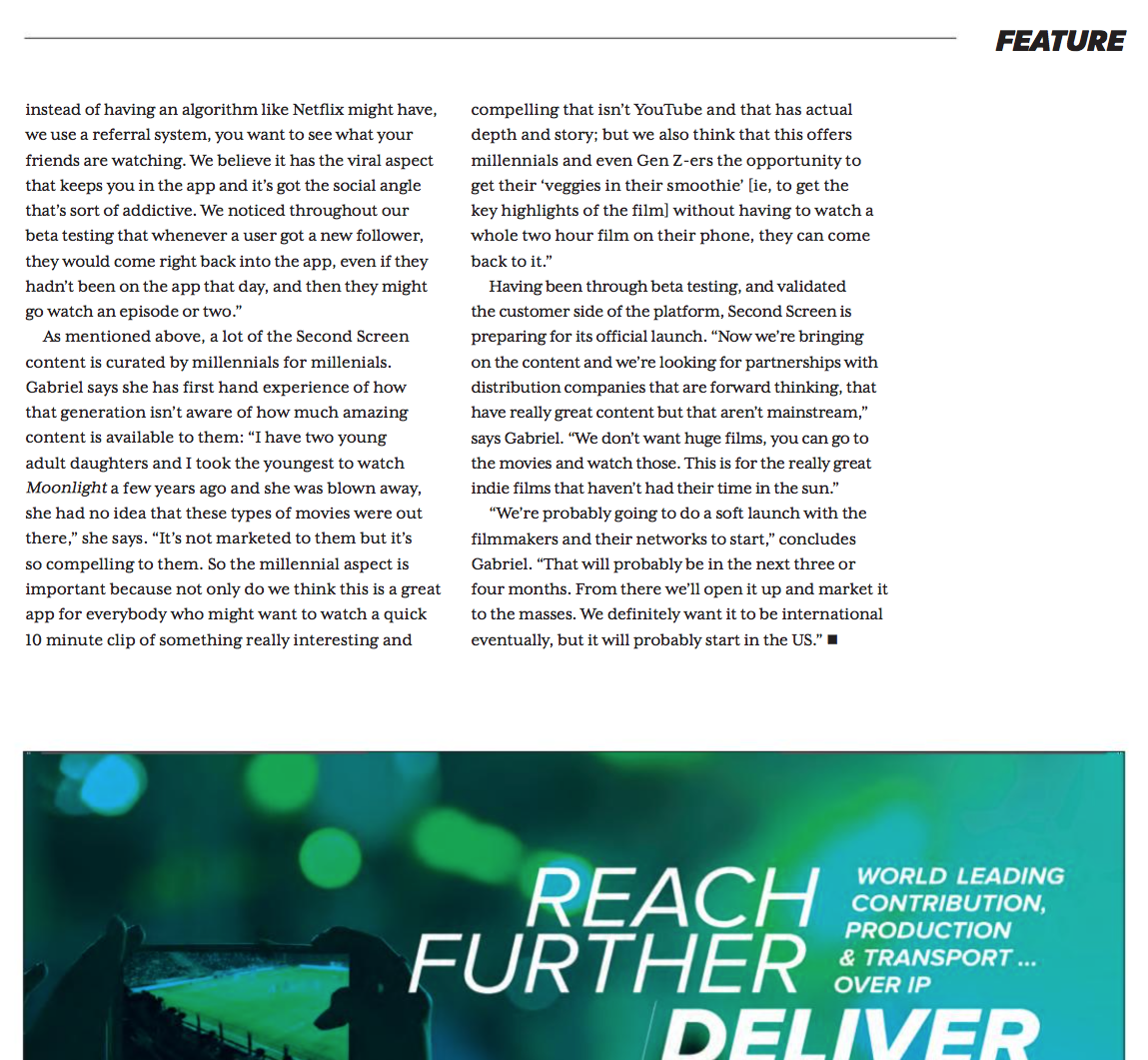
You can read the whole issue here.
SUBMIT YOUR FEATURE FILM: Second Screen is now seeking 50 founding filmmakers
Second Screen, where I am COO & Cofounder, is now accepting film submissions for consideration.
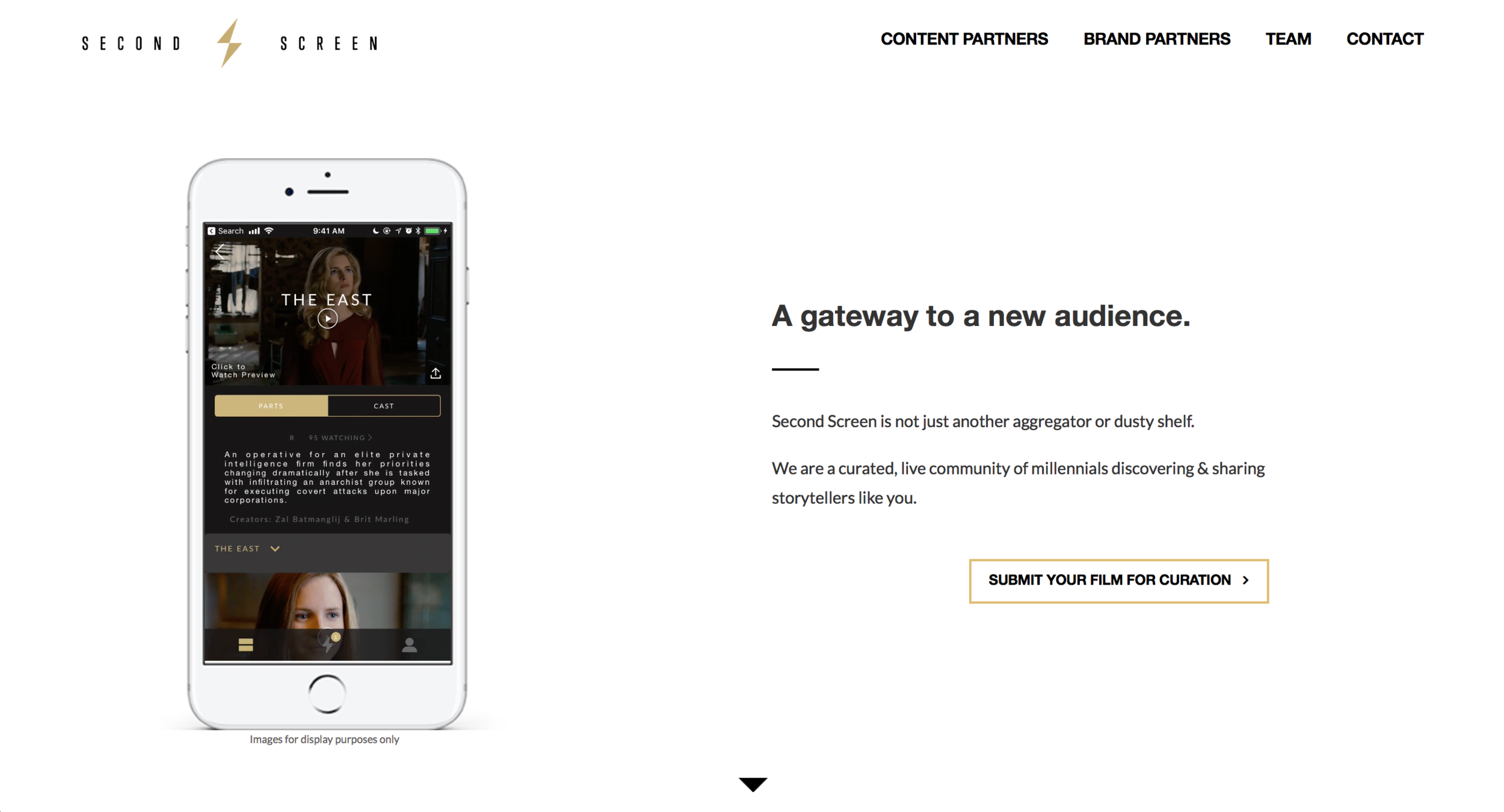
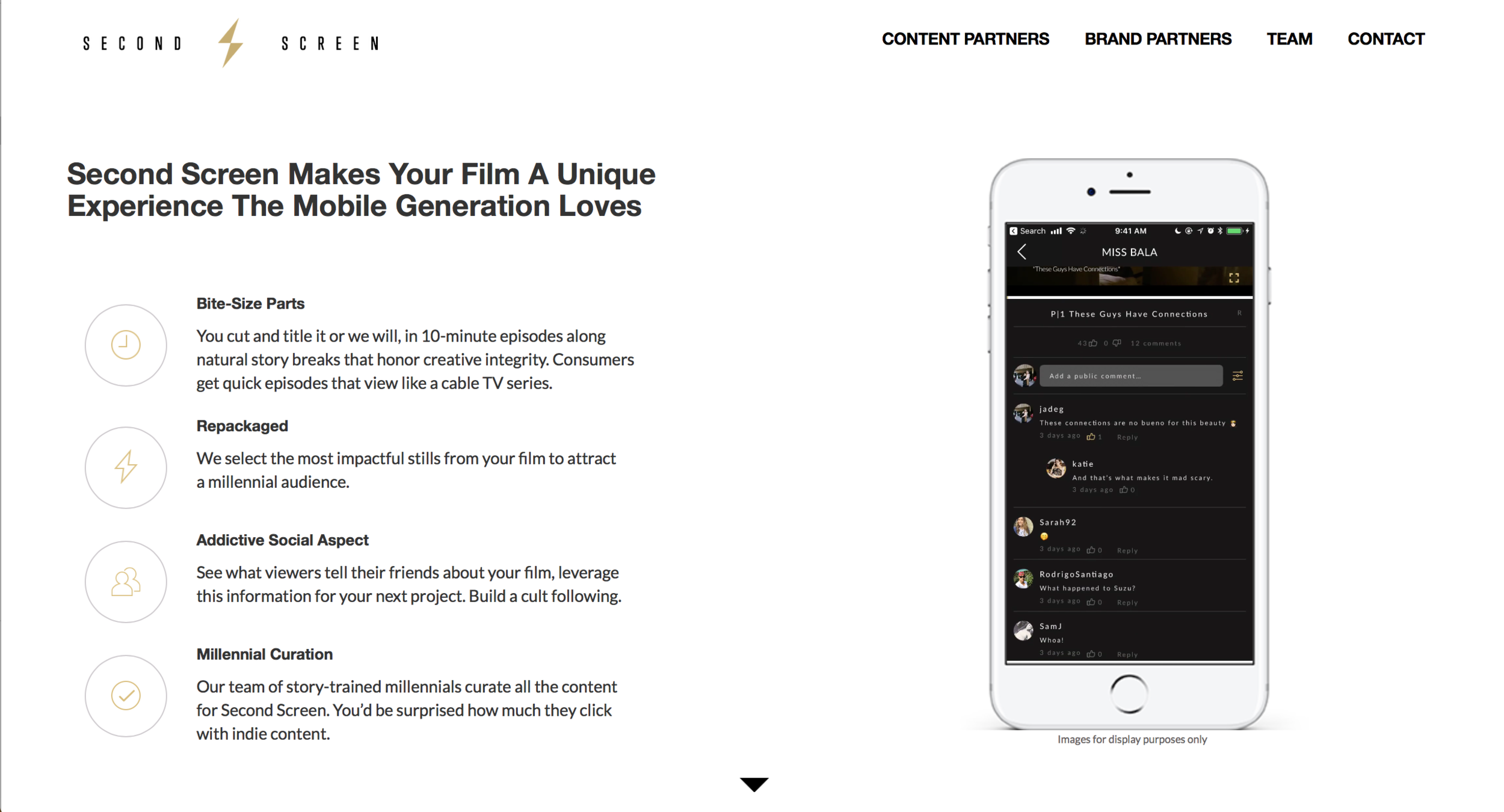

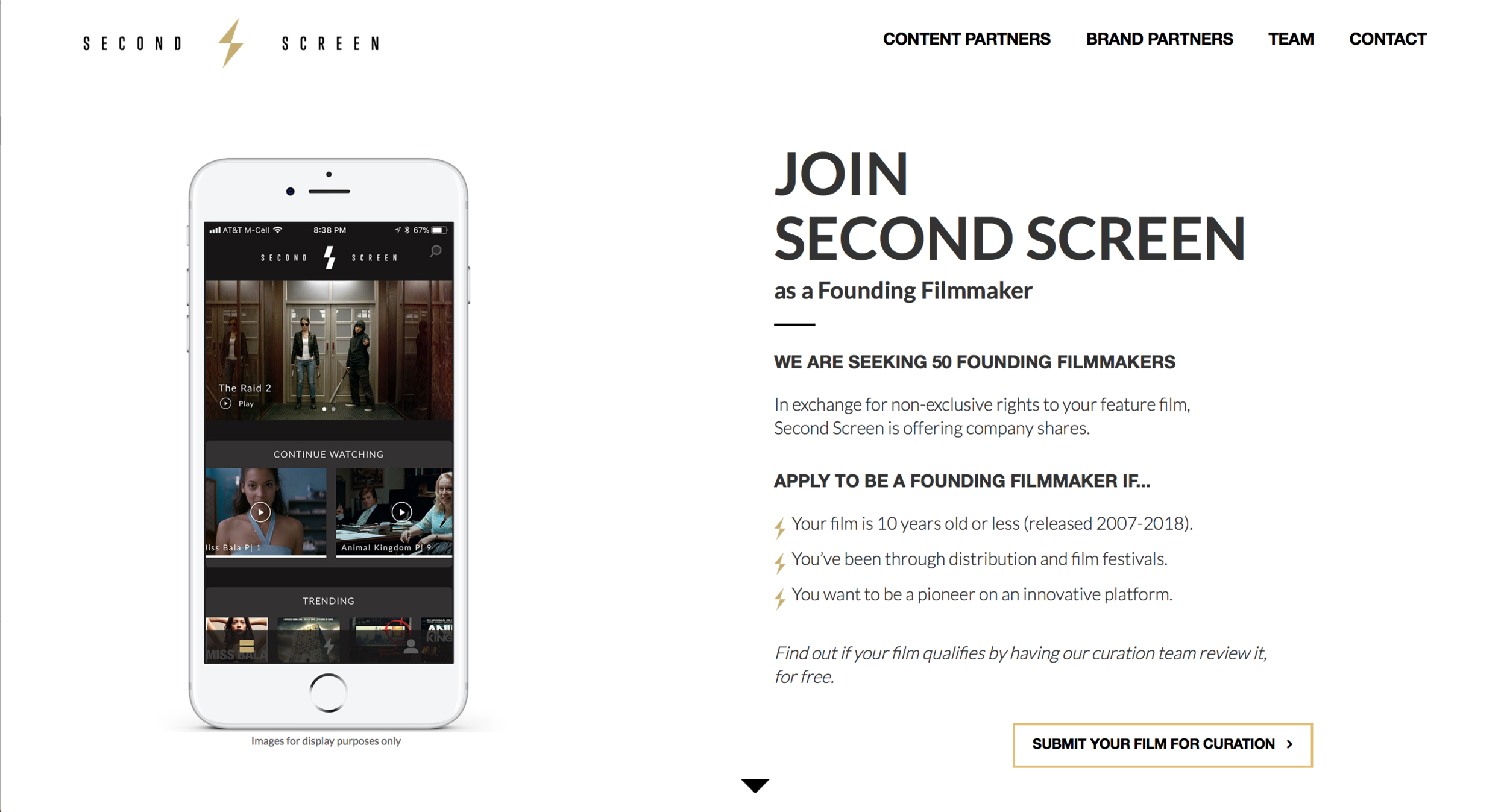
The first founding filmmaker is on board at Second Screen, and he's an award-winning ambassador for the 49 other feature makers this mobile streaming platform is now seeking, for equity! Do you know a filmmaker like Fernando Lebrija who is right for Second Screen?

FILM DISTRIBUTION COMPANIES: become a Second Screen content partner
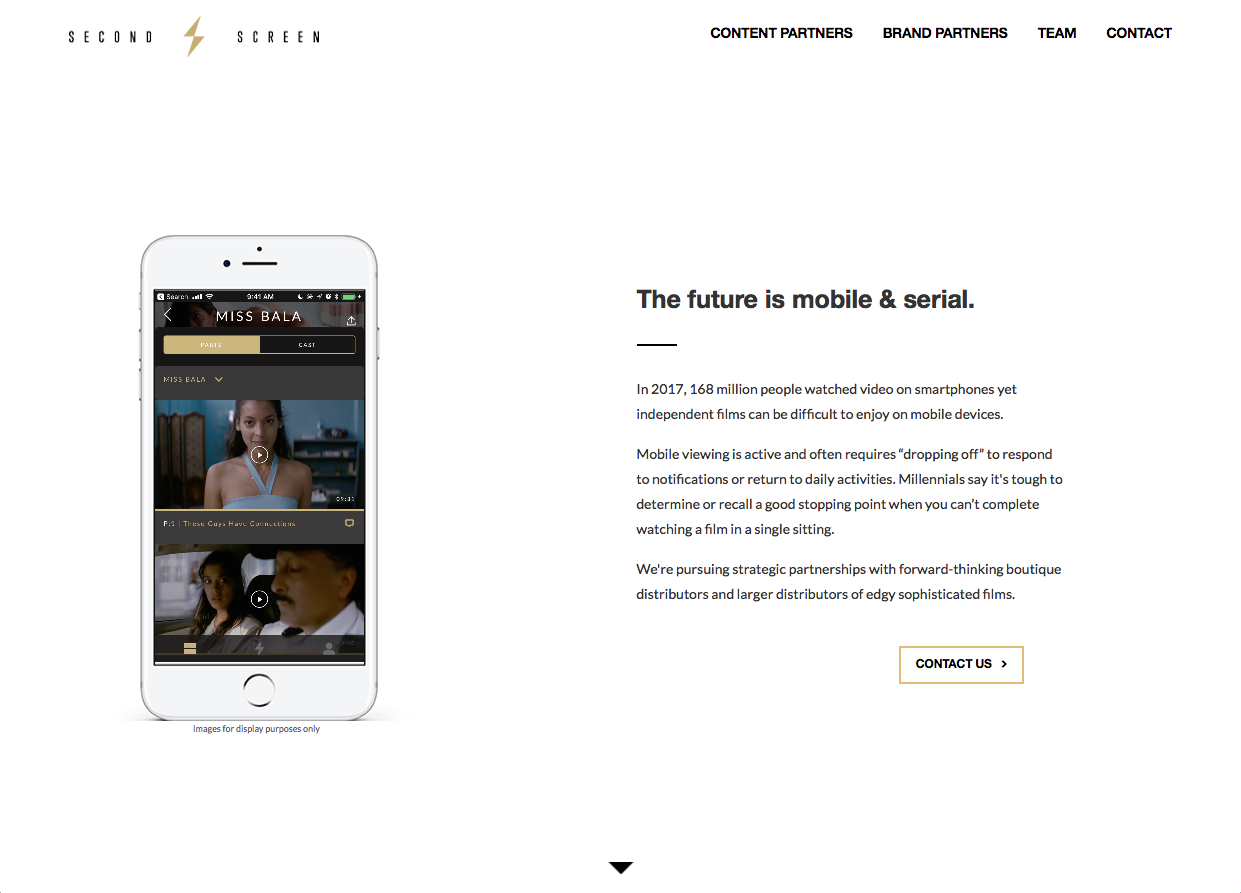
See more by visiting the Second Screen site.
Writing foreword to Expat Harem's natural successor, Expat Sofra

Meet the contributors to Expat Sofra and look for the book this spring!
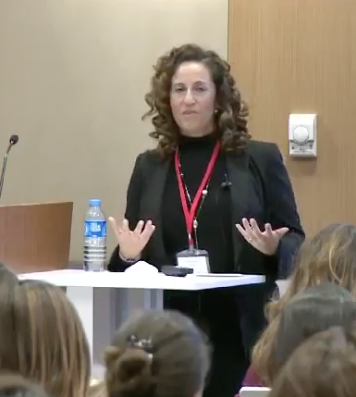
TBT, speaking at Microsoft HQ Turkey to the inaugural meeting of Turkish Women's International Network

Watch the talk here, and all the talks by members of the network that aspires to become the most impactful network focusing on women in Turkey and abroad. TRWIN collaborates with companies, NGOs and individuals to amplify our collective impact and empower women to realize their potential.
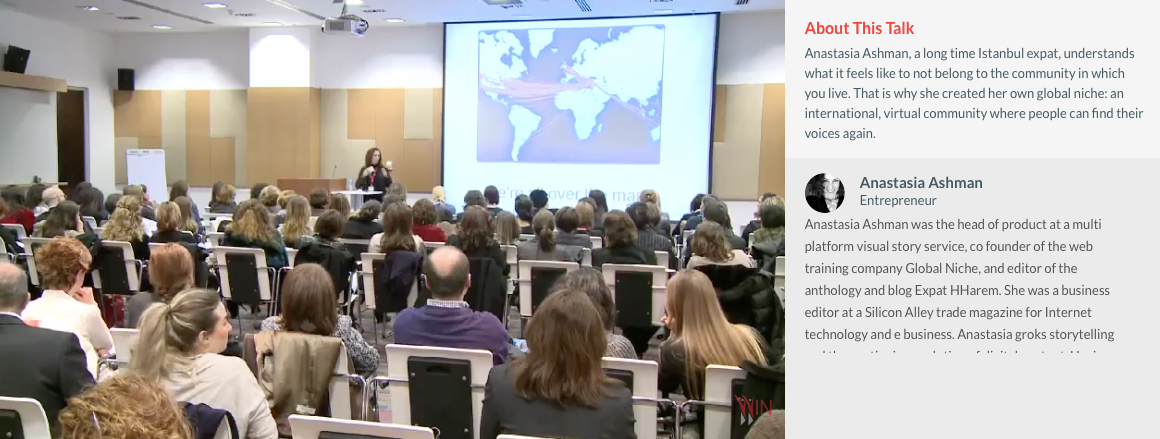
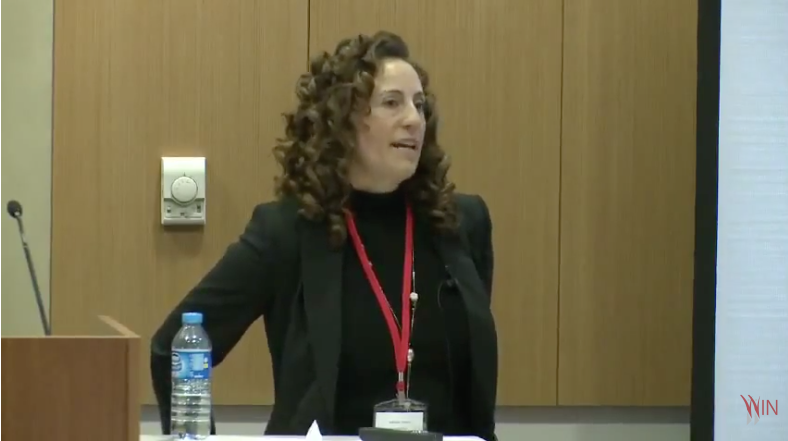
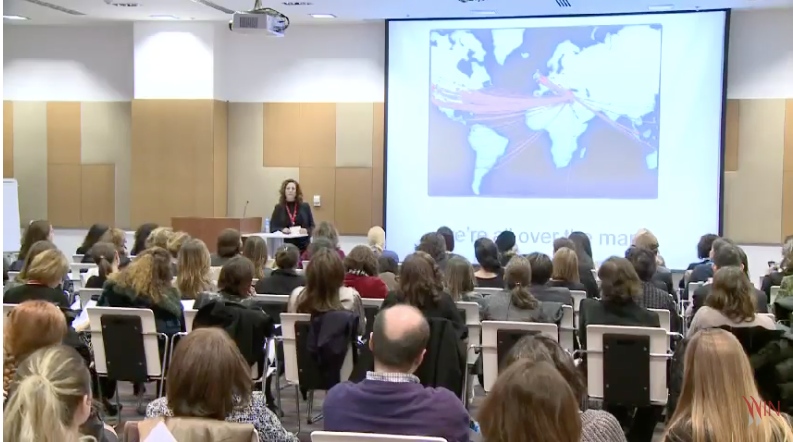
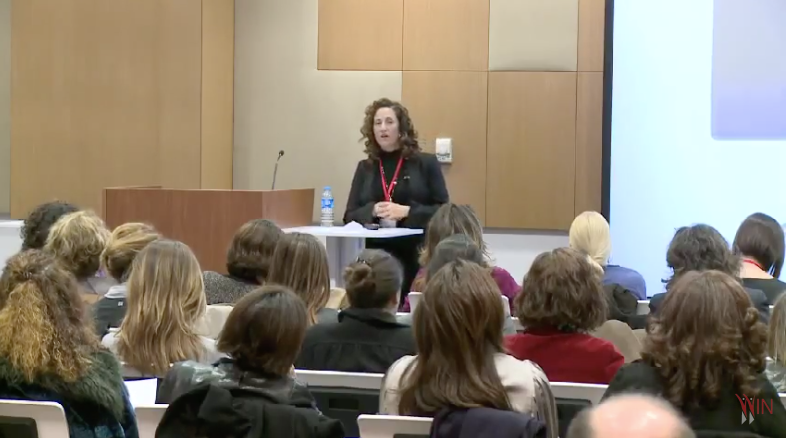
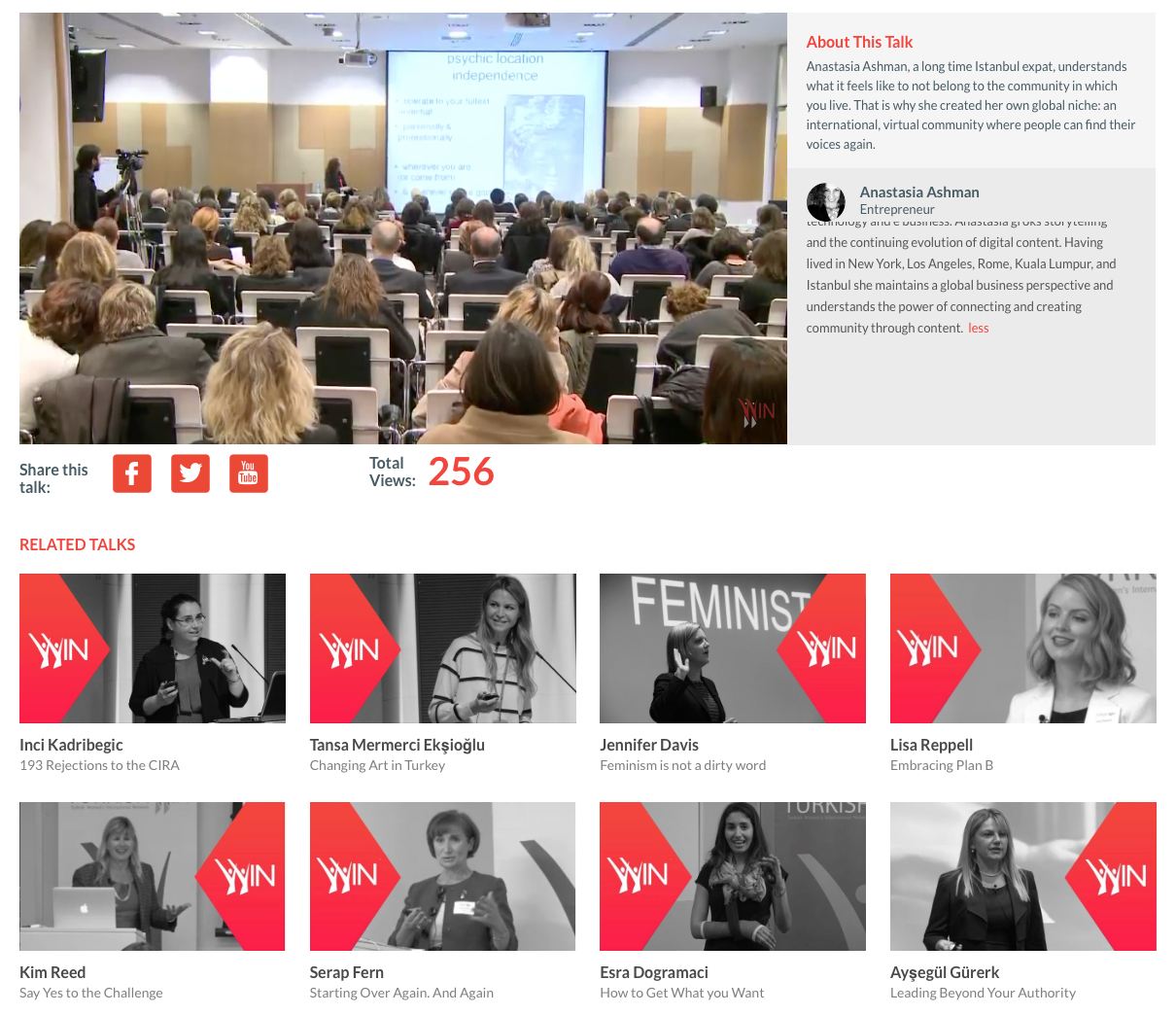
I've been pleased to serve as a member of the Advisory Board of Turkish WIN since its inception.

TBT, panelist at Exceptional Women In Publishing Conference

Check out Exceptional Women In Publishing, a non-profit org to educate, empower and support women in publishing and to educate, empower and support women and girls through the power of publishing.


Another life, another networked world!
This came in the mail today. It's from the major faculty of my liberal arts college, an event for my professor of Bronze Age Archaeology, Jim Wright. He was a great teacher, as I recall!
Also, it's a reminder of the solidity of liberal arts education. This classically-based education was meant to turn out a person who was "virtuous and ethical, knowledgeable in many fields and highly articulate." It doesn't matter what you do with it, you're equipped as a well-rounded individual.
Today's email and its particular Bronze Age lens on power and place is so far from where I am right this minute, and yet I am back in class in an instant, to when civilizations around the Aegean first established a far-ranging trade network and all together moved out of the Stone Age.
Then I'm back again, to today, back to looking at the future of stories for millennial audiences as a business, tech, and entertainment issue. That's a focus of mine right now and based here in California's own power centers of Los Angeles and San Francisco.


Hope all my Bryn Mawr archaeology peers have a fun symposium!

TBT, Platform Thinking Workshop with Sangeet Paul
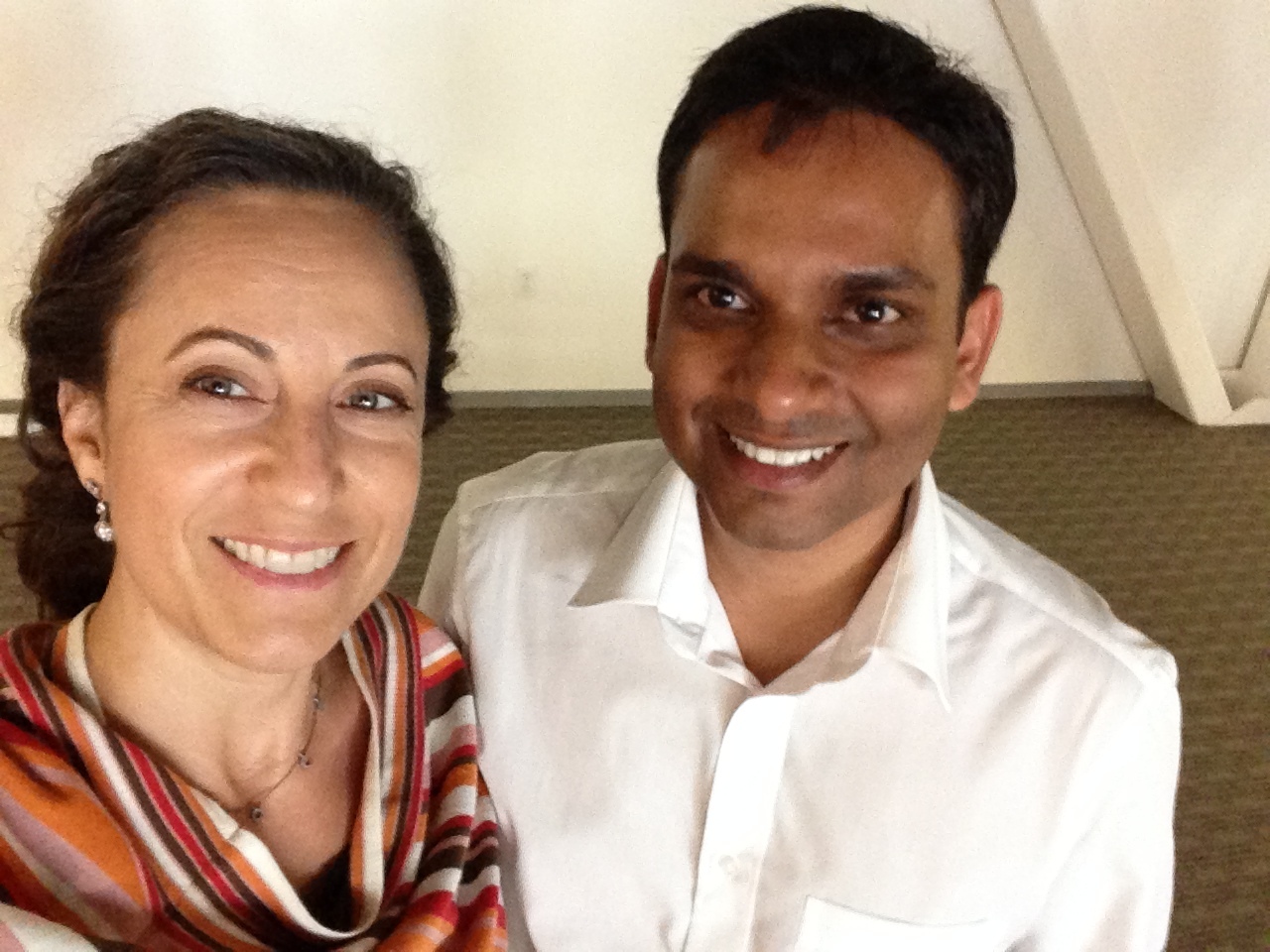
This was 2014. I've been a platform devotee for a long time! I count meeting platform guru Sangeet Paul F2F (he's normally in Singapore) and his platform workshop as a highlight of the year.

Here are my notes from the Platform Thinking workshop with Sangeet Paul of platformed.info at 500 Startups in San Francisco. Sangeet talked for 4 hours without stopping so…these are just the highlights.
After the age of pipes (where value is created upstream and consumed downstream), in the age of connectivity, the platform is king.
A platform is a business model that connects 2 people to exchange a particular unit of value with each other.
A platform needs to set the conditions for that exchange to take place between producers of content and consumers of content. (They might be the same person, or switch roles, as we know a producer will also consume and a consumer will become a producer.)
PLATFORM DESIGN/SEEDING THE PLATFORM
There are 3 sources of value:
standalone value, like tools for producers
network value, like access for producers to reach consumers
off-platform value that enables the core interaction, like guarantees, user incentives, social proof
To kickstart growth, the user workflow needs to create value for him from day 1.
Then leverage existing users to bring in new users. Scale network activity with feedback loops.
Pull the core unit of value by pulling the producers.
We need to be watching for the killer use case that will ignite our platform.
Define rules to govern the interaction. How do you manage curation of value to ensure quality?
Create conditions for trust. The value has to scale, like cumulative value of collectors, a mass of people following your account, etc.
What kind of data do we need to match the two sides? Acquire that required data, import information so it can deliver value. Enable minimum data collection to be able to serve value and populate the user’s experience with relevant content.
Users hate giving info, but we need to ask for it right at the start and little by little, and often. Gather enough data on day 1 to bring the user back a second time.
Personalization is the outcome of curation. This is how to avoid reverse network effects (people leave when it gets too big and not targeted enough to them.)
Build initial value for one side of the interaction, and that value has to last long enough so we can pitch it to the other side. (This is the single user utility I’ve been talking about!)
Find the initial bait, the initial source of value.
Build a cycle, then repeat it. Focus concentrations around an event, a time and a space, for instance. People came onto Twitter to discuss SXSW but then stayed on the service for other reasons.
Baits:
Consumer first: value without producers need to start with supply. Fake it til you make it. Fake initial activity.
Producer first: value without consumers and non-network value are tools for single user utility.
Provide a creation space to create and display content that attracts more creators and draws in consumers. Flickr, Instagram and Scoopit did this.
Create a customer service tool. This helps producer manage existing consumers. Kickstarter and Skillshare did this.
Pitch the traction to the other side. LinkedIn and Quora and Facebook focused on space (this tools give you access to people in Silicon Valley and college campuses), Twitter focused on time (this tool makes you more efficient at an event).
PRIMING THE NETWORK
If users sign up and don’t return, how long before you’ve lost a user?
What are the minimum number of actions to get value?
How do you ensure new users take these actions?
Activating producers
Implement producer activation.
Dropbox gives you a list of what to do, invite friends, exposes users to actions that provide value. User needs to experience network feedback within how many days of usage?
Activating consumers
Enable the minimum network formation to see value. Add minimum network formation: “Who to follow” feature for new users. Second Screen should supply users with content and people to follow upon joining us. “People you may know”. Facebook has found that users need 10 connections within 7 days to continue using the service. Second Screen needs to contact users to get them to add more connections in that first week of signing up.
Only activated users bring network effects. We need to track activations. We need to figure out which side we want to activate first.
SCALING NETWORK GROWTH
How can people spread word about our product without talking about it? That’s virality.
Sender — sends something from platform — the value unit has to be organically spreadable
Sharing
External network
Recipient
4 INGREDIENTS for VIRALITY
Sender motivation (that has to be aligned with core use case like Kickstarter user’s motivation is “gather support for my cause” and Kickstarter matches it with “tell the world about your cause”)
Spreadable value
External network
Recipient motivation
Optimize the value unit to spread.
Add call to action. “Get your own”, “Download the app”.
FILTER
Production feedback loop: Curation prompt, creation act.
Show producers feedback that encourages them the platform works, and show consumers that the relevance is increasing.
Consumption feedback loop: consumption feed, consumption act.
Value units pass through a filter (that’s curation). Then that consumption data is used to improve filter over time. This ensures people come back. Prioritize and institute a way to improve the filter. Examples of gathering relevance feedback: “I don’t want to see this” button. “I don’t like this” button.
Tell people “how many people viewed your profile” so they know their presence is working out.
Reactivation feedback:
Off-platform email invites people back with relevant content. Amazon does this with peer consumption feedback. Second Screen needs reactivation feedback.
Producers use the platform to get exposure. The feedback loop shows how the platform works for them, demonstrates the value of the platform for both producers and consumers.
Minimize friction between production and consumption.
Curation to ensure platform delivers value. Editorial curation is how a platform ensures value in its early days. Algorithmic comes next, then social.
The 4 points of curation:
platform access
value creation
value distribution
value consumption
How do you decide when you need curation? If negative content impacts the brand, you need to curate right at the beginning.
The earlier stage you are curating, the harder it is to get users on your platform. The less activity, the higher the quality. Focus on spreadable value units like, a click to tweet link in a block of text: that’s curation at consumption.
Rather than features, think about what is being exchanged. Focus on tools that enable it.
Creating cumulative value and ensure users don’t abandon the platform over time is how you create a competitive advantage. You want increasing value. You have to keep leveling up. How? Gamification.
Increasing value:
collection - The more I collect or build, the more useful it becomes. At LinkedIn, the more I enhance my profile, the more opportunities I will have.
reputation - Consider ratings for producers. Like reputation on Fiverr or Quora, where quality is front and center. Stackoverflow uses badges, where reputation leads to influence. Reputation may govern influence on network access. Other examples: Spotify playlists, Wikipedia where influence leads to more creation power on the platform.
data - the more you use the platform, the more relevant it becomes. Pinterest does this.
influence
If you achieve network effects you can still fail when a competitor arrives if you didn’t enable cumulative value.
REVERSE NETWORK EFFECTS
Value unit failure (low quality content or weirdo producers), filter failure (think Farmville or Candy Crush Saga).
NEW USER ABANDONMENT
Insular culture discourages new users.
Curation and traction work against each other. You have to get this balance right, then open it up down the line.
Ask for bite sized actions with feedback in exchange for data. “Which movies should I watch?”
Construct as an incentive, a gradual progression on a larger goal like filing your profile at LinkedIn. It’s gamification that gets the user invested. Also try to pull from other sources of data like Facebook.
Minimal Viable Platform enables exactly one interaction. Start narrow. Then you can layer more interactions on top. Order goes like this: concentration->curation->collection. LinkedIn focused on professionals, then recruiters, then thought leaders, now readers.
FUTURE SCALING PLANS
To scale, look at everything your employees are doing on the platform. Ask how can I get users to do that?
Ways to scale a platform: change who can be a creator or consumer; change your value unit; add new role for a new interaction
BUSINESS MODELS
pay for access
pay for attention
pay for lesser ads
pay for tools
pay for quality
pay for curated supply
Coaching at Startup Grind Global Program 2018 Pitch Bootcamp

I'm excited to serve as a Pitch Coach later this month for the Startup Grind Global Program 2018 Pitch Bootcamp hosted/mc'd by TD Lowe and her team at 42Phi Ventures. The event at Fox Forum in Redwood City is sponsored by Silicon Valley Bank.
TD Lowe is the founder and CEO of EnovationNation and 42Phi Partners are a diverse set of individuals devoted to fixing Venture's opportunity pipeline, inclusivity, and mentorship deficit.

The day precedes the launch of Startup Grind's Global Conference, where TD is the team member in charge of StartupGrind startup program which filters the best performing startups coming to the conference for the investor community.
