My Grandfather Wore A Diamond Horseshoe Pin
For years, this was a photograph of my grandfather as a young man among others in my grandmother’s albums.
Studio portrait. Newsboy cap. Dark overcoat. Striped tie. Seventeen? Eighteen? He looks serious, but not solemn. Carefully dressed in street garb without looking formal.
If I dated this right, he had left school and was working as a grocery store clerk.
Then I enlarged the photograph on my phone.
Fastened to his luscious striped silk tie was a tiny sparkly horseshoe.
I had never noticed it.
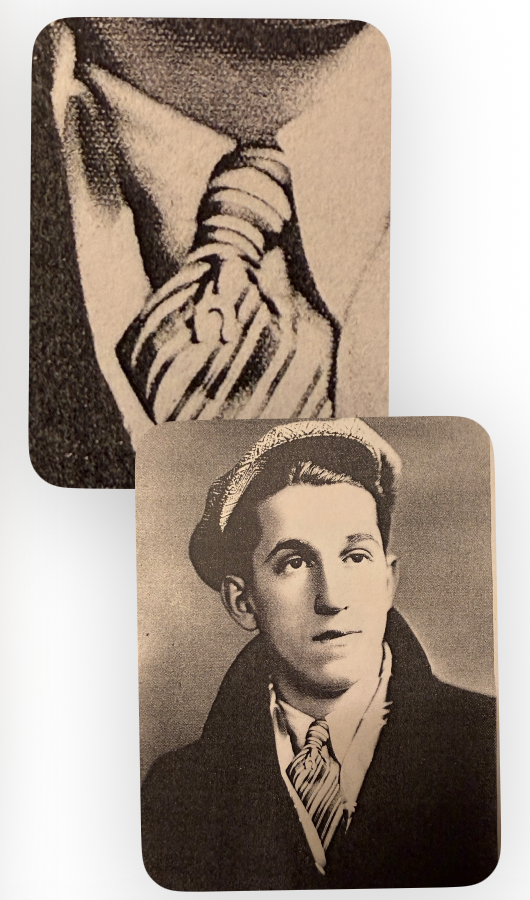
My grandfather around 1930, when he was a young grocery clerk in Chicago. © 2026 Anastasia Ashman
It appears to be silver or platinum and set with small clear stones. Rhinestones, perhaps. I hope. Diamonds, perhaps. The photograph cannot tell me.
It is not subtle.
Once I saw it, the portrait changed.
The coat and cap belong to an ordinary young working man. The pin introduces something else. A little flash. A little luck. A little display.
And, apparently, another horse.
And piece of jewelry doesn’t prove anything.
But this has become a recurring finding in my family photographs. Evidence of something I can’t explain.
A pinkie ring appears in more than one photograph.
Men turn up in good suits.
There are tenements in the background sometimes, yes, but also cars positioned just inside the picture.
There are formal portraits, jewelry, carefully chosen clothes, the small signals people use when they want to present themselves as having arrived, or at least as being on their way.
The written records are much less expressive.
A census might say clerk.
My family did not leave behind explanations saying, Here is how we got from there to here. No running account of the economic changes that carried one generation from immigrant neighborhoods and modest occupations toward property, cars, better clothes and, eventually, descendants growing up thousands of miles away in California.
What survived instead were the surfaces. Photographs. Clothes. Houses. Cars. Jewelry.
A horseshoe can mean luck.
Gambling. Horses.
It can mean nothing: I liked this pin.
I don’t know what it meant to my grandfather.
But I know he chose to wear it for the photograph.
And I know I did not see it until I began looking at these pictures differently.
The archive had not hidden the pin from me.
It had been sitting in plain sight.
I just had not yet learned to look for that unexplained something in the picture.
No Museum-Quality Scans For Me
I needed to properly scan my grandmother’s old photograph albums to do them justice. It was a project to do before I could do much else with them.
High resolution. Careful handling, white gloves, even! Useful, consistent file names. The whole museum-quality project.
I never did it.
What actually unlocked the albums was my iPhone.
I started taking quick photographs of the pages. Nothing fancy. In a bright diffusely lit room, I tried to steady the phone at a 90 degree angle to the prints.
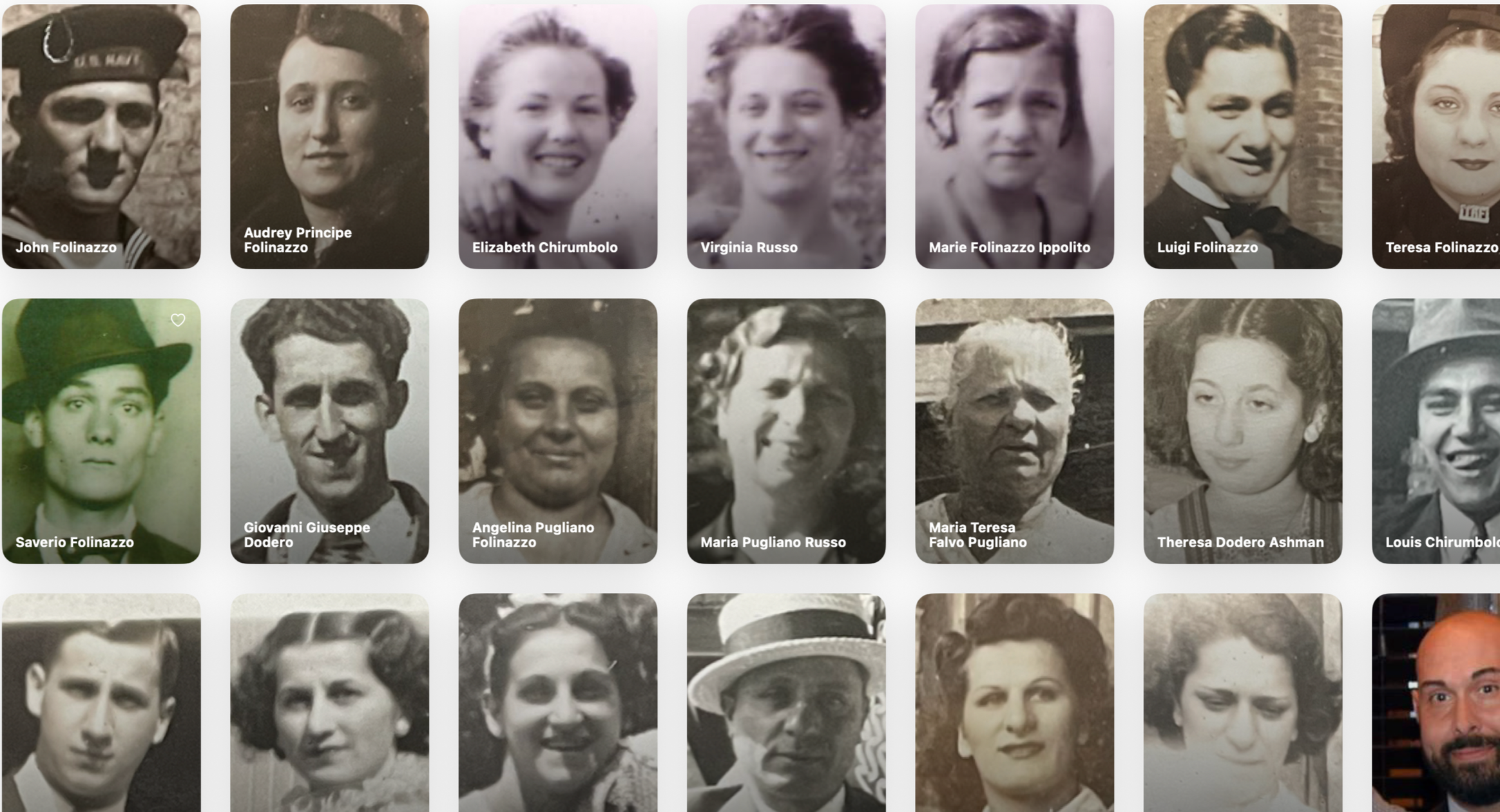
Once the pictures were in iPhoto, I could enlarge them, crop individual faces, reorder them, compare photographs from different albums and use iPhoto’s facial recognition to suggest possible matches. © 2026 Anastasia Ashman
Suddenly I was looking at the pictures all the time.
That mattered.
As my genealogy research moved farther back — eventually eight or ten generations in some branches — the photographs and the family tree began working together. A name in a record could lead me back to a face. A face I had seen in my lifetime occurred repeatedly through history.
I began attaching identified photographs to people in the tree and getting much more familiar with who belonged to whom.
The proper scanning project still exists somewhere in my future.