One afternoon, I read every death certificate filed in Chicago Heights, Illinois, in 1928.
I was researching relatives who had lived and worked in this industrial town south of Chicago. But I wasn't looking for one particular name that day. I wanted to know more about the place itself.
The certificates recorded causes of death, ages, and inquests. Some contained the verdict "person or persons unknown." That phrase appeared repeatedly.
Reading the certificates together gave me a different view of Chicago Heights from the one I could have assembled by collecting records for individual relatives.
It also raised questions about the town my family had known, and the conditions in which they had lived.
The Places Between the Records
Much of my research for Family of Mine begins with a person. But following that person often takes me somewhere unexpected.
In 1924, my cousin Dominic, a Chicago Heights bootlegger and jazz-club owner, married Rae, a Kentucky singer who worked for him.
They married in Jeffersonville, Indiana, across the Ohio River from Louisville. No family or friends appear to have been present.
Why Jeffersonville?
Learning that the town had a thriving quickie-marriage business gave me some context. It didn't explain their decision, but it made the location itself worth investigating.
The marriage was no longer just an event in two people's lives. It belonged to a particular place, with its own customs and commercial arrangements.
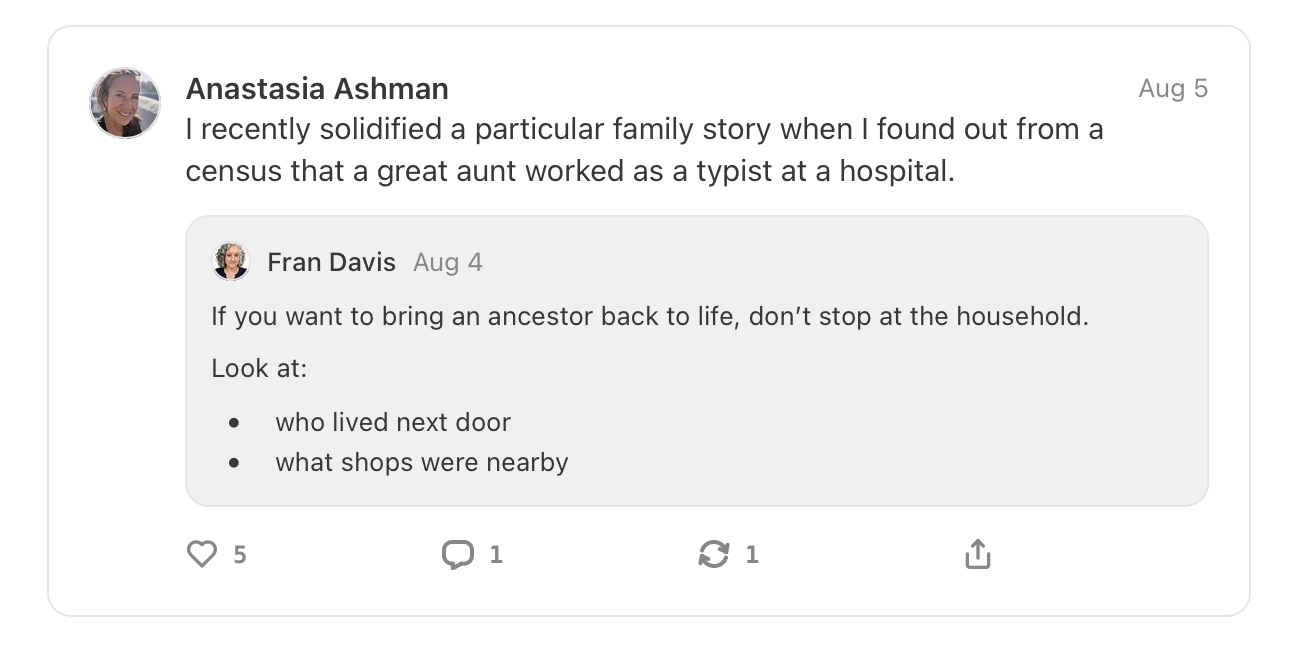
I am finding this happens frequently. An address or business name that initially seems incidental turns out to be worth following.
What a Photograph Doesn't Explain
My inherited family albums contain photographs of people whose names I know, people I have identified through research, and people I still cannot place.
One cherished wedding portrait remains unidentified. I initially thought I knew who the couple were. I was wrong.
A newly discovered relative circulated the photograph among other family members. Another woman sent a wedding portrait from her own family, dated 1922, for comparison.
The collars suggested that my photograph was earlier.
That was useful. It also meant reconsidering the people I had thought might be in it.
Photographs can be persuasive, especially when they belong to your own family. But recognizing a face, guessing a date, or believing you know the occasion is not the same as establishing an identification.
Sometimes the useful result of research is eliminating an answer.
What Was Within Walking Distance?
One photograph in my grandmother's albums shows my Calabrian great-grandparents on a Chicago porch in 1929.
A handwritten caption identifies their Sicilian landlord as Boss Arrigo.
That name, and particularly the word Boss, sent me looking beyond the people in the photograph.
Who was Arrigo? What did he own? Who lived in his building? What did the neighborhood look like at the time?
I've become interested in reconstructing the geography around my relatives. Not just their addresses, but the businesses, properties, and other people within walking distance.
A neighborhood map can bring relationships into view that are difficult to recognize when each person appears on a separate family-history record.
It doesn't establish that everyone knew everyone else. Proximity is something to investigate, not proof of a relationship.
But it gives me a more useful question to ask than simply whether two people shared a surname.
The Family Story I Didn't Inherit
My grandfather's novena cards are another kind of evidence.
He collected them at daily Mass and put them everywhere, including inside the frames of family photographs. Eventually, the cards obscured our faces.
We used to think this was primarily an expression of his religious devotion. Now I understand it as a way he expressed his love and concern for us.
No official document would have told me that. I needed the family photographs, the objects themselves, and my memory of how he used them.
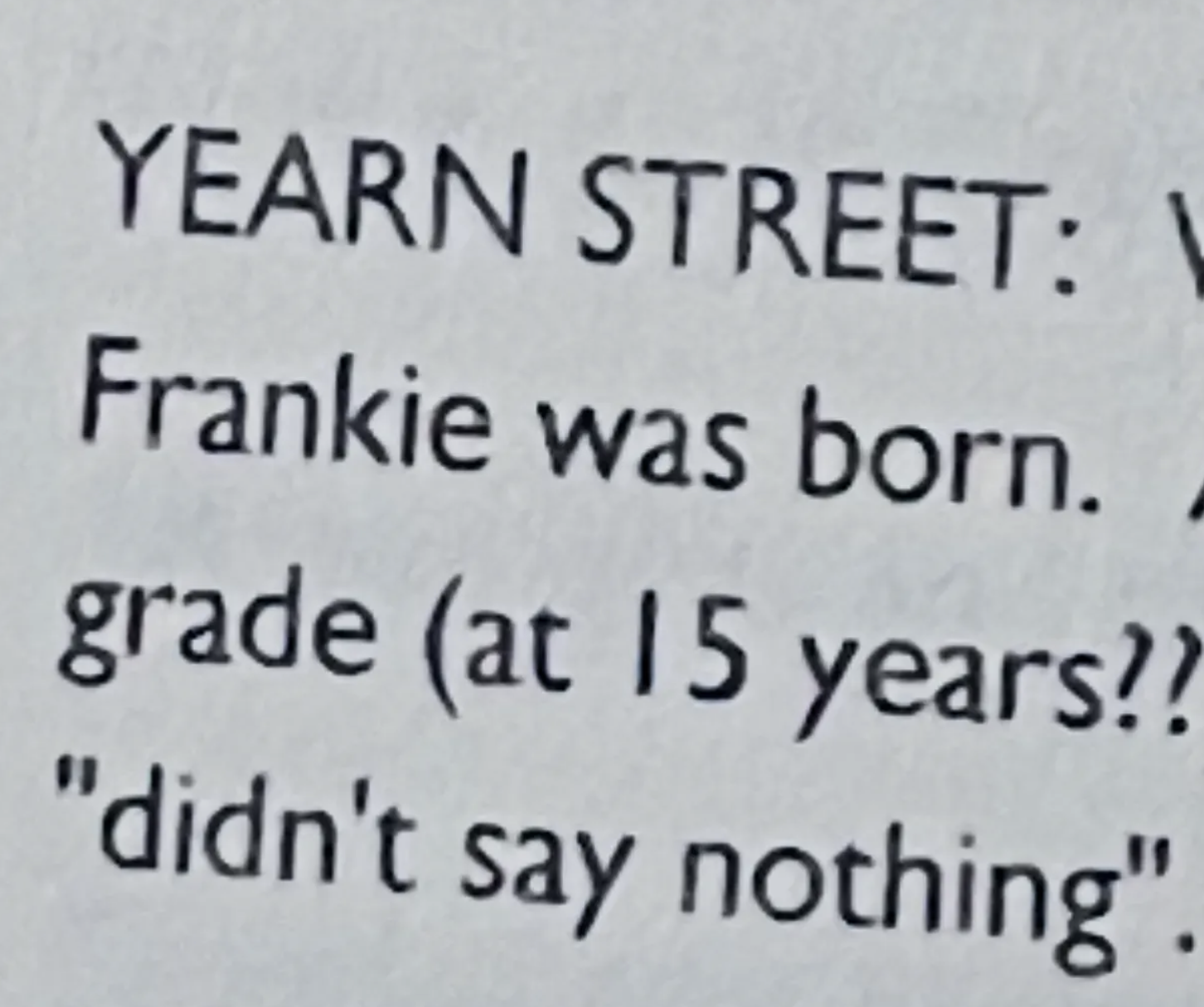
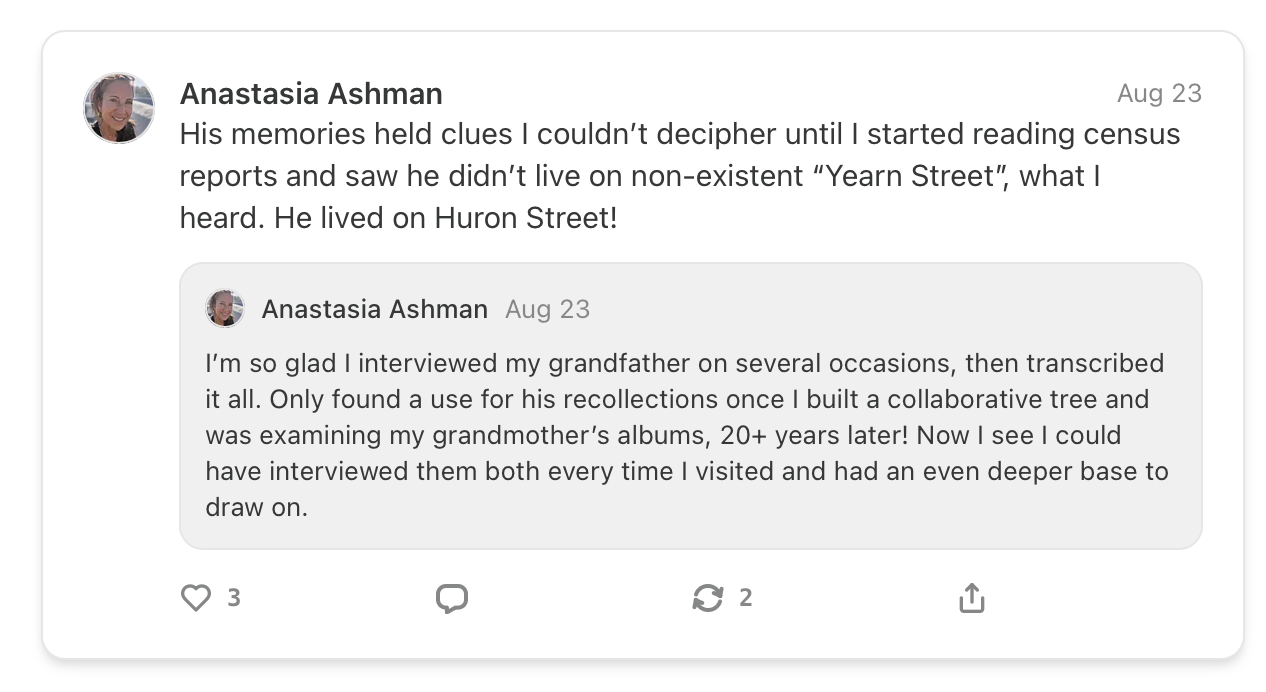
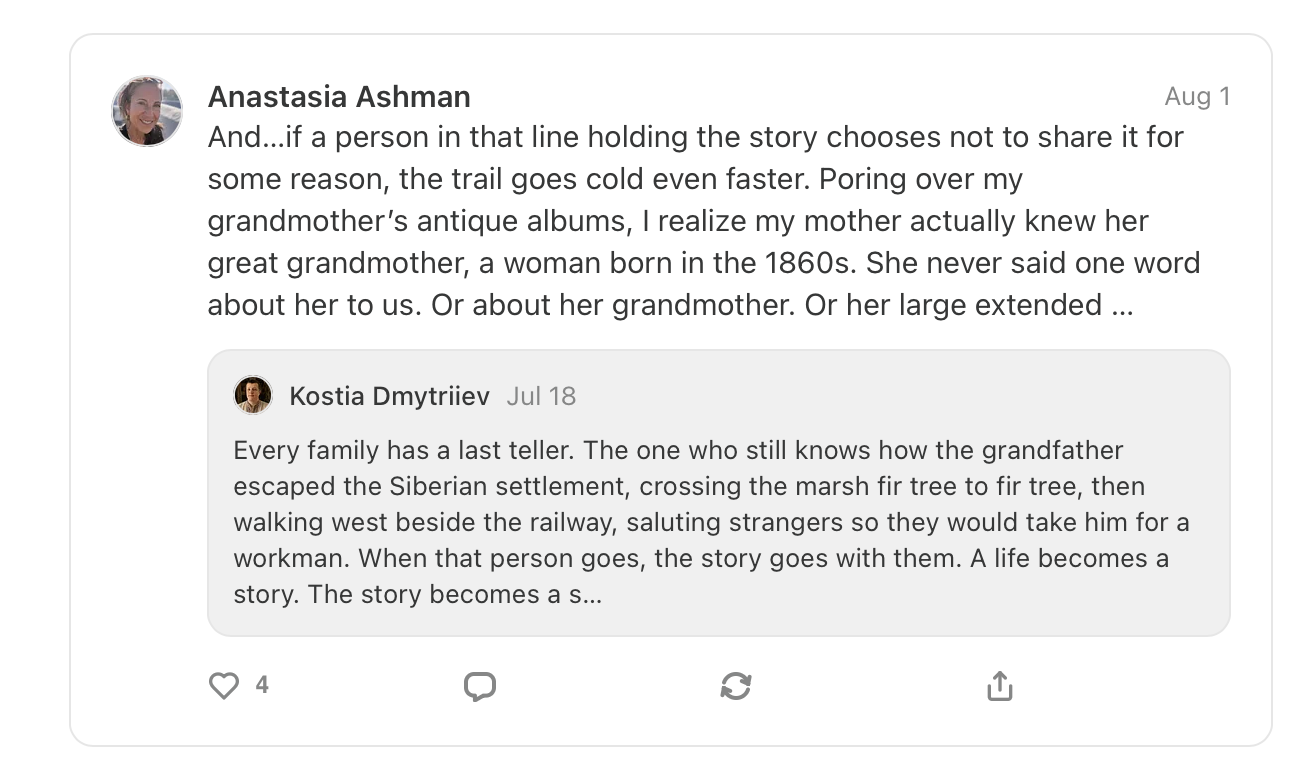
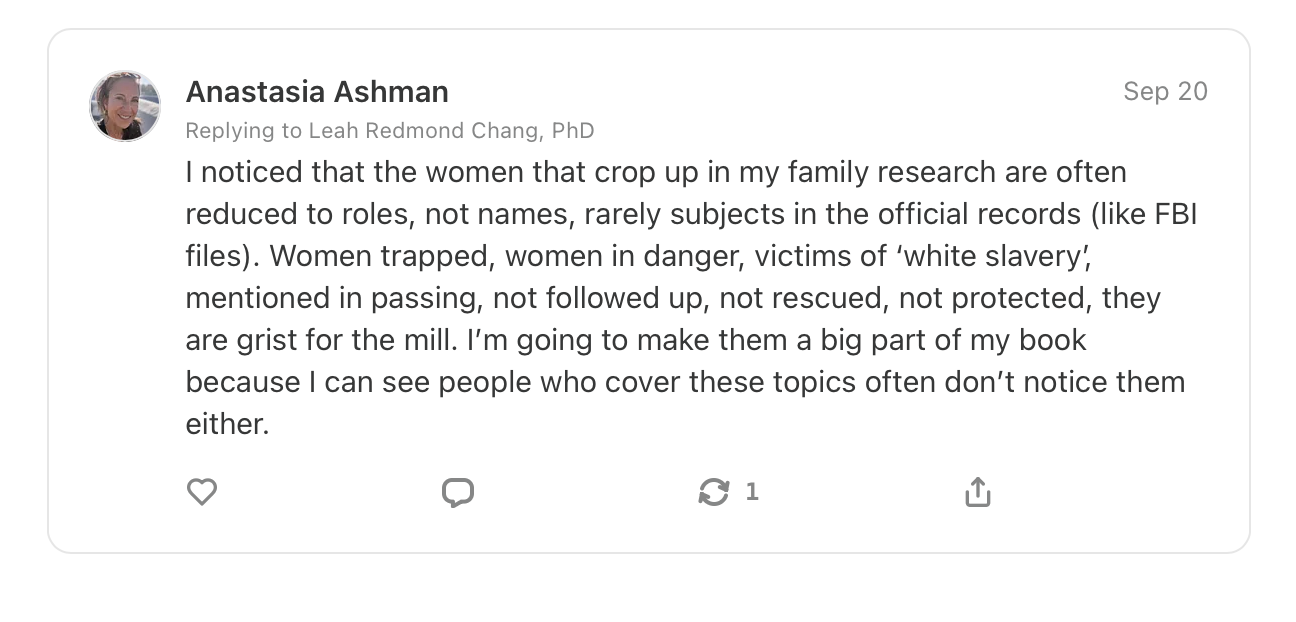
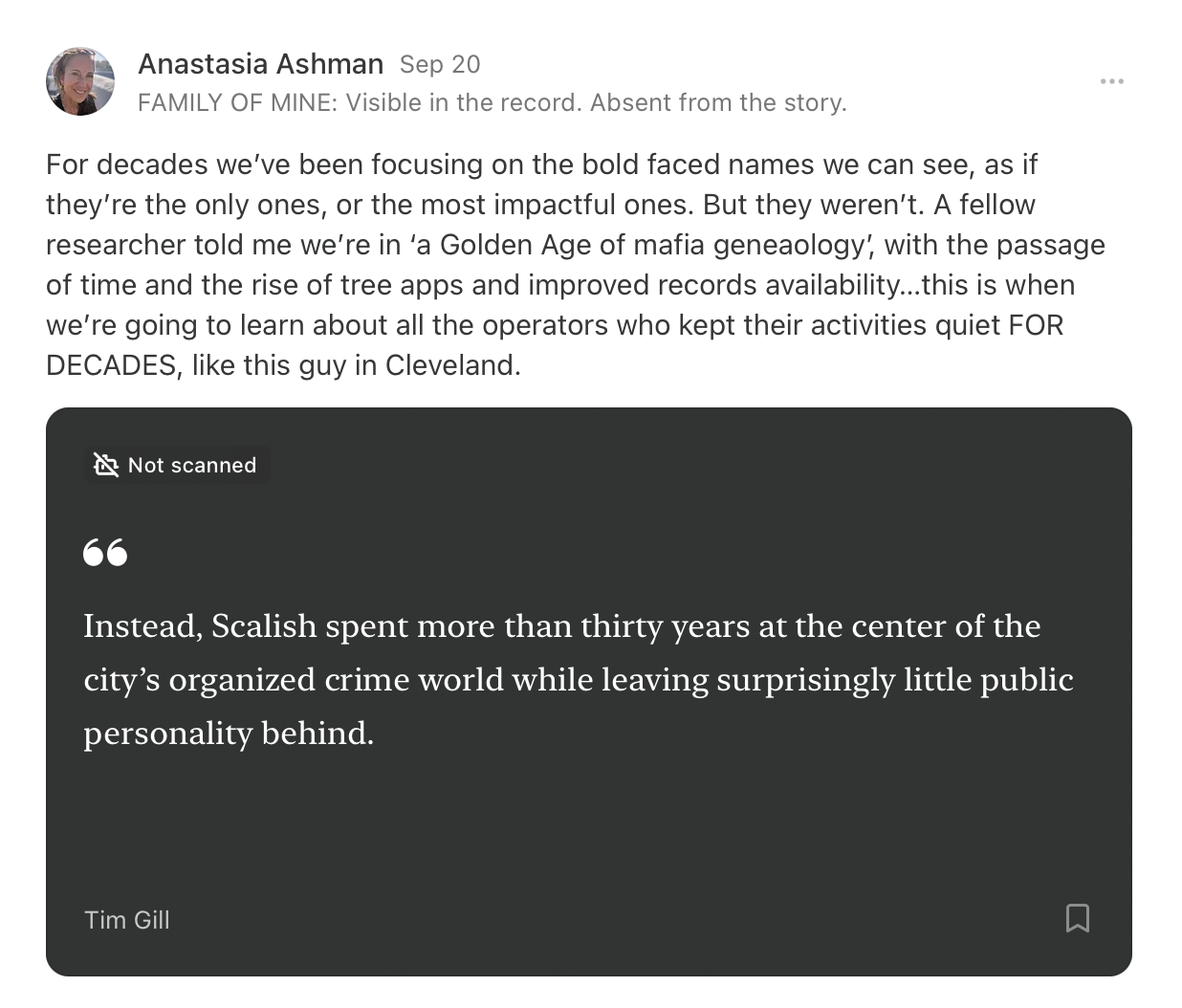
Other parts of the family history require an almost opposite approach. There are people, businesses, and relationships preserved in public records that barely registered in the stories I grew up with.
A relative who married a rodeo queen. A family business documented by the Library of Congress. People who lived only a couple of hours away and were never part of our family life.
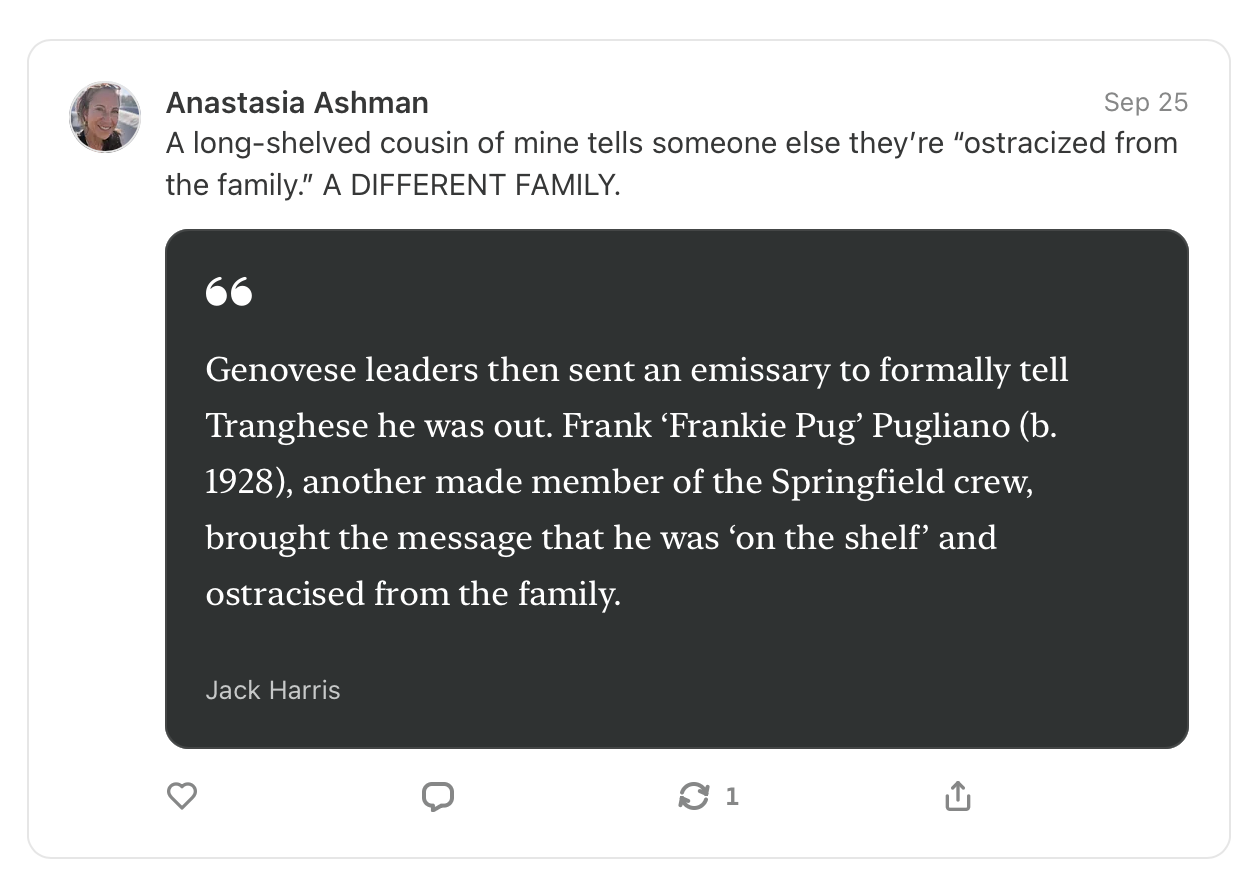
I can establish that they existed and that we were related. Understanding why I knew nothing about them is more difficult.
Beyond the Family Tree
Family of Mine began as an attempt to reconstruct a South Italian family history across generations and continents.
The family tree is essential to that work. But it cannot account for the world in which these people lived.
For that, I have needed property records, city directories, newspapers, court documents, photographs, death certificates, maps, and government investigative files. I have also needed to return repeatedly to the albums and interviews I inherited.
The question has changed as the research has developed.
I still want to know who these people were and what happened to them. I also want to understand the businesses they operated, the institutions they dealt with, the neighborhoods they inhabited, and the forms of power they lived alongside.
Some of this history was recorded in considerable detail.
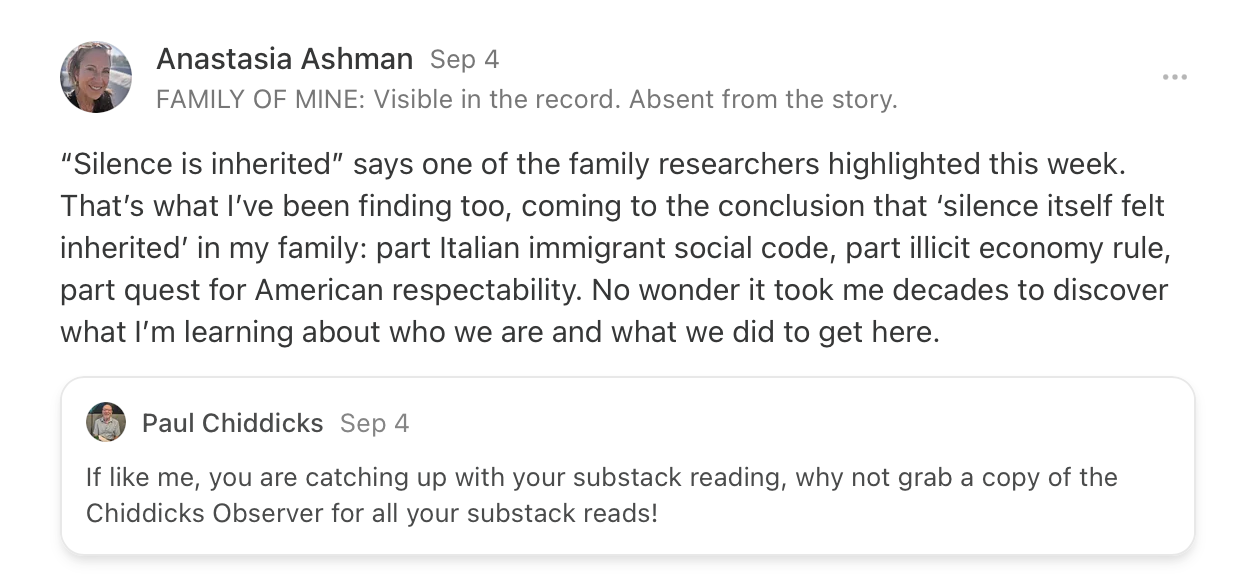
It just wasn't passed down to me.
That is the distance I'm trying to close.
For a look at the discoveries and fellow researchers that sent me back to these records, read Back to the Archive: When the Clues Started Connecting.