I was looking at a death certificate from 1919 when I became interested in the doctor.
His name was Dr. Jacob J. Minke. I followed him into records of his work as a surgeon during World War I.
Then I found myself looking into a county poor farm, a widow, and another house.
This was not what I had set out to research.
One person's death certificate had sent me into the lives of several other people, and into institutions I hadn't been investigating.
There is a limit to what the certificate itself could tell me. It recorded a death. It didn't explain the relationships, circumstances, or history that I was now trying to understand.
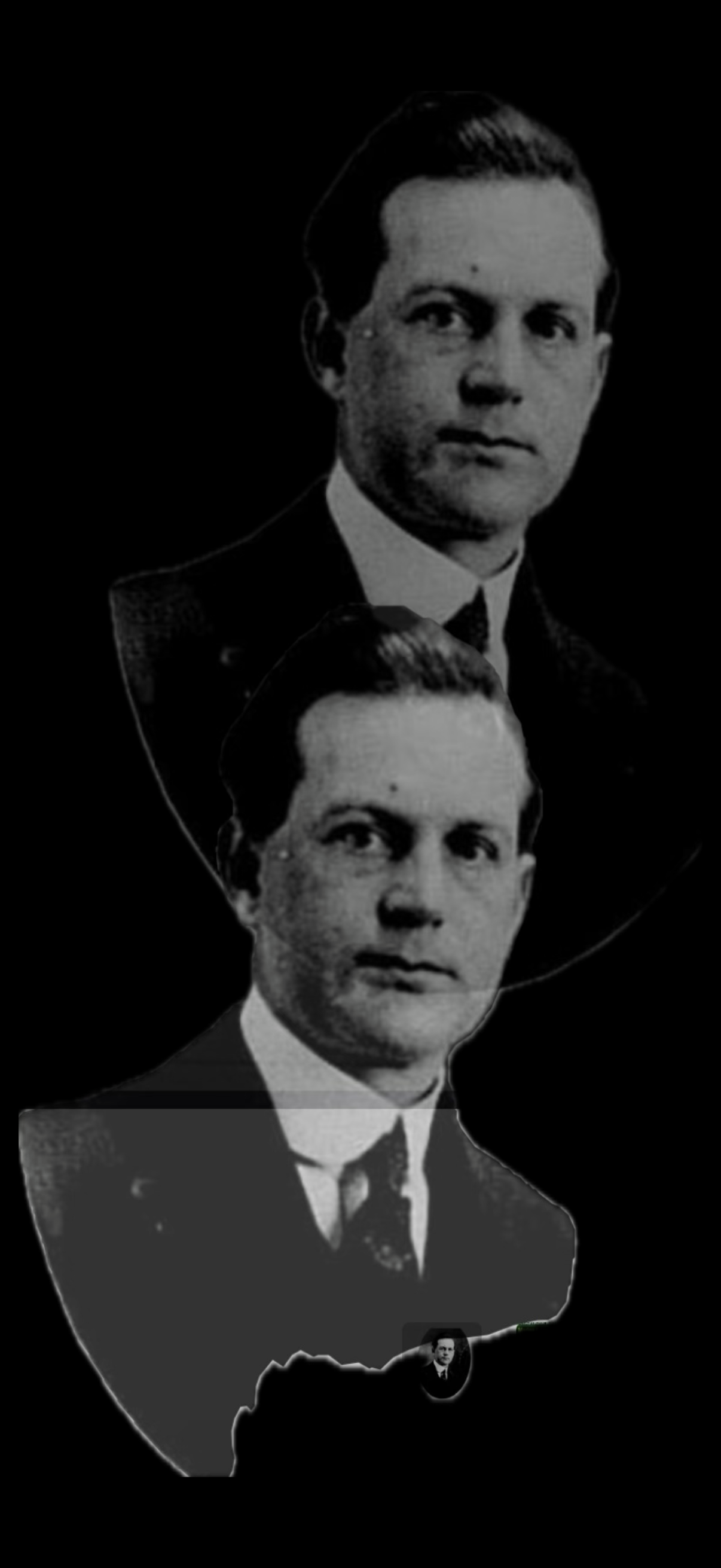
Portrait of my great great grandfather’s surgeon, Dr. Jacob J. Minke, from his 1916 passport application at FamilySearch. Additional rendering my own via Apple Photos.
What the Record Was Made to Record
I've spent years reconstructing my South Italian family through photographs, interviews, civil records, newspapers, and government files.
The records are often remarkably detailed. Some give me exact dates, addresses, occupations, parents' names, witnesses, and signatures.
Yet they frequently leave me with very basic questions.
Who else was living in that house? Why did someone move? Why was a particular person absent? What did that business actually do?
These are not necessarily failures of the records. A death certificate was created to document a death, not to explain a life. A census was intended to enumerate a population, not to preserve the relationships and events that mattered to the people being counted.
The information I need may never have belonged on the form.
But sometimes it exists in another kind of record.
The People Who Are Harder to Find
One problem I keep encountering is that people can be very present in the historical record without being easy to follow through it.
Women may appear under different surnames across successive documents. They may be identified principally through a husband or father. Some records preserve their relationships to other people while saying very little about their own lives.
A child's name or place in a household may change. A spouse disappears from one record and reappears elsewhere.
Those changes are worth investigating, but they don't explain themselves.
An absent spouse is not necessarily evidence of estrangement. A changed surname is not necessarily evidence of concealment.
I have to find out what happened rather than supply an explanation because one seems plausible.
And then there are the things the records document quite clearly that nobody in the family ever mentioned.
What the Family Left Out
The family archive I inherited contains photographs, interviews, names, and places. It also contains gaps that I didn't recognize as gaps until I began finding other records.
Some people and events were preserved in public documents but had no place in the history I knew growing up.
That difference interests me.
Official records were made for particular administrative, legal, and institutional purposes. Family stories were shaped by entirely different considerations.
What was worth remembering? What was considered private? What had become embarrassing, irrelevant, or simply too difficult to explain?
For a South Italian family becoming American, those choices matter.
I am investigating what respectability required people to present about themselves, and what was allowed to disappear from the family account.
It is one thing to discover an omitted fact. It is another to establish why it was omitted.
Reading What Wasn't Said
I've become more attentive to the information surrounding the thing I originally went looking for.
An address can lead to the history of a building. An occupation can lead to a business. A business can reveal other people whose names recur in entirely different records.
Sometimes a missing explanation becomes more noticeable only after several documents have been put together.
I don't think every omission is evidence of a secret.
Records are incomplete. People make errors. Some information was never collected. Some things were so ordinary to the people involved that nobody thought they needed explaining.
But when the same person, relationship, or event appears repeatedly in public records and remains absent from the family account, I want to understand that difference.
The 1919 death certificate is still part of this work.
I went looking at one death and came away with more people, more places, and more questions.
The certificate did what it was created to do.
I'm asking it to help me do something else: reconstruct the world my family lived in, including the parts they did not pass down to me.